

September 3, 2026
Energy Saving Switch Price in India: What Affects the Cost
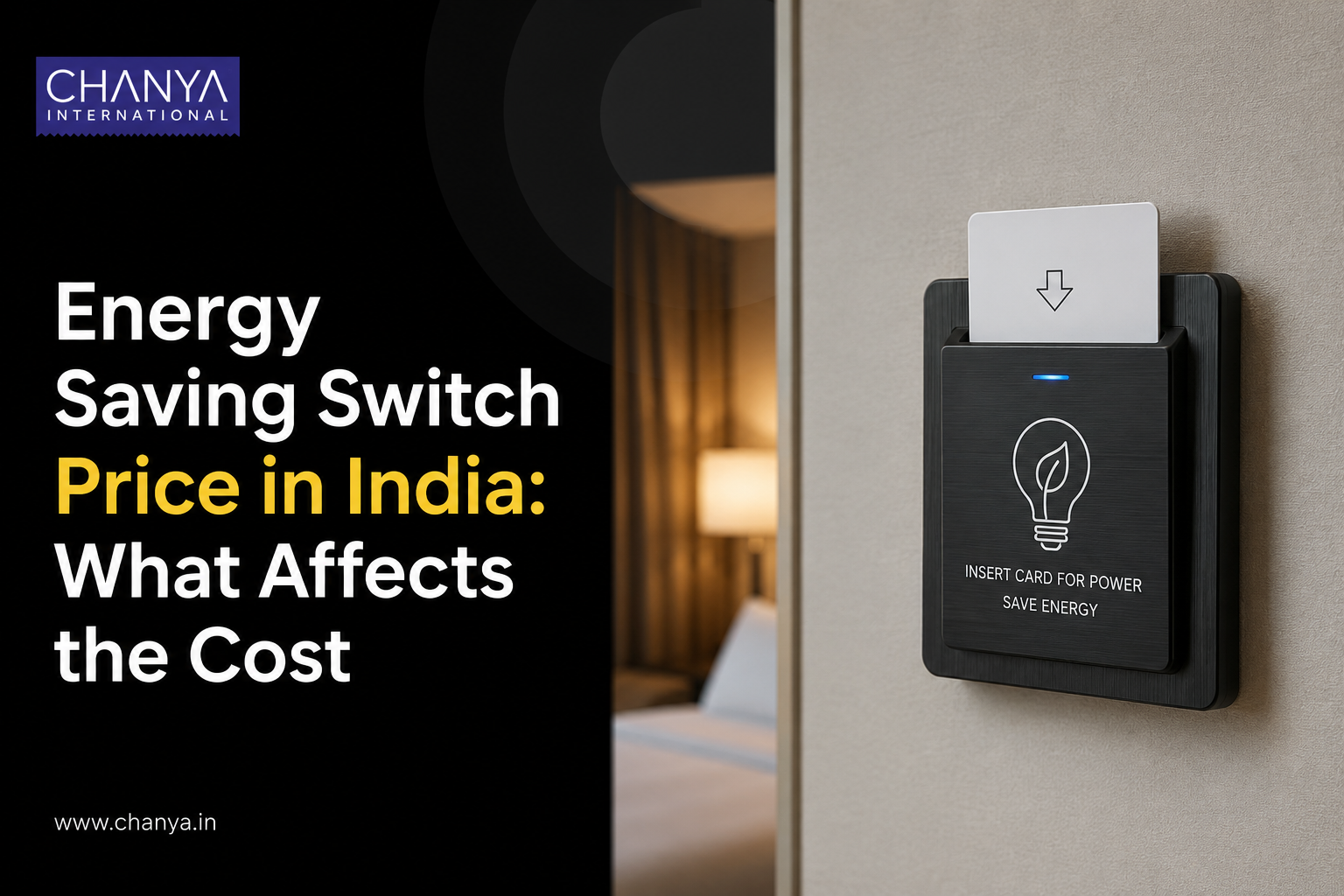
Electricity alone can account for one of the largest operating costs in hotels, serviced apartments, offices and other commercial developments. A lot of energy may be wasted when thermostats, lights televisions and other equipment are left in unoccupied rooms. This is where an energy saving switch can help. These switches give the control of the electricity supply on room occupancy, or by using a separate card access.
They are used in hotel rooms, where the guests put a card into a reader to switch on certain electrical appliances. But people always ask one important question in their mind while buying the item which is what is the energy saving switch price in India.It varies based on some factors. A standard switch will be very cheap compared with a hotel switch standard with more elaborate access verification.
Loading capacity, construction material quality, cardtech brand and installation offer can also impact on the final price. This document describes the reasons behind current prices, what types of switch there are, and what you should think about before buying a switch with an energy efficient label.
Energy Saving Switch Price in India: What Should Businesses Expect?
The cost of an energy saving switch in India is anything from a few hundred rupees to several thousand rupees per unit. In general, the more simple energy saving switch has a simple sensor which can control the power of a room based on the electrical occupancy of the room. Different hotel models that work with RFID or Mifare card, room number, or hotel lock software will be a higher cost.
Business should not select the switch that costs the most. The best switch should be suitable for the load, the size of the property, then current access system, and the most important factor is the duty cycle of this switch.
Average Energy Saving Switch Price in India
As of 2026, basic energy-saving switches are available at relatively affordable prices, while branded and hotel-specific products are positioned at a higher price point.
For example, a recent 2026 hospitality electrical price list shows a 25A energy-saving switch with key tag and indicator at an MRP of around ₹657.
At the other end of the market, branded electronic key card switches designed for hotels can cost several thousand rupees. Some current retail listings show 16A hotel key card switches priced around ₹3,000 to ₹4,500, while premium designer ranges can cost more.
For commercial buyers, bulk purchase pricing may be different from retail prices.
Energy Saving Switch Price Range by Type
Different switch technologies come with different price ranges.
A basic mechanical or universal card switch is usually the most affordable option. These switches may activate power when any compatible card is inserted. RFID and Mifare card switches generally cost more because they are designed to work with specific card technologies.
Advanced hotel energy-saving switches may also verify room numbers, check card validity, or connect with hotel management systems. These products usually have a higher purchase and installation cost. Bluetooth-enabled and remotely managed switches can also fall into a premium category because they offer additional monitoring and control features.
Why Prices Vary Between Different Switches
Two switches may look similar from the outside but have very different internal components and capabilities.
Price differences can come from:
- Electrical load capacity
- Card reading technology
- Compatibility with hotel locks
- Material and build quality
- Relay quality
- Smart control features
- Brand reputation
- Warranty support
- Installation requirements
This is why comparing only the listed energy saving switch price may not give businesses the full picture.
Hotel Energy Saving Switch Price vs Standard Switch Price
A standard energy efficient light switch is generally designed to control electrical circuits. A hotel energy-saving switch has a more specific role.
Hotel switches may need to work with room key cards, RFID cards, Mifare technology, or hotel lock systems. Some models can identify authorised cards and control room electricity accordingly.
For this reason, the hotel energy saving switch price is often higher than the price of a basic electrical switch.Chanya Enterprises as reliable hotel door lock system supplier offers several energy saver switch options, including 30A and 40A models designed for different card technologies and hotel requirements to ensure the lock, key card, and energy switch technologies are compatible.
What Factors Affect Energy Saving Switch Price?
Before comparing suppliers, businesses should understand what they are actually paying for. Several technical and commercial factors influence the final product cost.
Switch Type and Operating Mechanism
The operating mechanism is one of the biggest pricing factors. Mechanical switches are generally simpler and more affordable. Card-operated switches require additional components to detect and process cards.
Advanced models may support:
- Magnetic cards
- IC cards
- Low-frequency RFID cards
- High-frequency Mifare cards
- Room number verification
- Check-in time verification
- Remote monitoring
More advanced technology generally means a higher product cost.
Material, Build Quality, and Durability
Hotels and commercial properties use these switches frequently. A low-quality product may work initially but can develop problems after repeated use. Better-quality switches often use stronger housing, reliable relays, durable card slots, and components suitable for continuous operation.
A cheaper product may reduce the initial investment, but frequent replacement can increase long-term costs.For high-occupancy hotels, durability should be given more importance than a small difference in purchase price.
Electrical Rating and Load Capacity
Electrical rating directly affects the type of appliances the switch can control. A low-capacity switch may be suitable for lighting circuits. Hotels often require higher-capacity products that can support multiple room appliances.
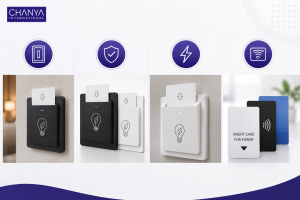
Common ratings can include 16A, 25A, 30A, and 40A models.
Higher-capacity switches generally require stronger internal components and may cost more. Businesses should always calculate the connected electrical load before selecting a switch.
Card Compatibility and Access Technology
Card compatibility is particularly important for hotels.Some switches work with almost any card. Others are designed for a specific RFID frequency or Mifare technology. A property already using RFID hotel locks should consider whether the new switch can work with the existing cards.Choosing compatible equipment can prevent additional spending on replacing access cards or modifying existing systems.
Hotel Energy Saving Switches: Features, Benefits, and Costs
Hotels have different requirements compared with residential properties. Guest rooms contain multiple electrical appliances, and rooms may remain empty for several hours while equipment continues to consume power.
Hotel energy-saving switches help reduce this unnecessary usage.When the guest leaves and removes the key card, the switch disconnects the configured power supply after a short delay. This can help prevent lights and other selected appliances from running unnecessarily in an empty room.
Some systems may allow essential equipment, such as refrigerators or certain emergency circuits, to remain active. Let’s dive a bit more into this –
Card Operated vs Automatic Energy Saving Switches
Card-operated switches require the guest to insert a key card or compatible card.Automatic switches may use occupancy sensors, motion detection, timers, or other methods to control electricity.
Card-operated systems are popular in hotels because the room key is already part of the guest experience. Automatic systems can be useful in offices, meeting rooms, washrooms, and other commercial spaces where card access is not required.
How Energy Saving Switches Reduce Electricity Waste
The main benefit is better control over unused electricity. Guests may leave lights, televisions, or air conditioning running when they leave their rooms. A card-operated system reduces the chances of these appliances remaining active for long periods without occupancy.
Over time, this can help properties manage unnecessary electricity consumption.The actual savings will depend on several factors, including room occupancy, guest behaviour, connected appliances, electricity tariffs, and how the system is configured.
Why Hotels May Pay More for Advanced Features
Basic power control may be enough for a small hotel. However, larger properties may require more control and security.
Advanced features can include:
- Specific card recognition
- Mifare card compatibility
- Room number verification
- Validity time checking
- Integration with hotel lock software
- Remote power control
- Electricity usage monitoring
These features increase the product cost but can provide better control for large hospitality properties.
Energy Saving Switch Supplies for Hospitality Properties
Hotels should look beyond individual products and consider the complete room setup. A reliable supplier should understand the relationship between energy switches, hotel locks, key cards, and room electrical systems.
Businesses looking for energy saving switch supplies should check product specifications carefully and discuss compatibility requirements before placing a bulk order.
How to Choose the Right Energy Saving Switch for Your Business
The cheapest product is not always the right choice. A switch should be selected based on the property’s actual electrical and operational requirements.
Features to Check Before Buying
Before purchasing, check the following details:
- Voltage rating
- Current capacity
- Card compatibility
- RFID frequency
- Delay time
- Relay quality
- Operating life
- Installation size
- Existing lock system compatibility
- Warranty
Hotels should also confirm whether the switch can work with their existing room key cards.
Comparing Quality, Price, Warranty, and Durability
When comparing suppliers, create a simple comparison sheet.
Include the following:
- Product price
- Technical specifications
- Warranty period
- Card compatibility
- Installation support
- Bulk pricing
- Replacement availability
This approach makes it easier to identify the best value rather than simply selecting the lowest-priced product.
Installation and Long Term Maintenance Costs
Installation costs can vary depending on the existing electrical setup.If the property already has suitable wiring and switch boxes, installation may be straightforward.
However, older properties may require:
- Electrical rewiring
- Panel modifications
- Additional relays
- Integration with access control systems
Maintenance requirements should also be discussed with the supplier. A slightly higher-quality switch with better service support may prove more economical over several years.
Choosing Reliable Hospitality Products Suppliers
Hotels usually need more than one type of product during construction, renovation, or daily operations. Working with experienced hospitality products suppliers can make procurement easier. A supplier that understands hotel requirements can help businesses select compatible products across guest rooms, housekeeping, washrooms, and security systems.
Chanya Enterprises supplies products across multiple hospitality categories, including guestroom items, hotel locks, energy saver switches, and housekeeping equipment.
Frequently Asked Questions –
What Is the Average Energy Saving Switch Price in India?
The price depends on the product type and features. Basic energy-saving switches can start from a few hundred rupees, while hotel-specific RFID and key card switches can cost several thousand rupees.
Is a Hotel Energy Saving Switch More Expensive Than a Standard Switch?
Yes, in many cases. Hotel switches may include card detection, RFID compatibility, higher load capacity, and integration with hotel access systems. These additional features can increase the cost compared with a standard electrical switch.
Are Energy Efficient Light Switches Worth the Investment?
They can be a worthwhile investment for properties where lights and appliances are frequently left running in unoccupied spaces. The value depends on the electricity usage pattern, number of rooms, and type of connected equipment.
Do Energy Saving Switches Require Professional Installation?
Professional installation is recommended, particularly for commercial and hotel properties. Incorrect wiring can affect product performance and electrical safety.
Final Thoughts
The energy saving switch price in India depends on much more than the product itself. Technology, load capacity, card compatibility, build quality, brand, and installation requirements all influence the final cost.
For hotels, choosing the right switch is particularly important because it needs to work with the property’s room access system and daily operations. The best approach is to understand your property’s requirements before comparing products.
Other Blog You May like
October 16, 2026
How Do Hotel Key Card Locks Work? A Complete Guide for Hoteliers
Hotel key cards have made room access easier for both...
Read More
October 9, 2026
Hotel Door Lock Components Explained: Mortise, Reader, Handle, Encoder & More
Ask any front office manager about their worst nights and...
Read More
October 1, 2026
Housekeeping Trolley Price in India: What Affects the Cost
Every housekeeping manager has had this conversation at some point,...
Read More
September 24, 2026
Hotel Door Lock vs Smart Lock: What’s the Difference?
At first glance, a hotel door lock and a smart...
Read More
September 17, 2026
Electric Kettle with Tray Set for Hotels: A Buying Guide for Guestrooms
Every guestroom checklist has a kettle tray set on it,...
Read More
September 10, 2026
How to Choose the Right Absorption Minibar for Hotels?
Every general manager who's replaced a batch of minibars has...
Read More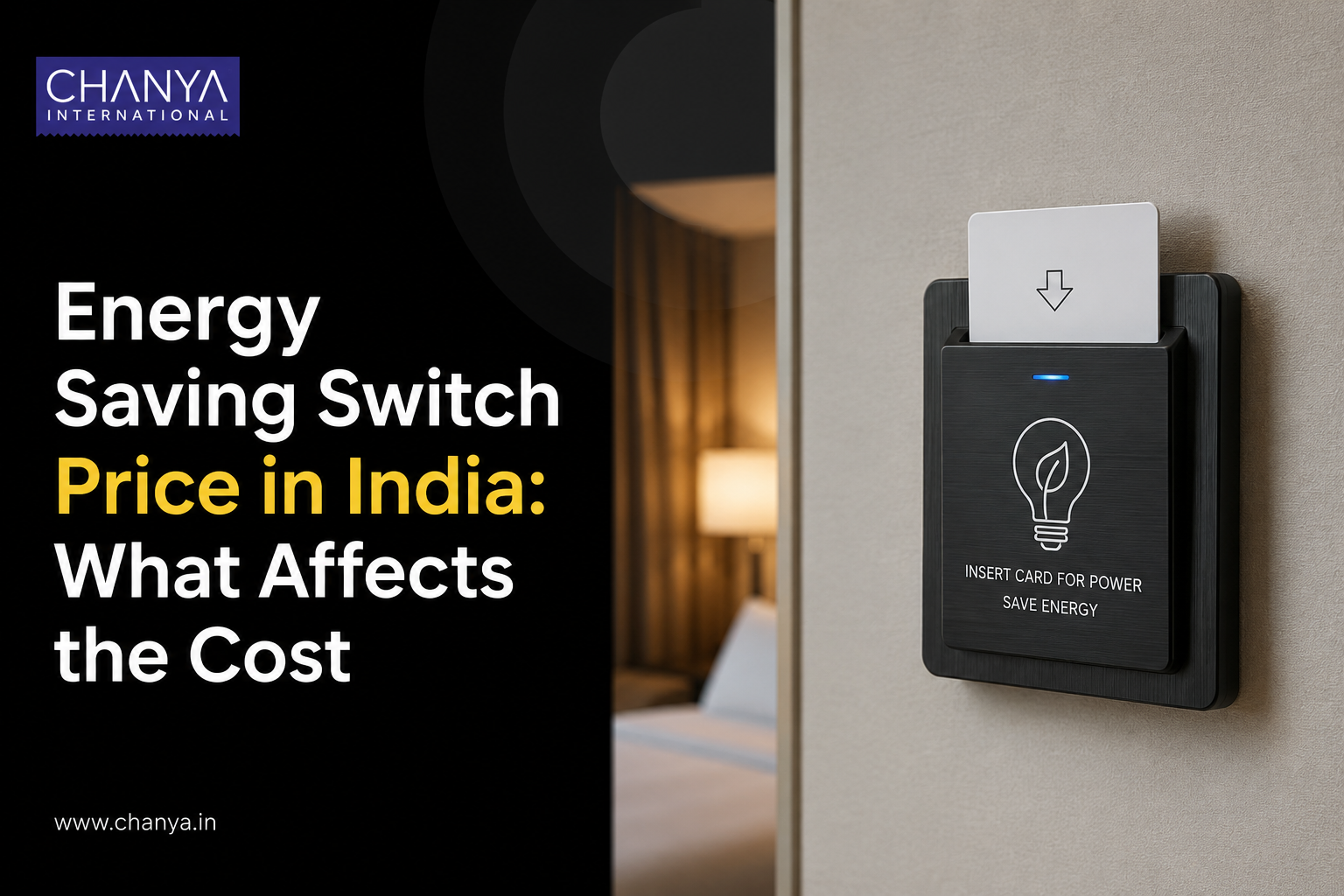
September 3, 2026
Energy Saving Switch Price in India: What Affects the Cost
Electricity alone can account for one of the largest operating...
Read More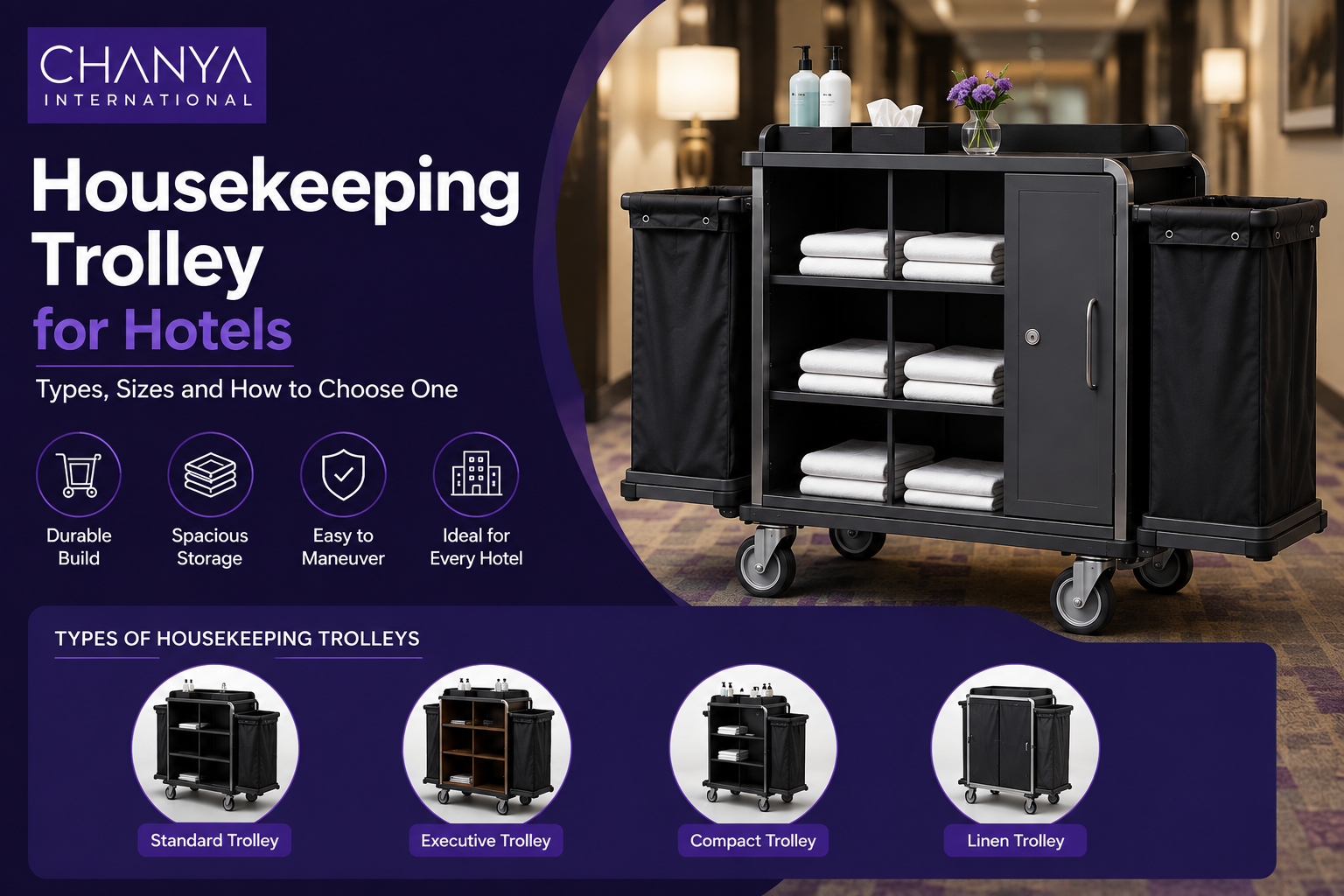
August 27, 2026
Housekeeping Trolley for Hotels: Types, Sizes and How to Choose One
You can tell a lot about a hotel by looking...
Read More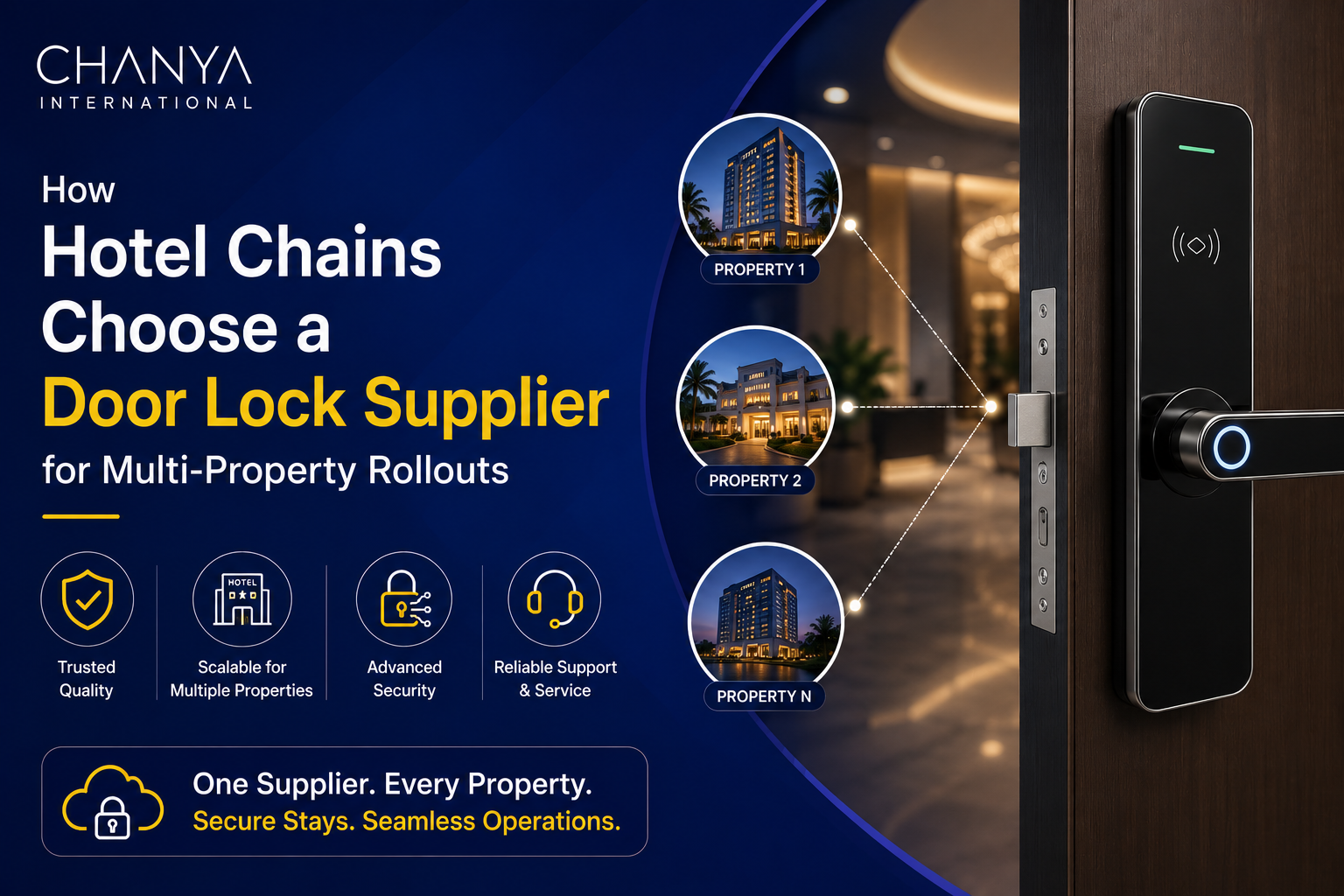
August 18, 2026
How Hotel Chains Choose a Door Lock Supplier for Multi-Property Rollouts
Buying locks for one hotel is a fairly contained decision....
Read More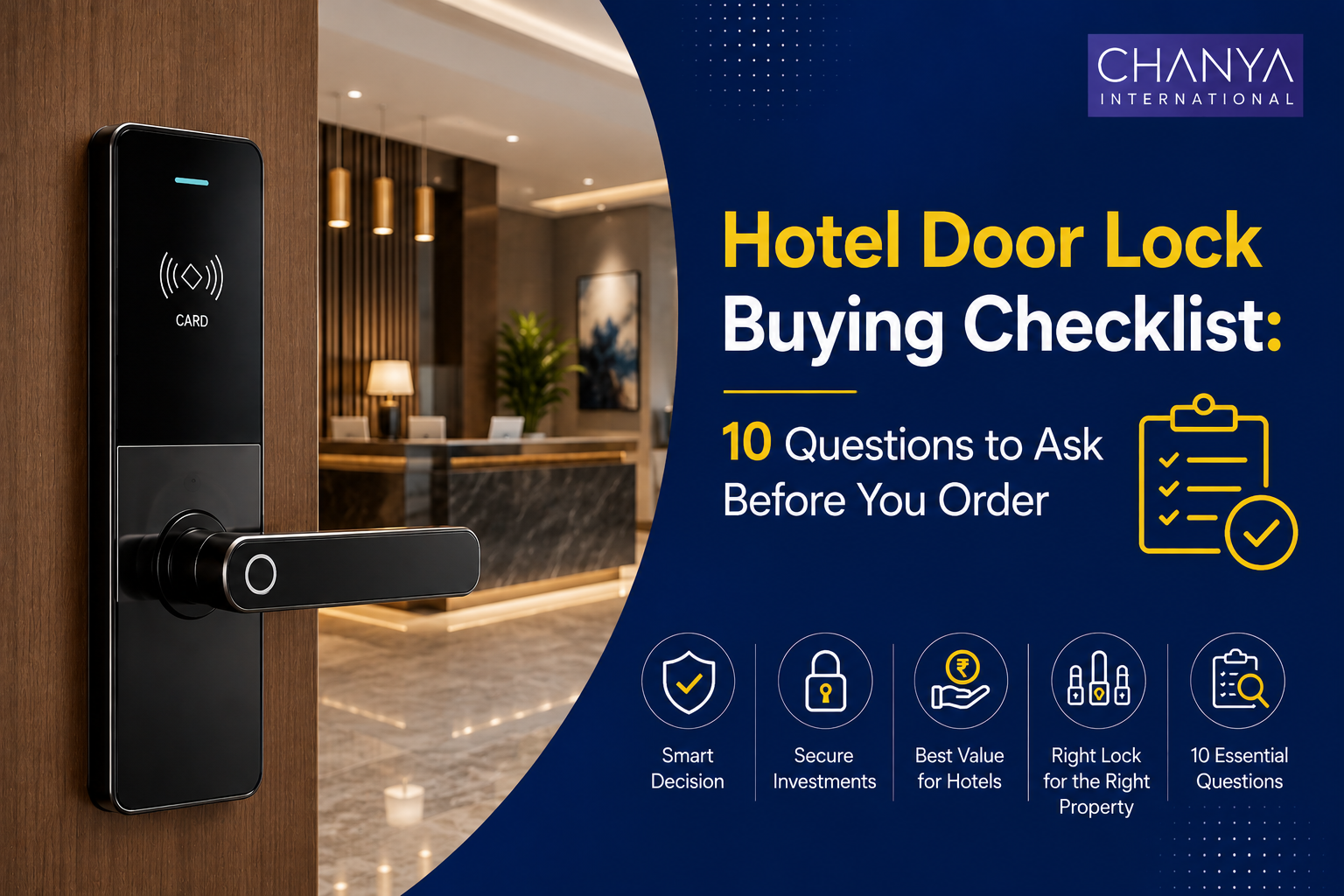
August 12, 2026
Hotel Door Lock Buying Checklist: 10 Questions to Ask Before You Order
Most hotel owners don't think much about door locks until...
Read More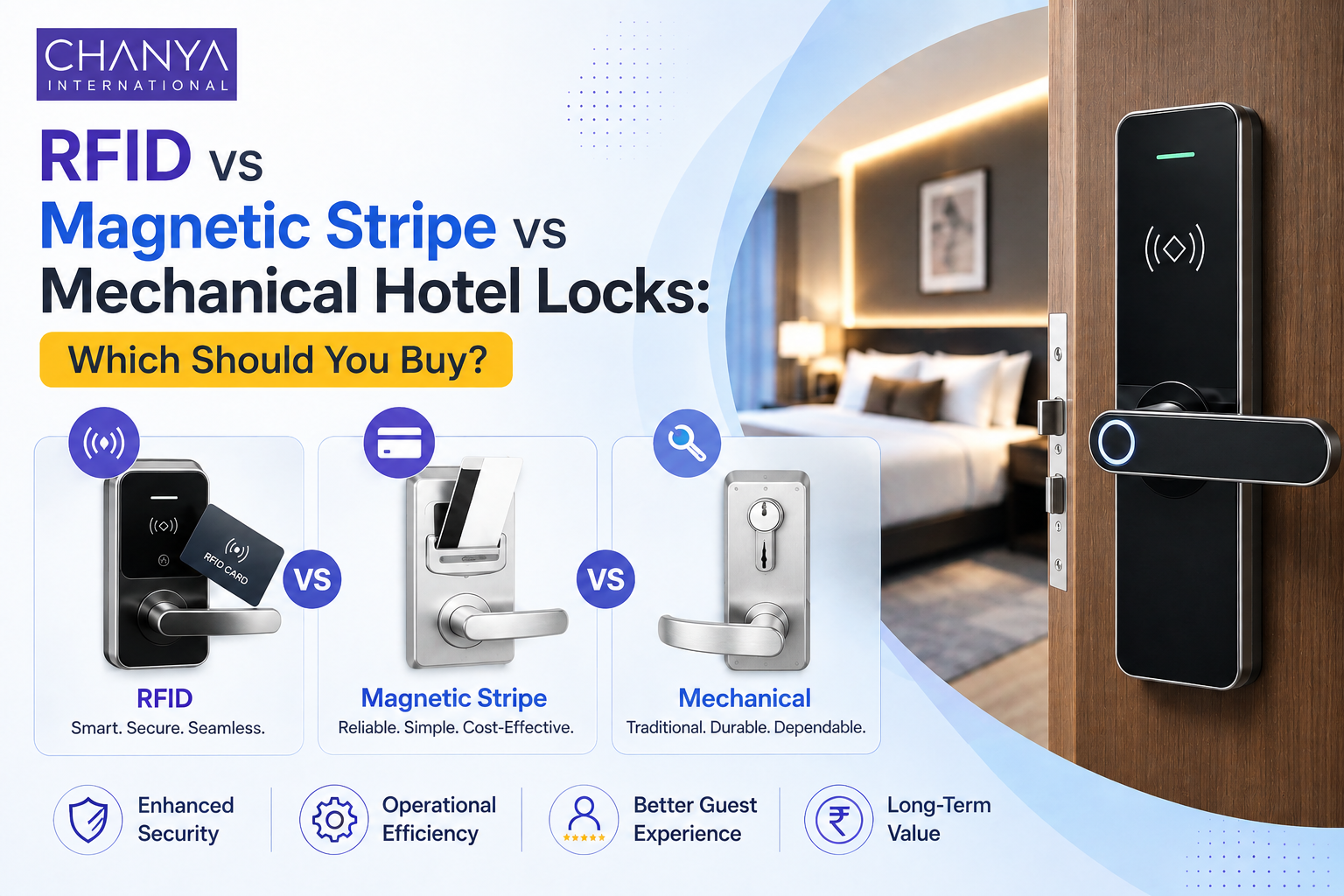
August 3, 2026
RFID vs Magnetic Stripe vs Mechanical Hotel Locks: Which Should You Buy?
Walk into ten different hotels and you'll probably come across...
Read More
July 28, 2026
Hotel Door Lock Price Guide: Costs, Types and Key Features
If you are preparing for the security upgrade of your...
Read More
January 28, 2026
Hotel Safe Usage: Essential Do’s and Don’ts
When a guest walks into their room, the first thing...
Read More
December 22, 2025
10 Best Hotel Door Lock Systems in 2026
Why 2026 Is a Turning Point for Hotel Security Hotel...
Read More
December 5, 2025
Choosing the Right Hotel Door Lock System
Did you know that guest anxiety about security decreases a...
Read More
August 19, 2025
Hotel Room Phones: Small Device, Big Impact on Guest Satisfaction
When you enter a contemporary hotel room, your attention immediately...
Read More
August 1, 2025
Why More Hotels Are Switching to Absorption Minibars?
When guests enter a hotel room, they have much to...
Read More
July 18, 2025
Enhance Guest Stay with Quality Bathroom Supplies
When one enters a hotel room, the bathroom is often...
Read More
June 20, 2025
Is Your Hotel Ready for Today’s Security Challenges?
Hotel security has come a long way past the key...
Read More
June 13, 2025
Eco-Friendly Hospitality: Mindful Choices for Tomorrow
Nowadays, sustainability is not something to be thought of afterwards,...
Read More
May 22, 2025
5 Tips to Choose the Right Hotel Supplier Partner
Running a hotel is all about constantly trying to make...
Read More
May 13, 2025
7 Creative Hotel Design Tips to Delight Guests This Holiday Season
Summer break is the ideal time for travellers to unwind,...
Read More
April 23, 2025
Boost Your Hotel Occupancy: Budget-Friendly Strategies That Work
In the hotel business, occupancy rates define a hotel’s reputation...
Read More
April 8, 2025
Top Benefits of Installing Digital Doorbells in Hotels
The hotel industry has witnessed very quick changes, taking guest...
Read More
March 26, 2025
How to Elevate Your Hotel Room Service Experience in 2025
In 2025, the room service experience is more important to...
Read More
March 7, 2025
Top Emerging Hospitality Industry Trends : What You Need to Know in 2025
Change is the only constant in this constantly changing hospitality...
Read More
February 7, 2025
Key Features to Look for in a Hotel Safe
Guest security is a key aspect of any hotel’s success...
Read More
January 27, 2025
5 Simple Ways to Make Your Hotel Reception Area Irresistibly Inviting
The first issue a guest sees while entering your lodge...
Read More
December 27, 2024
Innovative Laundry Solutions for Modern Hotels
Laundry is one of the most important yet underrated areas...
Read More
December 12, 2024
How Digital Door Bell Systems Improve Guest Satisfaction
Convenience and security are the buzzwords in today's fast-moving world,...
Read More
November 28, 2024
Hotel Amenities That Will Make Your Guests Feel Like Royalty
Every visitor who walks through the doorways of your hotel...
Read More
November 5, 2024
Essential Safety Tips for Guests Using Hotel Safes
Hotel safes are now a standard feature, especially in the...
Read More
October 18, 2024
Top 5 Hotel Amenities Suppliers In India | List Of 2026
In the hospitality industry, delivering exceptional quality is not just...
Read More
September 26, 2024
What is a Hotel Energy Saving Switch and How Does it Work?
Today, hotels are facing a significant challenge: the operational costs...
Read More
September 12, 2024
Top 6 Hotel Security Devices To Keep Your Guests Safe
Within the hospitality industry, hotels are greater than simply locations...
Read More
August 13, 2024
Guide On How To Enhance Guest Experience in Hotels?
Creating a memorable guest experience is no longer a luxury;...
Read More
August 5, 2024
Hotel Lobby Signage Items – Types And Their Importance
Imagine creating a hotel experience that delights guests and keeps...
Read More
July 24, 2024
Easy Upgrades for Your Hotel in 2026
Ensuring your hotel remains vibrant and appealing is essential for...
Read More
April 3, 2024
10 Must-Have Hotel Supplies for Guest Satisfaction in 2026
Ensuring your hotel guests are happy is crucial for your...
Read More
April 3, 2024
The Importance of Quality Housekeeping Supplies
In the hotel industry, providing excellent service to guests is...
Read More
April 3, 2024
Trends in Lobby Design and Products for 2024
Thinking about upgrading your hotel lobby? It's important to make...
Read More
December 26, 2023
The International Food & Hospitality Fair
Lorem Ipsum is simply dummy text of the printing and typesetting...
Read More
December 26, 2023
The International Food & Hospitality Fair
Lorem Ipsum is simply dummy text of the printing and...
Read More
December 26, 2023
The International Food & Hospitality Fair
Lorem Ipsum is simply dummy text of the printing and...
Read More
December 25, 2023
The International Food & Hospitality Fair
Lorem Ipsum is simply dummy text of the printing and...
Read More
December 25, 2023
The International Food & Hospitality Fair
Lorem Ipsum is simply dummy text of the printing and...
Read More
December 25, 2023
The International Food & Hospitality Fair
Lorem Ipsum is simply dummy text of the printing and...
Read More