

September 10, 2026
How to Choose the Right Absorption Minibar for Hotels?

Every general manager who’s replaced a batch of minibars has a story about the wrong purchase, the unit that hummed all night, the one that never cooled properly because nobody checked the ventilation clearance before it went into the cabinetry. Absorption minibars solve some of that, which is why so many properties are moving toward them heading into the back half of 2026. But “should we switch” is a bigger question than a spec sheet answers on its own.
We’ve already covered how an absorption minibar actually works and its core advantages on our absorption minibars for hotels page. This piece goes further than that. It’s written for the person actually deciding whether to switch an entire property over, what it changes operationally, and what to check before signing a purchase order for 80 or 150 units.
Why Are Hotels Moving to Absorption Minibars?
The shift isn’t really about chasing a trend. It’s usually a response to a specific complaint pattern that keeps showing up in guest feedback.
What Is an Absorption Minibar?
An absorption mini fridge cools using heat instead of a compressor. A small heating element drives a sealed cycle of ammonia, water, and hydrogen through the system, and the whole thing runs without a motor, a pump, or any part that physically moves. That’s the core difference from a standard fridge, and it’s also where every other advantage on this page actually comes from.
Why Silent Operation Matters in Hotel Rooms
Hotel-grade compressor fridges typically run at 28 to 38 decibels, which sounds minor until it’s 2am and a guest is trying to sleep six feet from the thing. Absorption units run close to silent since there’s no compressor cycling on and off. For a property competing on guest reviews, “the fridge kept me up” is exactly the kind of complaint that shows up in a one-star review and gets repeated by the next three guests who read it.
How Absorption Cooling Works Without a Compressor
The heating element warms the ammonia solution, which drives a chemical cycle that pulls heat out of the cabinet through absorption and evaporation, then releases it out the back through natural convection. No fan pushes that heat out on most designs, which is exactly why rear clearance around the unit matters so much, a point we’ll come back to later, since it’s one of the most common installation mistakes.
Why Hotels Are Looking Beyond the Purchase Price
The unit price on the invoice is only one line in the real cost. Replacement frequency, guest complaint volume, maintenance call-outs, and even how the fridge affects a room’s overall soundscape all factor into what a minibar actually costs a property over its working life. It’s the same logic that applies to most guestroom supplies really, the cheapest quote upfront isn’t always the cheapest choice once you account for how long something lasts. That’s the lens this whole article uses, not just whether absorption technology sounds impressive on paper.
What Makes an Absorption Minibar a Better Choice for Hotels?
These points matter less as features and more as things that change how a property actually operates day to day.
Silent and Vibration-Free Operation
Beyond the noise question, there’s no vibration transferring into the cabinetry or furniture around it, which matters more than people expect in rooms where the minibar sits inside a wooden console right next to the bed. Guests notice vibration through furniture even when they can’t quite place what’s bothering them.
Lower Maintenance Requirements
There’s no compressor to fail and no refrigerant circuit to leak, which cuts down on the maintenance calls that eat into an engineering team’s week. That doesn’t mean zero maintenance though, the ventilation path and the area around the absorber coil still need clearing of dust at least once a year, and blocked grills are the single most common reason an otherwise healthy unit stops cooling properly.
Energy Consumption and Operating Costs
This is where a lot of buyers get the wrong idea. Absorption units run their heating element more or less continuously to keep the cycle going, rather than cycling on and off like a compressor does. In practice, that can mean an absorption unit isn’t always cheaper to run electrically than a modern compressor fridge, even though it’s the quieter and lower-maintenance option. Worth modeling the actual wattage across your full room count rather than assuming “efficient” applies to the electricity bill specifically.
Flexible Design for Different Hotel Rooms
Because there’s no motor or moving parts, these units fit into tighter, more varied cabinetry designs without worrying about vibration isolation. That gives interior teams more freedom when planning guestroom layouts, though it does come with the ventilation clearance requirement mentioned earlier, which has to be designed in from the start rather than fixed after the furniture’s already built.
Better Guest Comfort
None of this shows up as a single dramatic guest review. It shows up as the absence of a complaint, which is harder to track but real. Properties that switch often notice fewer maintenance tickets tied to “fridge is too loud” over a full season rather than any one obvious spike, and it’s the kind of detail that good hospitality suppliers will actually discuss with you upfront rather than just pushing whatever they have in stock.
Absorption Minibar vs Compressor and Thermoelectric Models
None of the three technologies is universally better, and treating this as a straight upgrade misses the actual trade-offs involved.
Absorption Minibar vs Compressor Minibar
Compressor units cost less upfront, cool down faster, and recover quicker after the door’s been opened repeatedly, which matters in high-turnover budget properties. What they trade away is noise and long-term reliability, since a compressor is a mechanical part that eventually wears out, where an absorption unit has nothing mechanical to wear.
Absorption vs Thermoelectric Minibar
Thermoelectric units are simpler and quieter than compressor models, though not fully silent since most still run a small fan. Their real weakness shows up in warm, humid conditions, which is relevant across a lot of India outside consistently air-conditioned rooms, since thermoelectric cooling performance drops noticeably as ambient temperature climbs and struggles to hold a consistent internal temperature as a result.
Which Cooling Technology Works Best for Hotel Rooms?
Rooms that stay reliably air-conditioned and where guest experience is a priority tend to suit absorption best. Budget properties with tighter margins and faster room turnover often do fine with compressor units despite the noise, since the price gap and faster cooling matter more to that segment than a completely silent room. Most hospitality suppliers will tell you honestly which tier their stock actually suits, so it’s worth asking rather than assuming every model on a catalog page fits every property type.
When Should a Hotel Choose an Absorption Mini Fridge?
Mid-scale and upscale properties building or renovating guest rooms, especially ones where minibars sit close to the bed, get the clearest payoff from switching. It matters less in back-of-house pantries or staff break rooms, where noise and guest experience simply aren’t part of the equation.
What Should Hotels Check Before Buying an Absorption Minibar?
This is the part that gets skipped when a purchase decision moves too fast, and it’s where most post-installation complaints trace back to.
Capacity and Room Requirements
Most hotel room minibars run between 30 and 60 litres, and the right size depends on room category more than personal preference, a standard room rarely needs the same capacity as a suite stocked for a longer stay.
Energy Efficiency and Power Consumption
Check the rated wattage directly rather than trusting an “energy efficient” label on its own, and multiply that out across a full day of continuous running, since that’s closer to how these units actually operate compared to a compressor’s on-off cycle.
Cooling Performance
Confirm the ambient temperature range the unit is actually rated for. A model that performs well in a climate-controlled European hotel may struggle to hold temperature in a hot Indian summer if the surrounding room or storage area isn’t consistently cooled.
Door Design, Shelves, and Interior Layout
Glass doors work well in premium rooms where the minibar doubles as a bit of in-room merchandising, but they let in more ambient heat than a solid door, which matters more for absorption units given how they dissipate heat. Shelf configuration should match what you’re actually stocking, cans and bottles need different spacing than snacks and full-size mixers, and it’s worth treating this the same way you’d plan any other guestroom items supplies order, around what guests actually use rather than what looks fullest in a photo.
Installation, Ventilation, and Space Requirements
This is the step that causes the most complaints down the line. Absorption units need clear rear ventilation space to release heat through natural convection, and cramming one into a tightly sealed cabinet without airflow is the most common reason a perfectly good unit stops cooling properly within months. They also shouldn’t be tilted or handled roughly during transport and installation, since it can disturb the internal fluid balance and affect performance afterward.
How to Choose the Right Hotel Absorption Minibar
Once the technology decision is made, these are the practical filters worth running every model through before you commit.
Matching the Minibar to Your Room Category
Standard rooms rarely need the same spec as suites. It’s reasonable to run a smaller, simpler absorption unit across most of the property and reserve a glass-door or larger-capacity model for premium categories where the extra cost is easier to justify.
Checking Build Quality and Warranty
Ask specifically about the sealed system’s warranty, not just the general product warranty, since that’s the part that matters most if something does eventually go wrong. A longer warranty on the cooling system itself is usually a better signal of build quality than the cabinet finish or the brand name alone, and it’s worth comparing that detail across mini bar supplies before price becomes the deciding factor.
Considering Long-Term Maintenance Costs
Absorption units generally last longer than compressor models before replacement becomes necessary, often eight to ten years or more with basic upkeep, since there’s no mechanical wear to speed up the timeline. Budget for occasional professional cleaning of the ventilation path rather than a heavier repair schedule, and keep in mind that most of the maintenance cost here is labor and inspection time rather than parts, since there’s very little inside the unit that actually fails.
Buying for Multiple Hotel Rooms
Standardizing on one or two models across the property, rather than mixing several, makes spare parts and staff training simpler down the line. It also tends to improve your position when negotiating bulk pricing, since a supplier can quote confidently on volume rather than a scattered mix of models. This matters even more if you’re rolling out across several properties rather than one, since a consistent spec means your engineering team only has to learn one installation process instead of several.
Choosing Reliable Hospitality Suppliers
A lot of the guest room hardware you’re already sourcing tends to come from vendors who also carry minibars, and it’s worth asking before opening a new vendor relationship just for this one category. Ask directly about spare parts availability and lead times, not just the headline price per unit, since that matters more over five years than who quoted the lowest number on day one.
It’s also worth asking how a vendor actually handles service after the sale, not just at the point of purchase. Do they send someone to check installation and ventilation clearance, or just drop off boxes and leave the rest to your maintenance team? That one question tends to separate suppliers who genuinely understand hospitality equipment from ones who are simply reselling appliances they don’t actually service themselves.
It’s a small thing to ask upfront, but it tells you a lot about how the next five years of ownership will actually go.
And if you’re specifically hunting for a reliable minibar supplier in India who can service a multi-property rollout, local stock and installation support usually matter more than whichever brand has the flashiest catalog.
Frequently Asked Questions About Absorption Minibars
Is an Absorption Minibar Completely Silent?
Close to it. There’s no compressor and no moving parts, so absorption units don’t produce the humming or cycling noise that compressor fridges do. They’re not mechanically silent in the sense of zero sound ever, but in practice guests won’t hear them running.
Is an Absorption Minibar Energy Efficient?
It depends what “efficient” means to you. Absorption units run their heating element continuously rather than cycling like a compressor, so they’re not necessarily the lowest electricity cost option. What they save you on is maintenance, repairs, and replacement frequency rather than the power bill itself.
How Long Does an Absorption Minibar Last?
With basic upkeep, mainly keeping the ventilation path clear, absorption units commonly run for eight to ten years or longer, since there’s no compressor or motor to wear out mechanically. That’s typically longer than most compressor units manage before needing replacement.
Is an Absorption Mini Fridge Better Than a Compressor Model?
Not universally, it depends on what the property is optimizing for. Absorption wins on noise, vibration, and long-term reliability. Compressor wins on upfront price and faster cooling recovery. The right choice depends more on room positioning and guest expectations than on which technology is objectively superior.
What Size Minibar Is Best for a Hotel Room?
Most standard hotel rooms are well served by a 30 to 40 litre absorption minibar, while suites or longer-stay rooms often justify something closer to 50 to 60 litres. Matching size to how guests actually use the room matters more than defaulting to the largest option available.
Do Absorption Minibars Need Ventilation?
Yes, and this is one of the most overlooked requirements during installation. These units release heat through natural convection at the rear, so they need clear airflow space around them. A tightly enclosed cabinet without proper venting is one of the most common reasons an absorption minibar fails to cool as expected.
Other Blog You May like

October 23, 2026
Hotel Door Lock Maintenance: A Practical Guide for Hotel Owners & Maintenance Teams
Hotel Door Lock Maintenance: A Practical Guide for Hotel Owners...
Read More
October 16, 2026
How Do Hotel Key Card Locks Work? A Complete Guide for Hoteliers
Hotel key cards have made room access easier for both...
Read More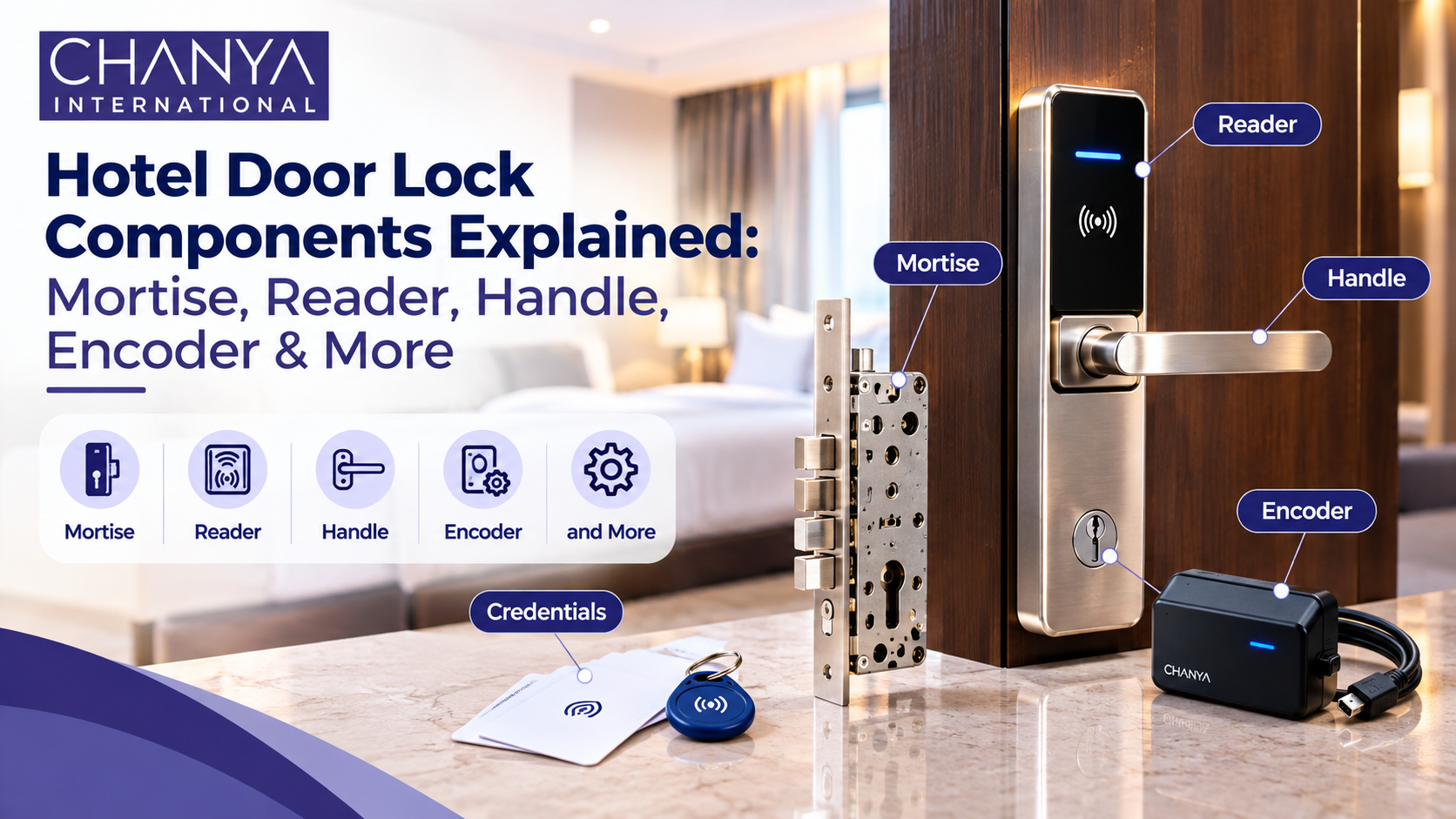
October 9, 2026
Hotel Door Lock Components Explained: Mortise, Reader, Handle, Encoder & More
Ask any front office manager about their worst nights and...
Read More
October 1, 2026
Housekeeping Trolley Price in India: What Affects the Cost
Every housekeeping manager has had this conversation at some point,...
Read More
September 24, 2026
Hotel Door Lock vs Smart Lock: What’s the Difference?
At first glance, a hotel door lock and a smart...
Read More
September 17, 2026
Electric Kettle with Tray Set for Hotels: A Buying Guide for Guestrooms
Every guestroom checklist has a kettle tray set on it,...
Read More
September 10, 2026
How to Choose the Right Absorption Minibar for Hotels?
Every general manager who's replaced a batch of minibars has...
Read More
September 3, 2026
Energy Saving Switch Price in India: What Affects the Cost
Electricity alone can account for one of the largest operating...
Read More
August 27, 2026
Housekeeping Trolley for Hotels: Types, Sizes and How to Choose One
You can tell a lot about a hotel by looking...
Read More
August 18, 2026
How Hotel Chains Choose a Door Lock Supplier for Multi-Property Rollouts
Buying locks for one hotel is a fairly contained decision....
Read More
August 12, 2026
Hotel Door Lock Buying Checklist: 10 Questions to Ask Before You Order
Most hotel owners don't think much about door locks until...
Read More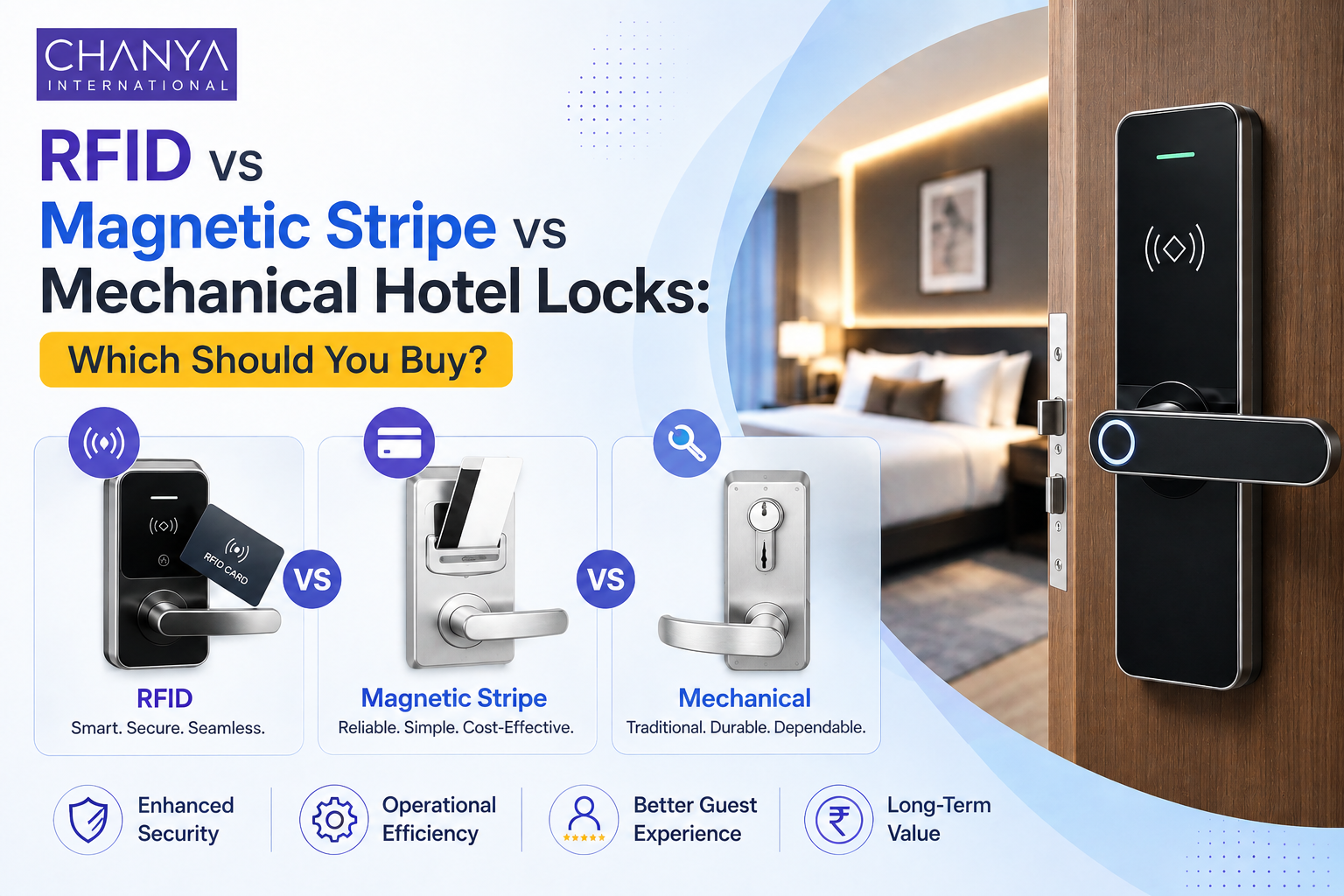
August 3, 2026
RFID vs Magnetic Stripe vs Mechanical Hotel Locks: Which Should You Buy?
Walk into ten different hotels and you'll probably come across...
Read More
July 28, 2026
Hotel Door Lock Price Guide: Costs, Types and Key Features
If you are preparing for the security upgrade of your...
Read More
January 28, 2026
Hotel Safe Usage: Essential Do’s and Don’ts
When a guest walks into their room, the first thing...
Read More
December 22, 2025
10 Best Hotel Door Lock Systems in 2026
Why 2026 Is a Turning Point for Hotel Security Hotel...
Read More
December 5, 2025
Choosing the Right Hotel Door Lock System
Did you know that guest anxiety about security decreases a...
Read More
August 19, 2025
Hotel Room Phones: Small Device, Big Impact on Guest Satisfaction
When you enter a contemporary hotel room, your attention immediately...
Read More
August 1, 2025
Why More Hotels Are Switching to Absorption Minibars?
When guests enter a hotel room, they have much to...
Read More
July 18, 2025
Enhance Guest Stay with Quality Bathroom Supplies
When one enters a hotel room, the bathroom is often...
Read More
June 20, 2025
Is Your Hotel Ready for Today’s Security Challenges?
Hotel security has come a long way past the key...
Read More
June 13, 2025
Eco-Friendly Hospitality: Mindful Choices for Tomorrow
Nowadays, sustainability is not something to be thought of afterwards,...
Read More
May 22, 2025
5 Tips to Choose the Right Hotel Supplier Partner
Running a hotel is all about constantly trying to make...
Read More
May 13, 2025
7 Creative Hotel Design Tips to Delight Guests This Holiday Season
Summer break is the ideal time for travellers to unwind,...
Read More
April 23, 2025
Boost Your Hotel Occupancy: Budget-Friendly Strategies That Work
In the hotel business, occupancy rates define a hotel’s reputation...
Read More
April 8, 2025
Top Benefits of Installing Digital Doorbells in Hotels
The hotel industry has witnessed very quick changes, taking guest...
Read More
March 26, 2025
How to Elevate Your Hotel Room Service Experience in 2025
In 2025, the room service experience is more important to...
Read More
March 7, 2025
Top Emerging Hospitality Industry Trends : What You Need to Know in 2025
Change is the only constant in this constantly changing hospitality...
Read More
February 7, 2025
Key Features to Look for in a Hotel Safe
Guest security is a key aspect of any hotel’s success...
Read More
January 27, 2025
5 Simple Ways to Make Your Hotel Reception Area Irresistibly Inviting
The first issue a guest sees while entering your lodge...
Read More
December 27, 2024
Innovative Laundry Solutions for Modern Hotels
Laundry is one of the most important yet underrated areas...
Read More
December 12, 2024
How Digital Door Bell Systems Improve Guest Satisfaction
Convenience and security are the buzzwords in today's fast-moving world,...
Read More
November 28, 2024
Hotel Amenities That Will Make Your Guests Feel Like Royalty
Every visitor who walks through the doorways of your hotel...
Read More
November 5, 2024
Essential Safety Tips for Guests Using Hotel Safes
Hotel safes are now a standard feature, especially in the...
Read More
October 18, 2024
Top 5 Hotel Amenities Suppliers In India | List Of 2026
In the hospitality industry, delivering exceptional quality is not just...
Read More
September 26, 2024
What is a Hotel Energy Saving Switch and How Does it Work?
Today, hotels are facing a significant challenge: the operational costs...
Read More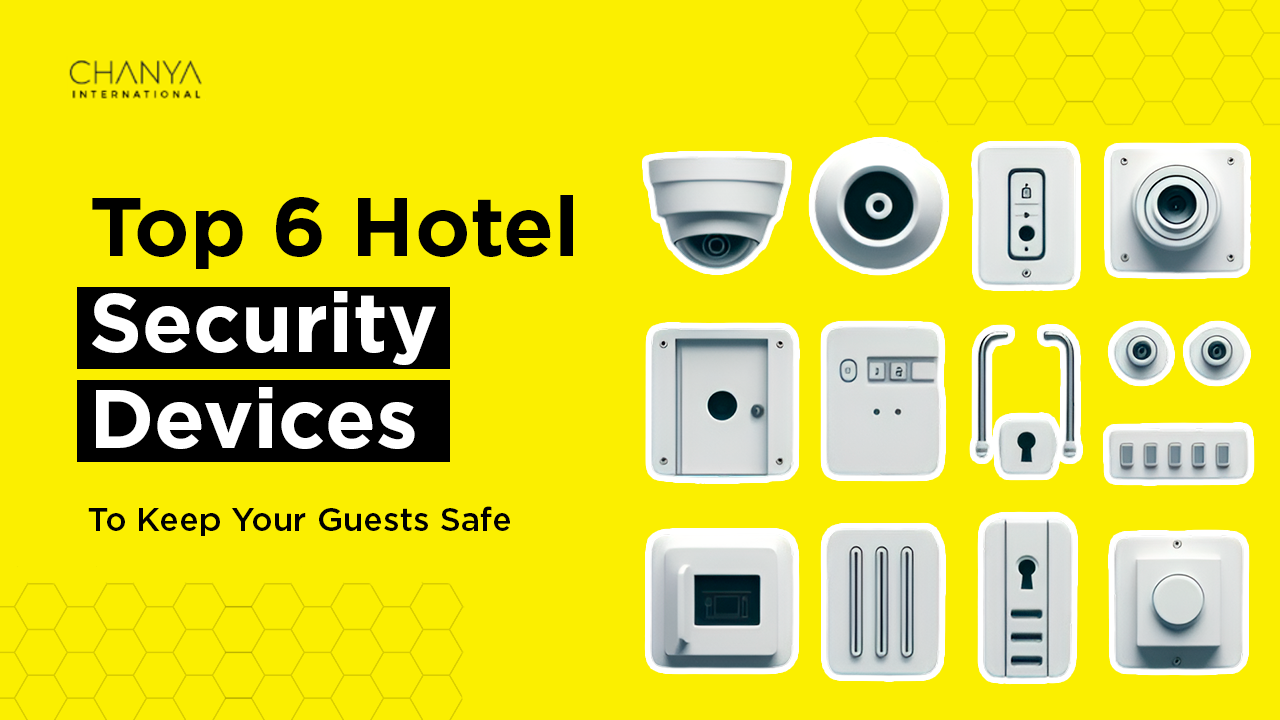
September 12, 2024
Top 6 Hotel Security Devices To Keep Your Guests Safe
Within the hospitality industry, hotels are greater than simply locations...
Read More
August 13, 2024
Guide On How To Enhance Guest Experience in Hotels?
Creating a memorable guest experience is no longer a luxury;...
Read More
August 5, 2024
Hotel Lobby Signage Items – Types And Their Importance
Imagine creating a hotel experience that delights guests and keeps...
Read More
July 24, 2024
Easy Upgrades for Your Hotel in 2026
Ensuring your hotel remains vibrant and appealing is essential for...
Read More
April 3, 2024
10 Must-Have Hotel Supplies for Guest Satisfaction in 2026
Ensuring your hotel guests are happy is crucial for your...
Read More
April 3, 2024
The Importance of Quality Housekeeping Supplies
In the hotel industry, providing excellent service to guests is...
Read More
April 3, 2024
Trends in Lobby Design and Products for 2024
Thinking about upgrading your hotel lobby? It's important to make...
Read More
December 26, 2023
The International Food & Hospitality Fair
Lorem Ipsum is simply dummy text of the printing and typesetting...
Read More
December 26, 2023
The International Food & Hospitality Fair
Lorem Ipsum is simply dummy text of the printing and...
Read More
December 26, 2023
The International Food & Hospitality Fair
Lorem Ipsum is simply dummy text of the printing and...
Read More
December 25, 2023
The International Food & Hospitality Fair
Lorem Ipsum is simply dummy text of the printing and...
Read More
December 25, 2023
The International Food & Hospitality Fair
Lorem Ipsum is simply dummy text of the printing and...
Read More
December 25, 2023
The International Food & Hospitality Fair
Lorem Ipsum is simply dummy text of the printing and...
Read More