

October 9, 2026
Hotel Door Lock Components Explained: Mortise, Reader, Handle, Encoder & More
Ask any front office manager about their worst nights and a dead door lock usually makes the list. A guest is stuck outside room 412, it’s gone 11 pm, and the card just blinks red. Half the time it’s one of the hotel door lock components that has failed, or two that never got along.
We’ll take the parts one at a time, starting where the guest touches the door. Hotel doors only.
What Are the Main Components of a Hotel Door Lock System?
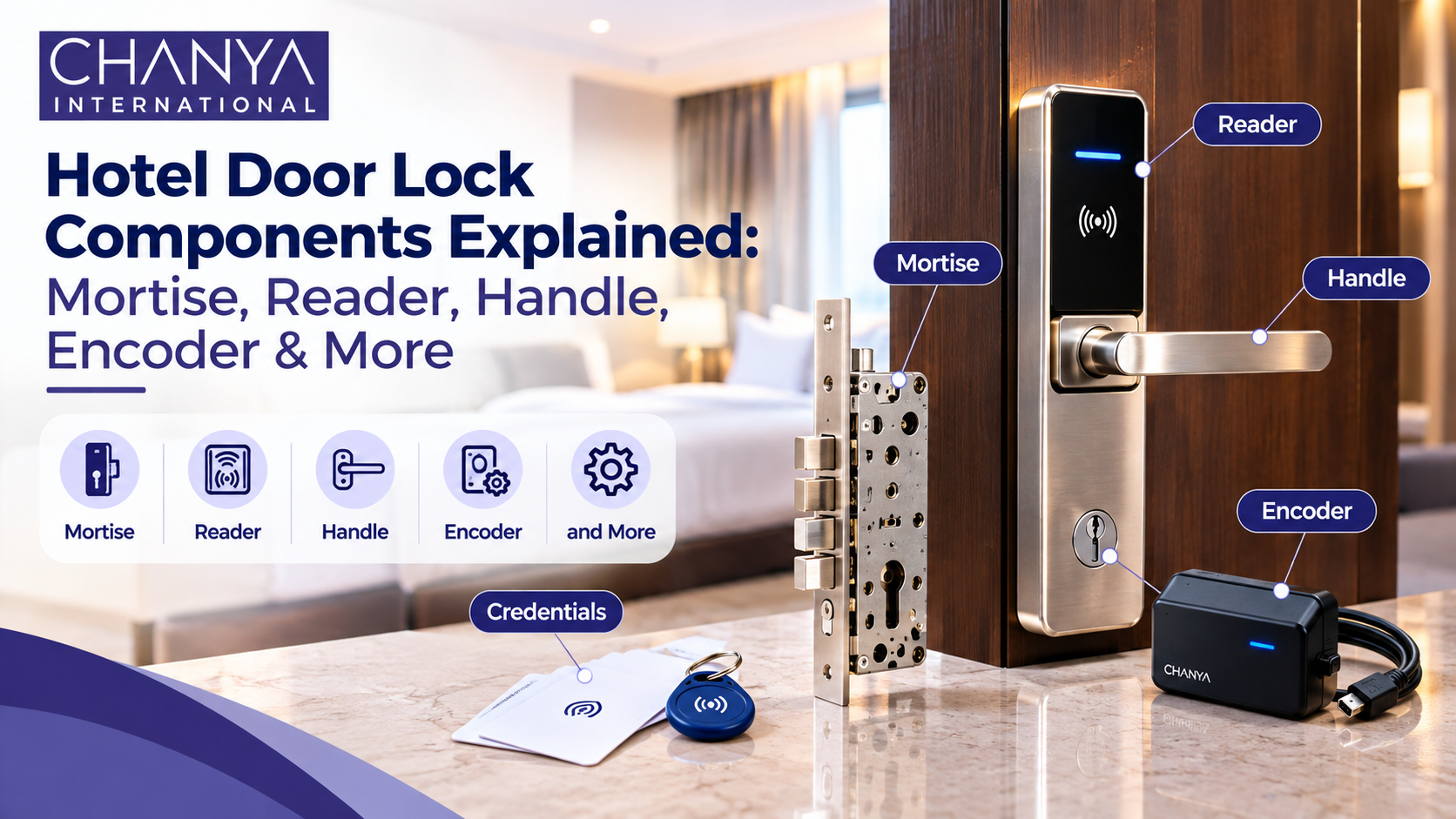
Picture two halves. The door has one. The front desk has the other. On the door you’ve got the mortise, which is the lock body: a metal case sunk into the edge of the door with the latch and deadbolt inside. Outside there’s a handle with the reader built in, which is where the guest taps. Inside, a plain handle, because nobody needs a card to walk out. The frame carries a strike plate for the latch. Then there’s a mechanical override for emergencies and a battery compartment inside the room.
The front desk side has far fewer parts: an encoder, some software and, in a lot of hotels, a link to the property management system (PMS). More on all that later. None of it is exotic. The trouble is that every piece has to suit the others, and hotels lean on mortise locks over the tubular kind on a house door because the case is bigger and sturdier. Hotel room door locks get opened and shut all day, so we’ll begin at the door.
How Does the Mortise, Handle and Reader Work Together?
Lock Body or Mortise
The lock body is the steel case that does the actual locking. In hotels it’s almost always a mortise lock, named after the mortise, a deep slot cut into the door edge that the case slides into.
Inside sit the latch, which holds the door shut and pulls back when you turn the handle, and the deadbolt, the heavier bolt a guest throws from inside. On an electronic lock there’s also a small motor that links the handle to the latch only after the reader accepts a card. Doors get used all day, so look for a solid commercial case, and measure first, because thickness and case size (ANSI or European) vary.
Exterior and Interior Handles
Outside, the guest taps and presses the lever. Levers beat knobs. Try twisting a knob with a suitcase in your other hand. Inside, one turn pulls back the latch and deadbolt together so people can leave fast, which is exactly what you want in a fire.
Finish matters more than people expect. Luggage trolleys and cleaning sprays strip thin plating pretty quickly, and solid stainless steel holds up better. Still choosing between lock types? Have a look at our piece on choosing the right hotel lock for your property.
RFID Reader and Credential Access
Tap a card and the reader behind the outside plate reads the chip, then the circuit board asks three quick questions: right room, right date, right time? A yes frees the handle. Most hotel locks read Mifare cards at 13.56 MHz. Older magnetic stripe cards got wiped by phone magnets all the time, so RFID took over. What you care about is reliability. A reader that misses a tap now and then means a guest back at reception. Ask about read range.
And phones? Apple Wallet has supported hotel keys since 2021, yet a February 2026 comparison from a key card maker found around 70% of guests with the hotel app still picked up a plastic card. Phone keys are coming. Card readers aren’t going anywhere.
What Are the Strike Plate, Mechanical Override and Battery Compartment Used For?
The strike plate is on the door frame. A few millimetres out and the latch won’t seat. On fire-rated doors, ask the door maker before changing the plate or frame. The mechanical override covers dead batteries and dead boards. Keep track of who holds the key.
Batteries are usually four AA cells, with a low-battery warning. Ask your hotel lock supplier whether settings and audit records survive a battery change. You don’t want to reprogram every door after a routine swap.
How Do Hotel Encoders, Lock Software and PMS Integration Work?
What Does a Hotel Card Encoder Do?
The encoder is a small unit next to the front desk computer. At check-in the receptionist keys in the room and dates, taps a blank card on it, and a second later the key is made. You can often put lift, gym or pool access on the same card. When the stay ends, the card dies by itself. Guest lost theirs? Make another. In many offline systems the lock learns the new card the first time it’s used and drops the old one. One thing to check: is the encoder in the quote, or an extra?
What Does Hotel Lock Software Manage?
The software holds the rules. Which room a card opens, and for which dates. Staff cards too, so housekeeping, engineering and managers each get a limited set of doors. A lost card? Cancel it, no need to touch the lock. Most locks also log recent openings, which is handy if a guest says something went missing. Ask your hotel door lock system supplier how many users the software allows and what reports you get.
When Does PMS Integration Matter?
The PMS is where bookings and billing live. Link the lock software to it and check-in details pass across on their own, and an early checkout can cancel the key. Do you need that? A 20-room guesthouse can encode by hand and be fine. At 150 rooms you’ll feel it every day. Check it works with your exact PMS before you buy.
How Do All Hotel Door Lock Components Work Together?
Front Desk → Encoder → Guest Credential → RFID Reader → Lock Electronics → Mortise → Door Access
Here’s the trip. The booking comes from the PMS or gets typed in. The encoder writes the card. The guest taps it, the reader passes it to the lock electronics, and if everything lines up the mortise lets go.
Most hotel locks run offline, so the card carries the instructions and the lock does its own checking. A network outage won’t strand anyone in the corridor. Wireless versions report back live and cancel cards remotely, but they need a gateway and a decent network, and they cost more per door. For costs, our guide to understanding hotel door lock pricing has the numbers.
Guest locked out? Usually a flat battery, a bent card or wrong dates on the card. The override gets the door open and engineering finds the cause. Keep a log of override use, and you’ll spot patterns early. A door that keeps needing it has a real fault. The real trouble is mismatched parts. A reader from one maker, a mortise from another, an encoder from a third. Each fine alone, none of them talking to each other. Maybe the encoder writes a card format the lock can’t read. Nobody notices until check-in day, which is the worst time to find out. That’s the 11 pm problem again, and it’s why buying the lot as one system makes sense. A good supplier will go through this before quoting.
What Should Hotels Check Before Buying a Complete Door Lock System?
Most hotels ask these questions after the quote is signed, which is late, and changes cost money. Ask before. Watch out for extras as well. Encoders, software and blank cards are the usual surprises. A spec sheet tells you what a lock can do, not whether it will suit your hotel, so keep our hotel door lock buying checklist handy while you compare quotes. Put the same ten questions to every supplier, and get the answers in writing:
- Does it fit our doors? Check thickness, handing and fire rating, and measure on a few floors.
- Which card technology does it use, and can it read phones later?
- Is the mortise built for heavy hotel use? Ask about the case, deadbolt and cycle testing.
- How is emergency access handled, and who holds the override keys?
- What batteries does it use, and how long do they last at our traffic?
- Is the encoder included? What do blank cards cost?
- Which software comes with it, how many users, which reports?
- Do we need PMS integration, and which interface does the system use?
- Who installs it, and what support and spare parts do we get?
- Can one supplier give us everything?
One company for locks, encoders, software and support means one phone call when something breaks. Chanya Enterprises can go through any of this for your property. Bring your door thickness, room count, PMS name and a few photos of the door frames. And if you already buy from hospitality items suppliers, ask them first.
Other Blog You May like
October 9, 2026
Hotel Door Lock Components Explained: Mortise, Reader, Handle, Encoder & More
Ask any front office manager about their worst nights and...
Read More
October 1, 2026
Housekeeping Trolley Price in India: What Affects the Cost
Every housekeeping manager has had this conversation at some point,...
Read More
September 24, 2026
Hotel Door Lock vs Smart Lock: What’s the Difference?
At first glance, a hotel door lock and a smart...
Read More
September 17, 2026
Electric Kettle with Tray Set for Hotels: A Buying Guide for Guestrooms
Every guestroom checklist has a kettle tray set on it,...
Read More
September 10, 2026
How to Choose the Right Absorption Minibar for Hotels?
Every general manager who's replaced a batch of minibars has...
Read More
September 3, 2026
Energy Saving Switch Price in India: What Affects the Cost
Electricity alone can account for one of the largest operating...
Read More
August 27, 2026
Housekeeping Trolley for Hotels: Types, Sizes and How to Choose One
You can tell a lot about a hotel by looking...
Read More
August 18, 2026
How Hotel Chains Choose a Door Lock Supplier for Multi-Property Rollouts
Buying locks for one hotel is a fairly contained decision....
Read More
August 12, 2026
Hotel Door Lock Buying Checklist: 10 Questions to Ask Before You Order
Most hotel owners don't think much about door locks until...
Read More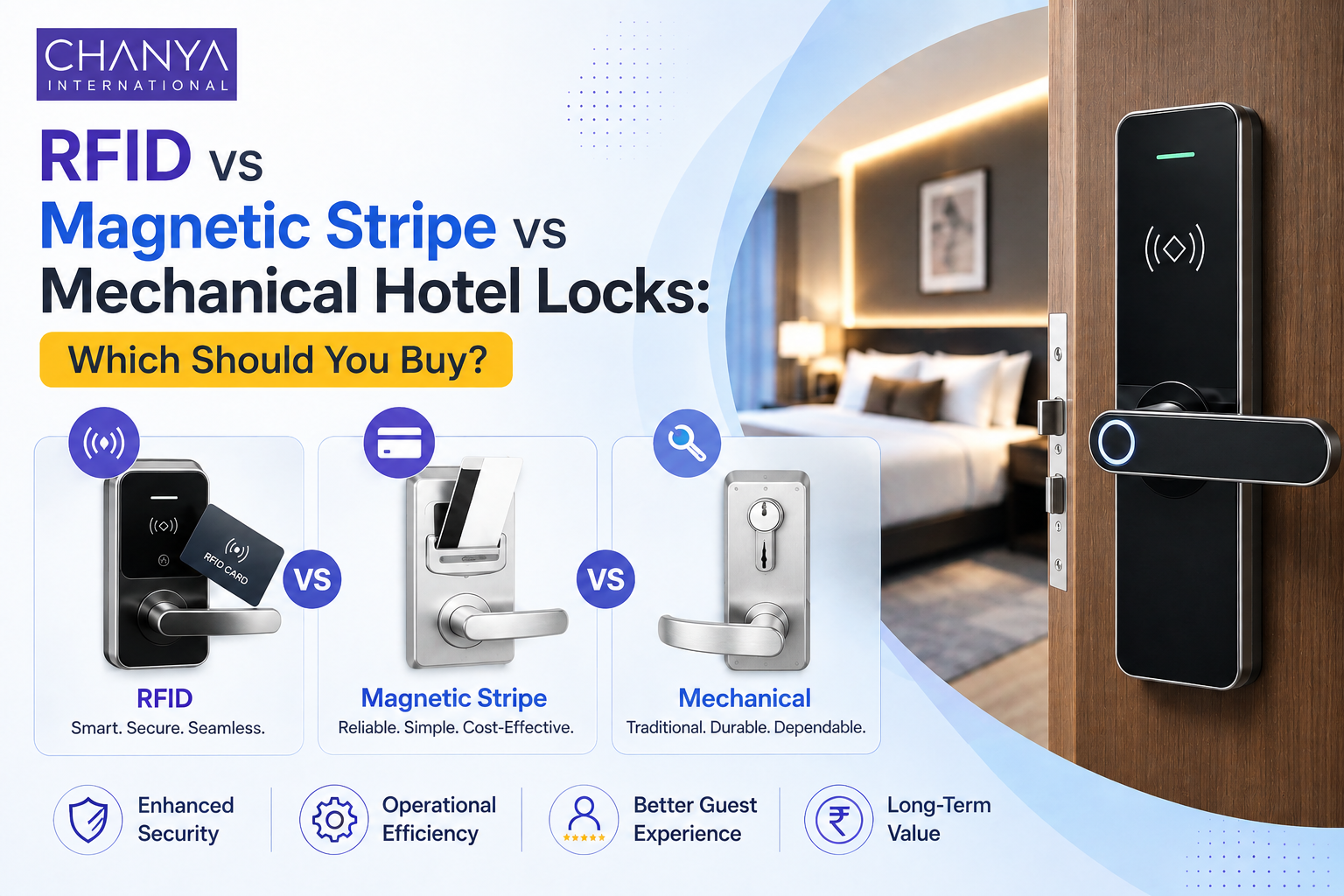
August 3, 2026
RFID vs Magnetic Stripe vs Mechanical Hotel Locks: Which Should You Buy?
Walk into ten different hotels and you'll probably come across...
Read More
July 28, 2026
Hotel Door Lock Price Guide: Costs, Types and Key Features
If you are preparing for the security upgrade of your...
Read More
January 28, 2026
Hotel Safe Usage: Essential Do’s and Don’ts
When a guest walks into their room, the first thing...
Read More
December 22, 2025
10 Best Hotel Door Lock Systems in 2026
Why 2026 Is a Turning Point for Hotel Security Hotel...
Read More
December 5, 2025
Choosing the Right Hotel Door Lock System
Did you know that guest anxiety about security decreases a...
Read More
August 19, 2025
Hotel Room Phones: Small Device, Big Impact on Guest Satisfaction
When you enter a contemporary hotel room, your attention immediately...
Read More
August 1, 2025
Why More Hotels Are Switching to Absorption Minibars?
When guests enter a hotel room, they have much to...
Read More
July 18, 2025
Enhance Guest Stay with Quality Bathroom Supplies
When one enters a hotel room, the bathroom is often...
Read More
June 20, 2025
Is Your Hotel Ready for Today’s Security Challenges?
Hotel security has come a long way past the key...
Read More
June 13, 2025
Eco-Friendly Hospitality: Mindful Choices for Tomorrow
Nowadays, sustainability is not something to be thought of afterwards,...
Read More
May 22, 2025
5 Tips to Choose the Right Hotel Supplier Partner
Running a hotel is all about constantly trying to make...
Read More
May 13, 2025
7 Creative Hotel Design Tips to Delight Guests This Holiday Season
Summer break is the ideal time for travellers to unwind,...
Read More
April 23, 2025
Boost Your Hotel Occupancy: Budget-Friendly Strategies That Work
In the hotel business, occupancy rates define a hotel’s reputation...
Read More
April 8, 2025
Top Benefits of Installing Digital Doorbells in Hotels
The hotel industry has witnessed very quick changes, taking guest...
Read More
March 26, 2025
How to Elevate Your Hotel Room Service Experience in 2025
In 2025, the room service experience is more important to...
Read More
March 7, 2025
Top Emerging Hospitality Industry Trends : What You Need to Know in 2025
Change is the only constant in this constantly changing hospitality...
Read More
February 7, 2025
Key Features to Look for in a Hotel Safe
Guest security is a key aspect of any hotel’s success...
Read More
January 27, 2025
5 Simple Ways to Make Your Hotel Reception Area Irresistibly Inviting
The first issue a guest sees while entering your lodge...
Read More
December 27, 2024
Innovative Laundry Solutions for Modern Hotels
Laundry is one of the most important yet underrated areas...
Read More
December 12, 2024
How Digital Door Bell Systems Improve Guest Satisfaction
Convenience and security are the buzzwords in today's fast-moving world,...
Read More
November 28, 2024
Hotel Amenities That Will Make Your Guests Feel Like Royalty
Every visitor who walks through the doorways of your hotel...
Read More
November 5, 2024
Essential Safety Tips for Guests Using Hotel Safes
Hotel safes are now a standard feature, especially in the...
Read More
October 18, 2024
Top 5 Hotel Amenities Suppliers In India | List Of 2026
In the hospitality industry, delivering exceptional quality is not just...
Read More
September 26, 2024
What is a Hotel Energy Saving Switch and How Does it Work?
Today, hotels are facing a significant challenge: the operational costs...
Read More
September 12, 2024
Top 6 Hotel Security Devices To Keep Your Guests Safe
Within the hospitality industry, hotels are greater than simply locations...
Read More
August 13, 2024
Guide On How To Enhance Guest Experience in Hotels?
Creating a memorable guest experience is no longer a luxury;...
Read More
August 5, 2024
Hotel Lobby Signage Items – Types And Their Importance
Imagine creating a hotel experience that delights guests and keeps...
Read More
July 24, 2024
Easy Upgrades for Your Hotel in 2026
Ensuring your hotel remains vibrant and appealing is essential for...
Read More
April 3, 2024
10 Must-Have Hotel Supplies for Guest Satisfaction in 2026
Ensuring your hotel guests are happy is crucial for your...
Read More
April 3, 2024
The Importance of Quality Housekeeping Supplies
In the hotel industry, providing excellent service to guests is...
Read More
April 3, 2024
Trends in Lobby Design and Products for 2024
Thinking about upgrading your hotel lobby? It's important to make...
Read More
December 26, 2023
The International Food & Hospitality Fair
Lorem Ipsum is simply dummy text of the printing and typesetting...
Read More
December 26, 2023
The International Food & Hospitality Fair
Lorem Ipsum is simply dummy text of the printing and...
Read More
December 26, 2023
The International Food & Hospitality Fair
Lorem Ipsum is simply dummy text of the printing and...
Read More
December 25, 2023
The International Food & Hospitality Fair
Lorem Ipsum is simply dummy text of the printing and...
Read More
December 25, 2023
The International Food & Hospitality Fair
Lorem Ipsum is simply dummy text of the printing and...
Read More
December 25, 2023
The International Food & Hospitality Fair
Lorem Ipsum is simply dummy text of the printing and...
Read More