

August 18, 2026
How Hotel Chains Choose a Door Lock Supplier for Multi-Property Rollouts
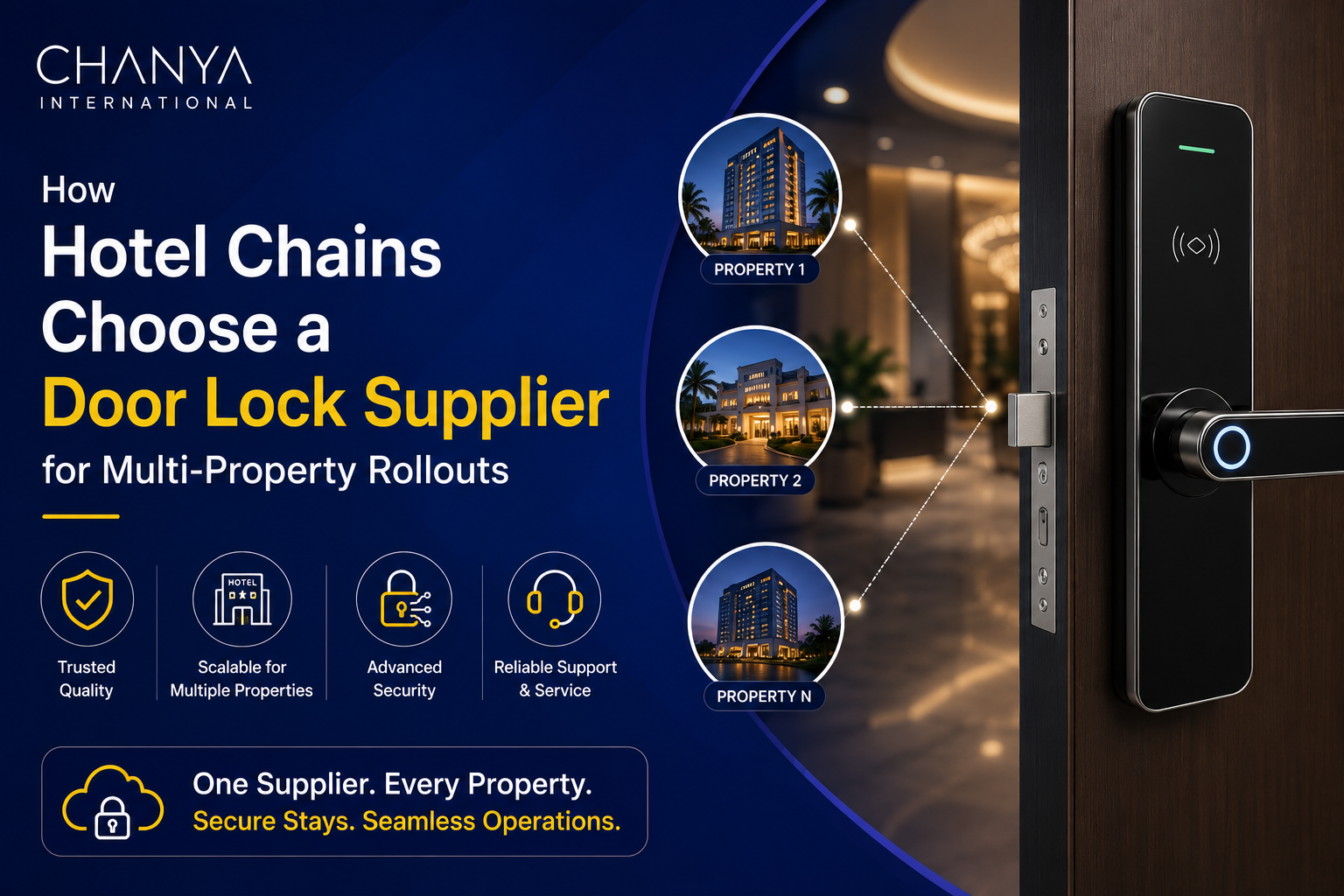
Buying locks for one hotel is a fairly contained decision. Buying them for fifteen properties spread across six states is a different exercise altogether, and it rarely goes the same way twice. The stakes are higher too. Pick the wrong hotel lock supplier for hotel chains at this scale, and you’re not just dealing with one property’s complaints, you’re managing a support headache across an entire portfolio for years.
This is a conversation we have often with operations teams and procurement heads who are past the single-property stage. Here’s how that decision usually gets made in practice, as of August 2026, and what tends to separate a rollout that goes smoothly from one that drags on for a year.
Standardizing Lock Technology Across Properties
The first real question isn’t which brand to pick. It’s whether to standardize at all, and how far to take it.
Balancing Consistency With Property-Specific Needs
A chain with a mix of airport business hotels and leisure resorts often has genuinely different guest needs property to property. Business travelers move fast and want mobile key or tap access without a stop at the front desk. Leisure guests are usually fine with a card, and some resort properties even prefer the physical ritual of it. Full uniformity across every property sounds neat on paper, but it can force a compromise that doesn’t actually fit any single property well.
Choosing One Lock Type for the Whole Portfolio
That said, most chains do end up converging on one base technology, usually RFID, even if the finish or access method varies slightly by property tier. The reason is operational, not aesthetic. One core technology means one training program, one spare parts list, and one support relationship instead of five. If your portfolio is still split across mechanical, magnetic stripe, and RFID, our comparison of RFID vs magnetic vs mechanical hotel locks is a useful starting point for deciding what the new baseline should be before you start evaluating vendors.
Hotel chain door lock standardization doesn’t have to mean identical hardware everywhere on day one. Most chains treat it as a target to converge toward over two or three years, not a rule that has to apply retroactively to every existing property overnight.
Vendor Evaluation Criteria for Multi-Property Deals
Once the technology direction is settled, the vendor conversation looks nothing like it does for a single property. Scale changes what actually matters.
Manufacturing Capacity and Bulk Order Reliability
A hotel door lock system supplier who handles single-property orders comfortably can still struggle when a chain needs 2,000 locks delivered in batches across a rollout schedule. Ask directly about production capacity and typical lead times for large orders, not just their catalog turnaround for a small order. A vendor who quotes six weeks for 50 locks might quietly need six months for 2,000, and that gap only shows up if you ask the question upfront.
Local Support and Installation Across Locations
Hotel lock vendor selection at chain scale really comes down to one practical question, can this supplier actually service every city you operate in, or only the ones near their head office. A supplier with strong support in Delhi and Mumbai but no real presence in tier-2 cities creates an uneven experience across the portfolio, where some properties get same-day fixes and others wait a week for a technician to travel in.
Cost and ROI at Scale
Pricing conversations change shape once you’re buying for a portfolio instead of a property. This is usually where procurement and operations start negotiating together instead of separately.
Bulk Pricing and Volume Discounts
A bulk hotel door lock supplier will usually price in tiers, better rates past 500 units, better still past 1,500 or 2,000. It’s worth asking for pricing broken out by tier rather than one blended number, since that makes it easier to model what expanding the rollout to more properties later would actually cost. Our hotel door lock price guide covers what a full system costs per door if you need a baseline to compare bulk quotes against.
Long-Term Savings vs Per-Property Buying
Buying property by property as budgets free up feels safer in the short term, but it usually costs more overall. Every separate order resets you to a lower pricing tier, and a mixed fleet of lock generations means training and spare parts fragment right along with it. Chains that commit to a portfolio-wide order, even if delivery is staged, generally come out ahead on both price and long-term maintenance.
Integration and Compliance Across Properties
This is the part that gets rushed the most, usually because it’s less visible than hardware and pricing until something breaks.
PMS Integration for Multi-Property Chains
Most chains run a central property management system, or at least a small handful, across their properties. Confirm that the lock system can push and pull data at that scale, not just for one property’s worth of rooms. A system that works cleanly for a 60-room test site can behave very differently once it’s syncing across fifteen properties and a few thousand active cards at once.
Meeting Regional Security and Fire Codes
Fire and safety exit requirements don’t change property to property within India, but local enforcement and inspection practices sometimes do, and older buildings in different states can have different retrofit constraints. Every property still needs a lock that lets guests exit from inside with a single motion, no card or key required, regardless of how it’s locked from outside. Confirm this in writing for each property type in the portfolio rather than assuming compliance carries over automatically from your flagship location.
Rollout Planning and Implementation
Choosing the right hotel door lock manufacturers and supplier is only half the job. How the rollout actually happens decides whether the transition is smooth or chaotic.
Phased Rollout vs All-at-Once Installation
Very few chains install everywhere at once, and for good reason. A phased rollout, usually starting with one or two pilot properties, lets you catch integration issues, door compatibility surprises, and workflow gaps before they repeat across the whole portfolio. A full property typically takes two to four hours per door for installation, so even a mid-size hotel adds up to real downtime if it isn’t scheduled around occupancy.
Staff Training Across Multiple Properties
Training gets harder to standardize than the hardware does. Front desk teams, housekeeping, and maintenance all need slightly different training, and running it separately at every property multiplies the effort fast. Many chains ask their hospitality supplier to train a small group of property-level trainers centrally, who then train their own teams locally, rather than sending a trainer to every single site.
Multi-Property Lock Rollout FAQs
How do hotel chains negotiate bulk lock pricing?
Most negotiate in volume tiers, locking in better per-unit pricing as order size crosses set thresholds, often 500, 1,500, and 3,000 units. It also helps to negotiate the full package together, hardware, encoders, software licensing, and installation, rather than pricing each piece separately across different conversations.
Should every property in a chain use the same lock brand?
Not necessarily the same brand, but usually the same core technology. Some chains run one supplier across the whole portfolio for simplicity, while others allow regional variation as long as everything integrates with the same central PMS and support process.
How long does a multi-property lock rollout take?
For a mid-size chain with 10 to 15 properties, a full rollout typically runs six months to a year when phased properly, factoring in pilot testing, staggered installation, and training at each site. Rushing this timeline is usually where problems start showing up later.
What support should a supplier offer for chain-wide installs?
Look for a dedicated account contact rather than routing every property through general customer service, along with documented response times per city and a clear escalation path for issues that a local technician can’t resolve on the spot.
Can lock systems be phased in property by property?
Yes, and it’s the more common approach. Most chains start with one or two pilot properties, work out any integration or installation issues there, and then apply what they learned to a faster rollout across the remaining properties.
What happens if one property has different door types?
This comes up more often than chains expect, especially with older or acquired properties. A good supplier will survey non-standard doors separately and quote any frame or hardware adjustments upfront, rather than discovering the mismatch mid-installation once the rest of the portfolio is already underway.
Other Blog You May like
October 1, 2026
Housekeeping Trolley Price in India: What Affects the Cost
Every housekeeping manager has had this conversation at some point,...
Read More
September 24, 2026
Hotel Door Lock vs Smart Lock: What’s the Difference?
At first glance, a hotel door lock and a smart...
Read More
September 17, 2026
Electric Kettle with Tray Set for Hotels: A Buying Guide for Guestrooms
Every guestroom checklist has a kettle tray set on it,...
Read More
September 10, 2026
How to Choose the Right Absorption Minibar for Hotels?
Every general manager who's replaced a batch of minibars has...
Read More
September 3, 2026
Energy Saving Switch Price in India: What Affects the Cost
Electricity alone can account for one of the largest operating...
Read More
August 27, 2026
Housekeeping Trolley for Hotels: Types, Sizes and How to Choose One
You can tell a lot about a hotel by looking...
Read More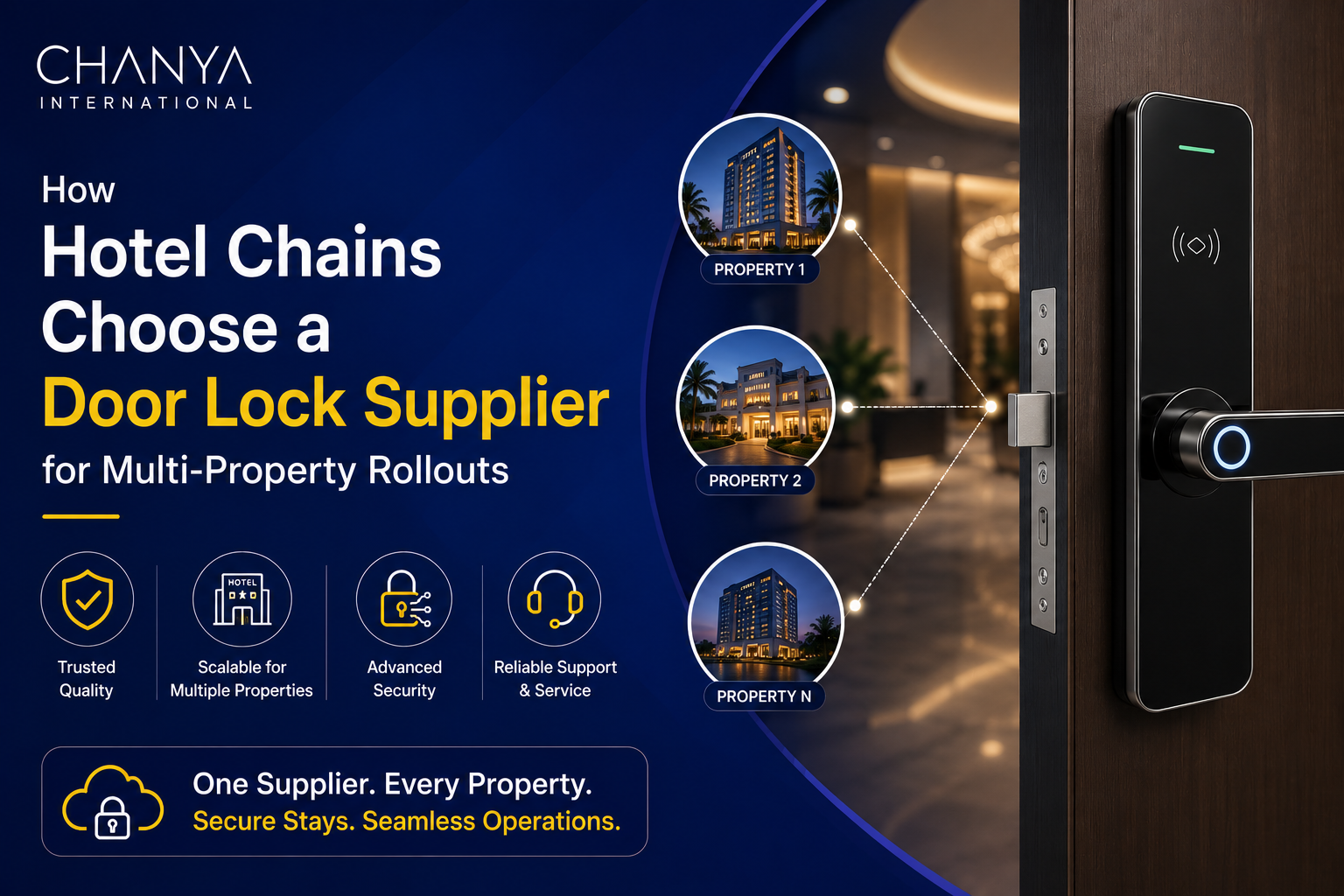
August 18, 2026
How Hotel Chains Choose a Door Lock Supplier for Multi-Property Rollouts
Buying locks for one hotel is a fairly contained decision....
Read More
August 12, 2026
Hotel Door Lock Buying Checklist: 10 Questions to Ask Before You Order
Most hotel owners don't think much about door locks until...
Read More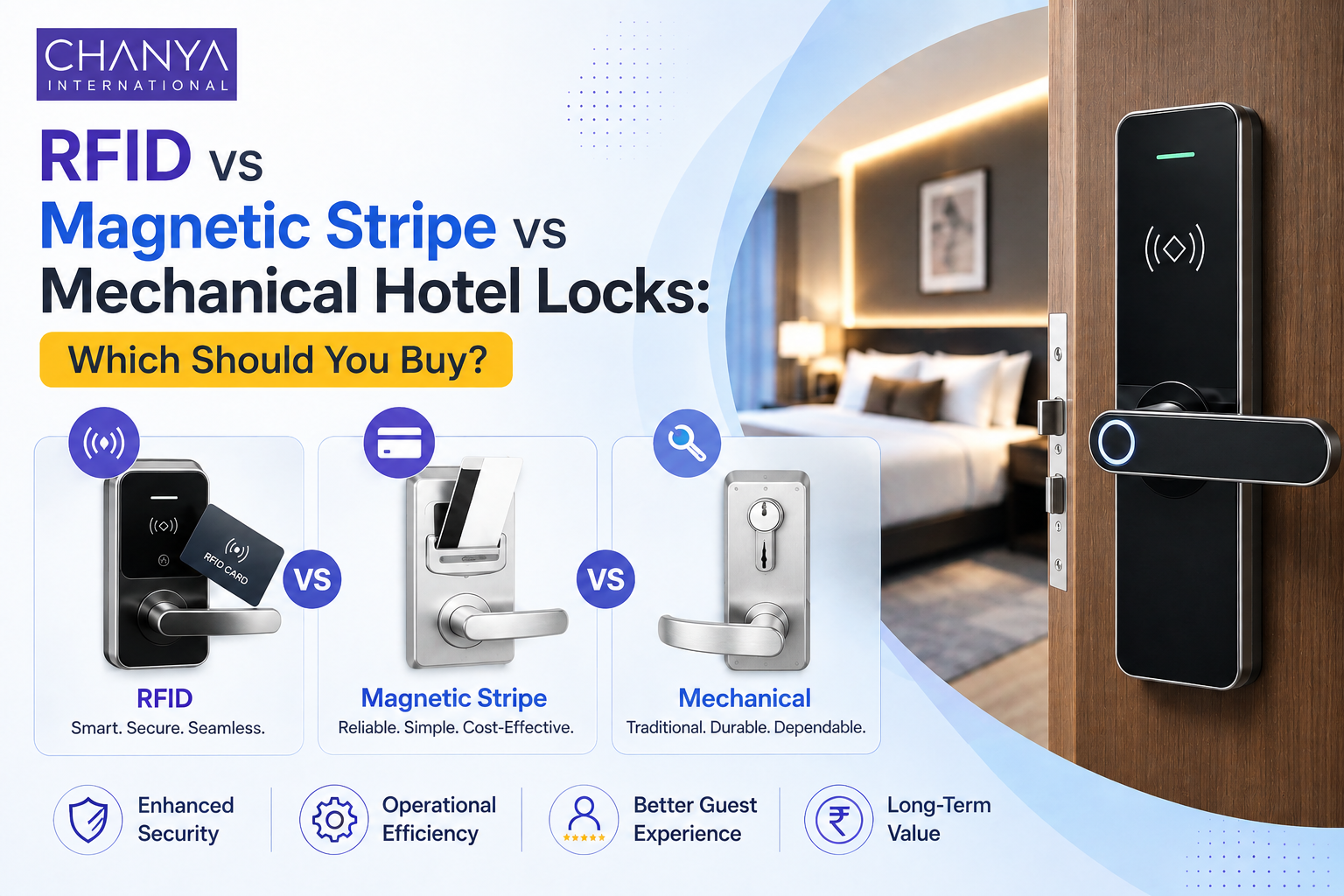
August 3, 2026
RFID vs Magnetic Stripe vs Mechanical Hotel Locks: Which Should You Buy?
Walk into ten different hotels and you'll probably come across...
Read More
July 28, 2026
Hotel Door Lock Price Guide: Costs, Types and Key Features
If you are preparing for the security upgrade of your...
Read More
January 28, 2026
Hotel Safe Usage: Essential Do’s and Don’ts
When a guest walks into their room, the first thing...
Read More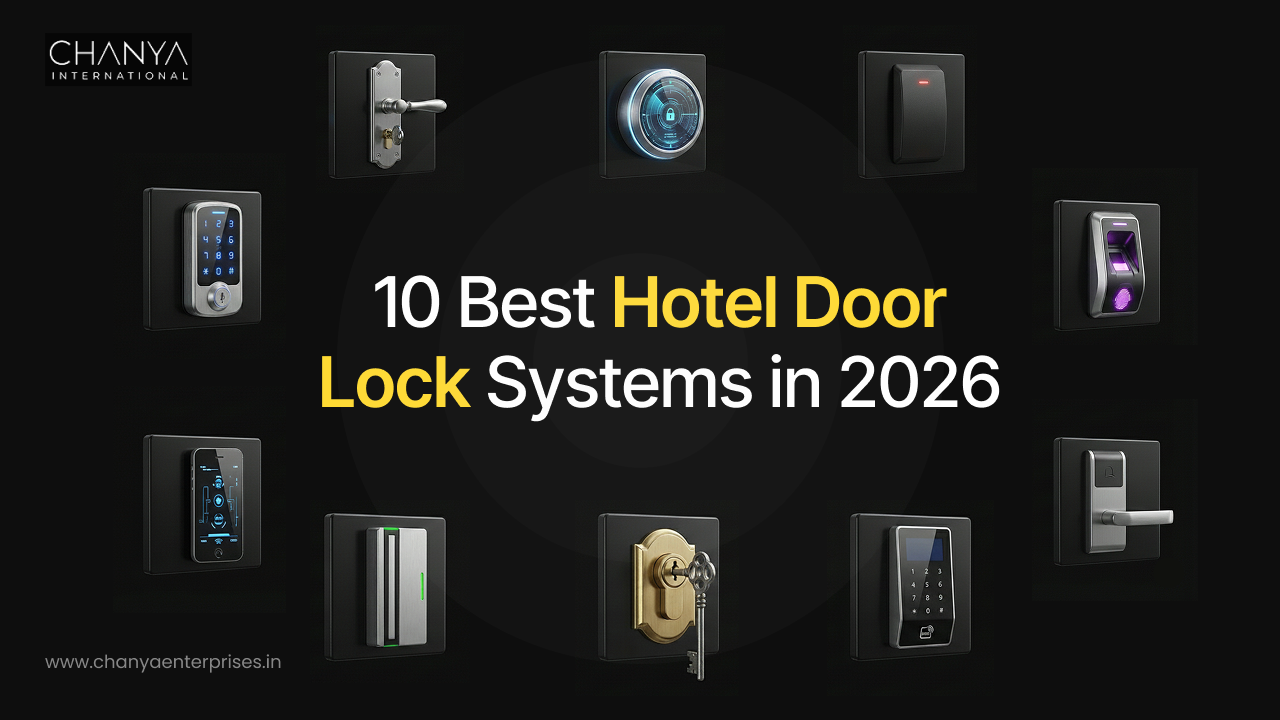
December 22, 2025
10 Best Hotel Door Lock Systems in 2026
Why 2026 Is a Turning Point for Hotel Security Hotel...
Read More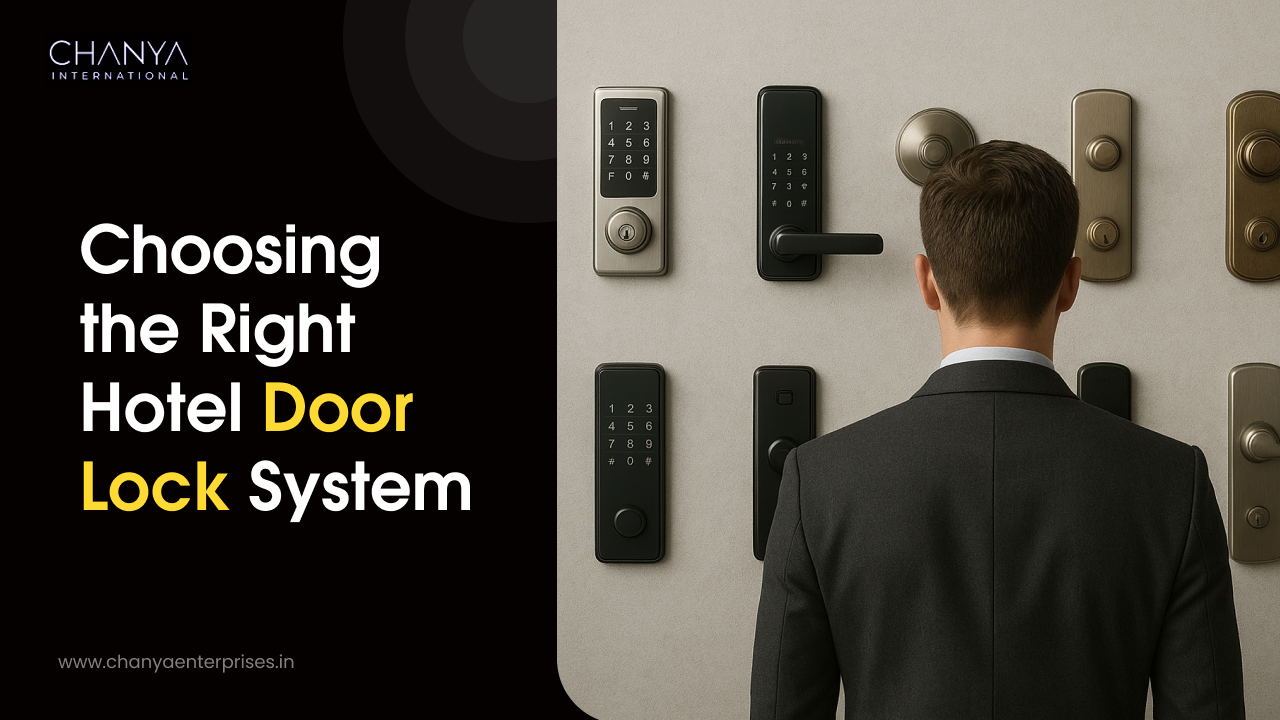
December 5, 2025
Choosing the Right Hotel Door Lock System
Did you know that guest anxiety about security decreases a...
Read More
August 19, 2025
Hotel Room Phones: Small Device, Big Impact on Guest Satisfaction
When you enter a contemporary hotel room, your attention immediately...
Read More
August 1, 2025
Why More Hotels Are Switching to Absorption Minibars?
When guests enter a hotel room, they have much to...
Read More
July 18, 2025
Enhance Guest Stay with Quality Bathroom Supplies
When one enters a hotel room, the bathroom is often...
Read More
June 20, 2025
Is Your Hotel Ready for Today’s Security Challenges?
Hotel security has come a long way past the key...
Read More
June 13, 2025
Eco-Friendly Hospitality: Mindful Choices for Tomorrow
Nowadays, sustainability is not something to be thought of afterwards,...
Read More
May 22, 2025
5 Tips to Choose the Right Hotel Supplier Partner
Running a hotel is all about constantly trying to make...
Read More
May 13, 2025
7 Creative Hotel Design Tips to Delight Guests This Holiday Season
Summer break is the ideal time for travellers to unwind,...
Read More
April 23, 2025
Boost Your Hotel Occupancy: Budget-Friendly Strategies That Work
In the hotel business, occupancy rates define a hotel’s reputation...
Read More
April 8, 2025
Top Benefits of Installing Digital Doorbells in Hotels
The hotel industry has witnessed very quick changes, taking guest...
Read More
March 26, 2025
How to Elevate Your Hotel Room Service Experience in 2025
In 2025, the room service experience is more important to...
Read More
March 7, 2025
Top Emerging Hospitality Industry Trends : What You Need to Know in 2025
Change is the only constant in this constantly changing hospitality...
Read More
February 7, 2025
Key Features to Look for in a Hotel Safe
Guest security is a key aspect of any hotel’s success...
Read More
January 27, 2025
5 Simple Ways to Make Your Hotel Reception Area Irresistibly Inviting
The first issue a guest sees while entering your lodge...
Read More
December 27, 2024
Innovative Laundry Solutions for Modern Hotels
Laundry is one of the most important yet underrated areas...
Read More
December 12, 2024
How Digital Door Bell Systems Improve Guest Satisfaction
Convenience and security are the buzzwords in today's fast-moving world,...
Read More
November 28, 2024
Hotel Amenities That Will Make Your Guests Feel Like Royalty
Every visitor who walks through the doorways of your hotel...
Read More
November 5, 2024
Essential Safety Tips for Guests Using Hotel Safes
Hotel safes are now a standard feature, especially in the...
Read More
October 18, 2024
Top 5 Hotel Amenities Suppliers In India | List Of 2026
In the hospitality industry, delivering exceptional quality is not just...
Read More
September 26, 2024
What is a Hotel Energy Saving Switch and How Does it Work?
Today, hotels are facing a significant challenge: the operational costs...
Read More
September 12, 2024
Top 6 Hotel Security Devices To Keep Your Guests Safe
Within the hospitality industry, hotels are greater than simply locations...
Read More
August 13, 2024
Guide On How To Enhance Guest Experience in Hotels?
Creating a memorable guest experience is no longer a luxury;...
Read More
August 5, 2024
Hotel Lobby Signage Items – Types And Their Importance
Imagine creating a hotel experience that delights guests and keeps...
Read More
July 24, 2024
Easy Upgrades for Your Hotel in 2026
Ensuring your hotel remains vibrant and appealing is essential for...
Read More
April 3, 2024
10 Must-Have Hotel Supplies for Guest Satisfaction in 2026
Ensuring your hotel guests are happy is crucial for your...
Read More
April 3, 2024
The Importance of Quality Housekeeping Supplies
In the hotel industry, providing excellent service to guests is...
Read More
April 3, 2024
Trends in Lobby Design and Products for 2024
Thinking about upgrading your hotel lobby? It's important to make...
Read More
December 26, 2023
The International Food & Hospitality Fair
Lorem Ipsum is simply dummy text of the printing and typesetting...
Read More
December 26, 2023
The International Food & Hospitality Fair
Lorem Ipsum is simply dummy text of the printing and...
Read More
December 26, 2023
The International Food & Hospitality Fair
Lorem Ipsum is simply dummy text of the printing and...
Read More
December 25, 2023
The International Food & Hospitality Fair
Lorem Ipsum is simply dummy text of the printing and...
Read More
December 25, 2023
The International Food & Hospitality Fair
Lorem Ipsum is simply dummy text of the printing and...
Read More
December 25, 2023
The International Food & Hospitality Fair
Lorem Ipsum is simply dummy text of the printing and...
Read More