

August 3, 2026
RFID vs Magnetic Stripe vs Mechanical Hotel Locks: Which Should You Buy?
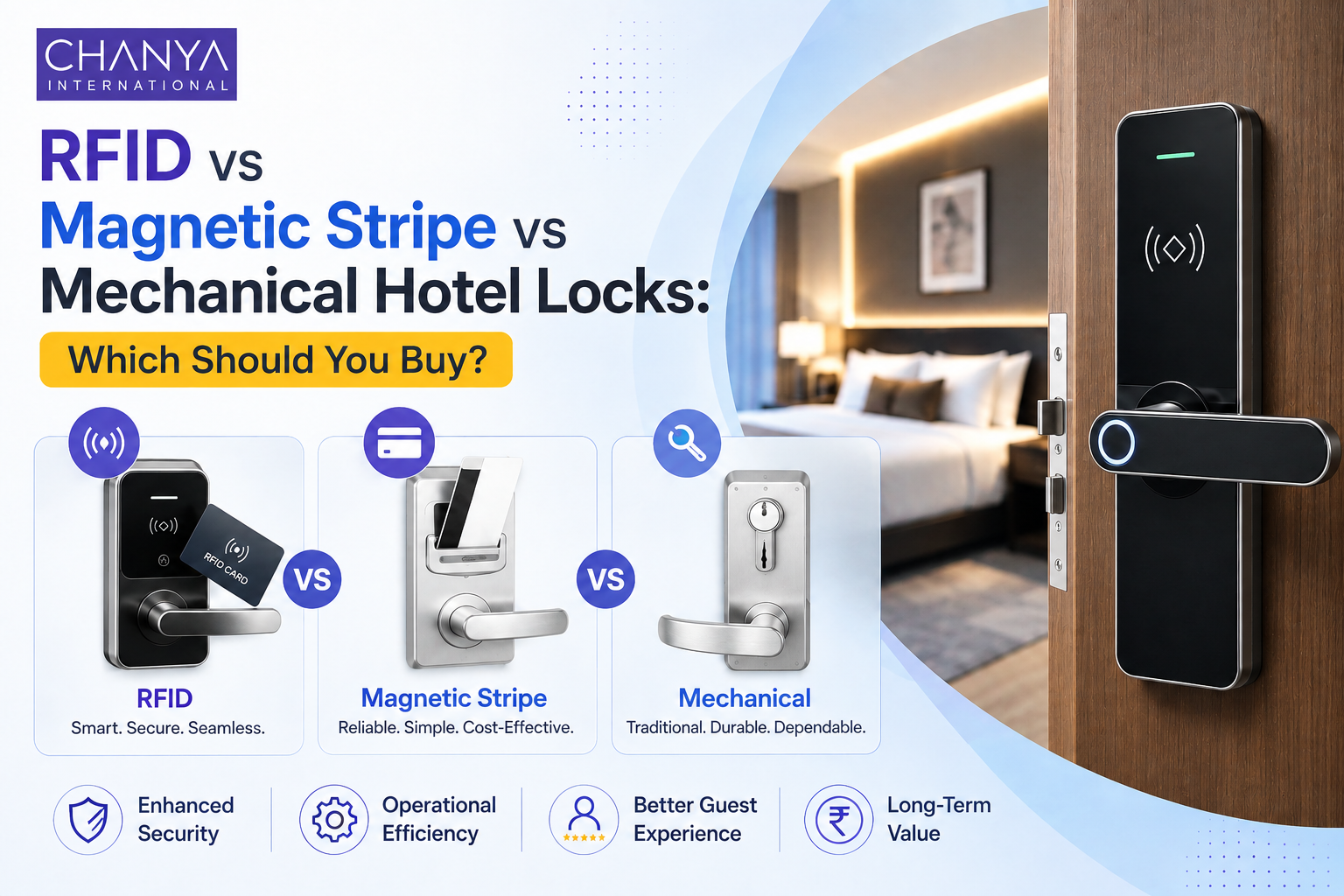
Walk into ten different hotels and you’ll probably come across three or four different kinds of door locks. Some properties still hand out a metal key at the front desk. Others swipe a card. Most newer builds just ask you to tap. None of this is random. Each of these hotel door lock types exists because it solves a different problem at a different price point, and picking the wrong one can cost a property far more than the lock itself.
In my conversations with hotel owners, this issue often gets raised, especially smaller and mid-size properties that opt to renovate instead of constructing a completely new facility. We should then consider what mechanical, magnetic stripe, and RFID lock the situations in which each one can still be used, and how you can make the right choice without ending up regretting it a year later.
The Three Main Hotel Door Lock Types
It’s better to be well aware of the choices before you go into comparing them. Mechanical lock is a traditional key lock that doesn’t rely on batteries, doesn’t need a card, and doesn’t run on software. Magnetic stripe lock is a system that recognizes a data-encoded strip on a plastic card, which is what hotels have been employing since the 80s. RFID lock operates by detecting a microchip incorporated in a card or fob via radio waves, and it underpins most of the hotel lock systems currently labelled keyless, including bluetooth and app-based ones which build on top. The hospitality locks segment worldwide has witnessed a strong swing towards RFID and app-based access since last few years.
The mix of hotel door lock types India properties actually install mirrors that shift too, just running a couple of years behind in the budget and mid-scale segments, where mechanical and magnetic stripe locks still hang around longer than they do in bigger international chains.
Mechanical Hotel Locks: Still Around, Just Not Growing
Mechanical locks aren’t going away completely. Small guesthouses, homestays, and back-of-house doors still use them because they’re cheap, need no batteries, and never lock a guest out over a dead power source.
The problems show up as a property grows. There’s no audit trail, so if something goes missing from a room, there’s no record of who entered and when. Lost keys mean re-keying the whole lock, sometimes the whole floor if keys were cut from a master. And guests lose physical keys constantly, which turns into a recurring cost most owners underestimate until they’ve tracked it for a season.
Magnetic Stripe Locks: The Middle Ground That’s Fading Out
Magnetic stripe locks were the default for decades, and a lot of older properties in India still run on them. They’re cheaper than RFID hardware and don’t need a mechanical key duplicated for every room.
But the cards themselves are the weak point. They demagnetize when kept near a phone, another card, or even a strong magnet in a handbag, which means front desk staff end up re-encoding cards constantly. The strip itself is also easier to clone than an RFID chip, and most manufacturers have quietly stopped investing in new magstripe hardware because the industry has moved on. If you’re building new or doing a full renovation, this isn’t the technology to bet on.
RFID and Card Door Lock Systems for Hotels
A card door lock system for hotels built on RFID is what most 3-star and above properties are installing today, and for good reason. The card or fob doesn’t touch the reader, so there’s less wear on both. Access data gets encrypted on chips like Mifare DESFire, which makes cloning far harder than with a magstripe card. Every entry gets logged, so if a guest reports something missing, staff can check exactly who opened that door and when.
A key card door lock for hotels also plugs into the property management system, so front desk staff can issue, cancel, or extend a card’s access in seconds instead of manually resetting a lock. That’s a real time saver during a busy check-in rush. Many RFID systems now support a Bluetooth layer too, turning them into a full keyless hotel lock setup where guests unlock the door from a phone app instead of carrying a card at all. You can read more about how this plays out for guest safety in our piece on rfid locks for hotels.
Quick Comparison: RFID vs Magnetic Stripe vs Mechanical
| Feature | Mechanical | Magnetic Stripe | RFID |
| Upfront cost | Lowest | Low to mid | Mid to high |
| Audit trail | None | Basic | Detailed, PMS-linked |
| Card durability | No card needed | Wears out, demagnetizes | Durable, contactless |
| Cloning risk | Key can be copied | Higher | Low, encrypted |
| Guest experience | Manual, no reissue | Swipe, occasional fails | Tap or app, fast reissue |
| Battery dependent | No | Yes | Yes, with mechanical override |
| Best fit | Homestays, back-of-house | Older properties, tight budgets | Mid-scale to luxury hotels |
Which Hotel Door Lock Type Fits Your Property
There’s no single right answer, it depends on the property.
Budget guesthouses and small homestays with under 15 to 20 rooms often don’t need the added cost of electronics at all. A solid mechanical lock combined with sound front desk procedures serve the purpose. For mid-scale hotels operating on a legacy magstripe system, a phased RFID replacement offering may be more economical than a one off complete overnight lock replacement starting from the “hot” end of the hotel. For anything 3-star and above, RFID has become more of a tick-for-the-guest feature than a nice to have.
People now want to be able to stroll right in, hand over, press a button! Developing a hotel door lock system based on RFID is also much more flexible when the time comes to develop mobile check-in, and replace the hardware yet again. If you’d like a detailed guide on how to reverse engineer this kind of system around an entire property, check out our step-by-step guide on hotel room door locks System.
Choosing the Right Hotel Door Lock Manufacturers and Suppliers
After you’ve chosen a type of lock, the manufacturer becomes almost as important as the technology. Not all hotel door lock manufacturers produce to the same level, and cheaper hardware often equates to less long battery life, poor encryption or hard-to-find parts a couple of years down the line.
Find hotel door lock system suppliers who can demonstrate an operational site, rather than simply providing specifications. Ensure they have direct local after-sales support, and not simplysend warranty claims back to an offshore head office.
Inquire about the availability of spare parts. Locks that cannot be repaired are often replaced long before they should be. This is an unrecognized contributor to undermining even the lowest-priced purchases.
FAQs
Is RFID Better Than Magnetic Stripe for Hotels?
For most properties, yes. RFID cards don’t demagnetize, they’re harder to clone, and they log every entry, which magnetic stripe systems generally don’t do well. The only real advantage magstripe holds onto is a lower hardware price, and even that gap is narrowing as RFID components become cheaper to manufacture.
How Durable is a Hotel Door Lock?
A properly cared for electronic lock (password programmed magstripe or RFID) generally should last 7 – 10 years before replacing. Electronic locks will have a shorter life on their hardware side than mechanical but the need to change out the lock every time the lock is lost causes re-keying a lock more often. The battery pack’s generally last 12 – 18 months according to traffic.
Can You Upgrade Mechanical Locks to Keyless Hotel Locks?
Yes, and it is a frequent upgrade. Many RFID and keyless hotel locks are designed to match standard door prep; this means in many cases we can simply replace the lock body and strike plate, leaving the existing door intact. All the same, it is best to have the supplier survey the doors before installation, as older properties often have non-standard door thickness.
Do RFID Locks Work During a Power Outage?
Yes. RFID hotel locks run on internal batteries, not mains power, so a blackout doesn’t lock guests out. Most units also include a mechanical key override for staff in case the battery dies entirely, and some higher-end models have a USB port that lets staff jump-start the lock with a power bank in an emergency.
How Much Does It Cost to Switch to RFID Hotel Locks?
Costs vary by brand and features, but hardware alone typically runs a few thousand rupees per door, with additional costs for an encoder, management software, and installation. Most hotels find it more manageable to phase the switch over a few months rather than replacing every lock in one go, which also spreads out the cost.
Other Blog You May like
September 17, 2026
Electric Kettle with Tray Set for Hotels: A Buying Guide for Guestrooms
Every guestroom checklist has a kettle tray set on it,...
Read More
September 10, 2026
How to Choose the Right Absorption Minibar for Hotels?
Every general manager who's replaced a batch of minibars has...
Read More
September 3, 2026
Energy Saving Switch Price in India: What Affects the Cost
Electricity alone can account for one of the largest operating...
Read More
August 27, 2026
Housekeeping Trolley for Hotels: Types, Sizes and How to Choose One
You can tell a lot about a hotel by looking...
Read More
August 18, 2026
How Hotel Chains Choose a Door Lock Supplier for Multi-Property Rollouts
Buying locks for one hotel is a fairly contained decision....
Read More
August 12, 2026
Hotel Door Lock Buying Checklist: 10 Questions to Ask Before You Order
Most hotel owners don't think much about door locks until...
Read More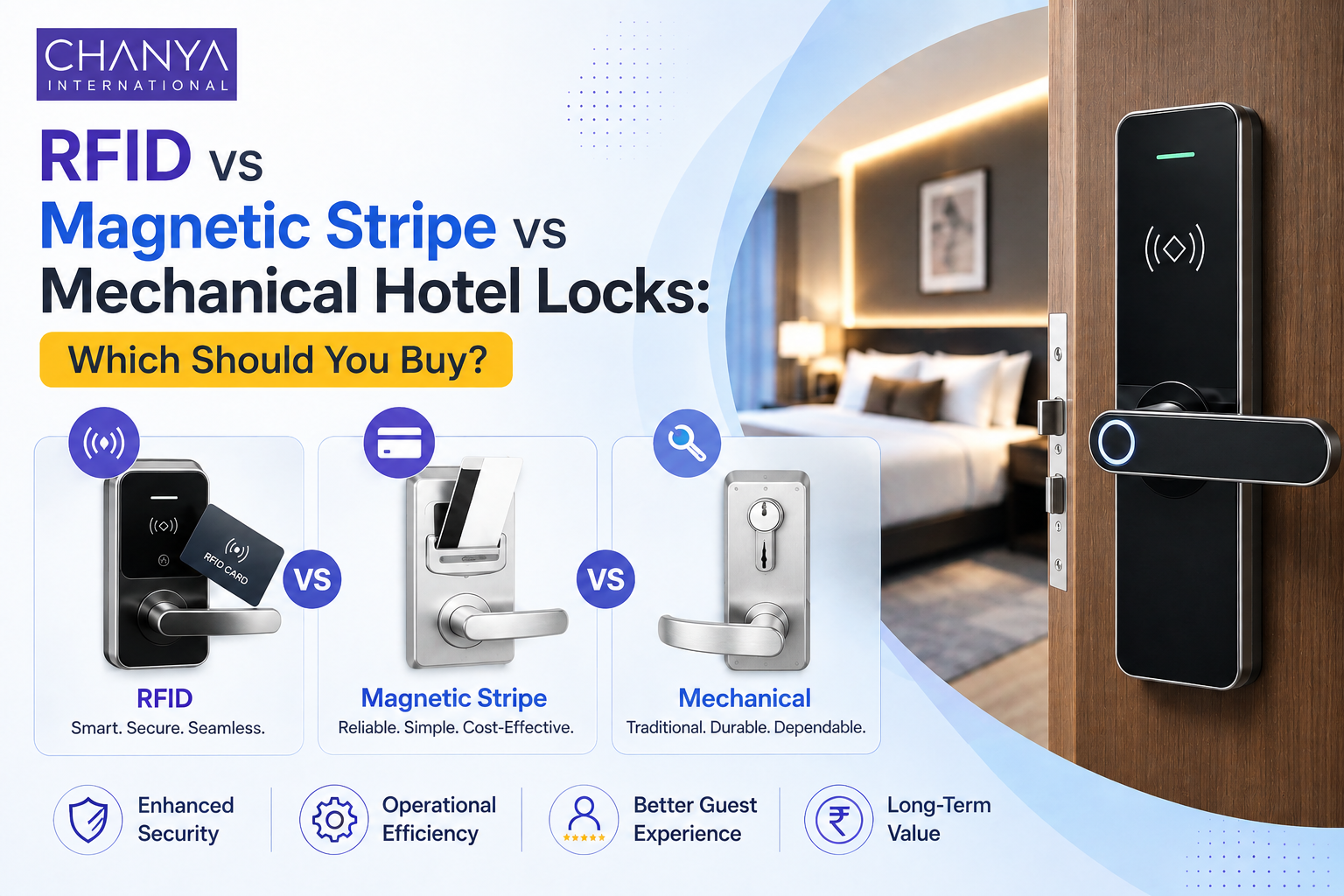
August 3, 2026
RFID vs Magnetic Stripe vs Mechanical Hotel Locks: Which Should You Buy?
Walk into ten different hotels and you'll probably come across...
Read More
July 28, 2026
Hotel Door Lock Price Guide: Costs, Types and Key Features
If you are preparing for the security upgrade of your...
Read More
January 28, 2026
Hotel Safe Usage: Essential Do’s and Don’ts
When a guest walks into their room, the first thing...
Read More
December 22, 2025
10 Best Hotel Door Lock Systems in 2026
Why 2026 Is a Turning Point for Hotel Security Hotel...
Read More
December 5, 2025
Choosing the Right Hotel Door Lock System
Did you know that guest anxiety about security decreases a...
Read More
August 19, 2025
Hotel Room Phones: Small Device, Big Impact on Guest Satisfaction
When you enter a contemporary hotel room, your attention immediately...
Read More
August 1, 2025
Why More Hotels Are Switching to Absorption Minibars?
When guests enter a hotel room, they have much to...
Read More
July 18, 2025
Enhance Guest Stay with Quality Bathroom Supplies
When one enters a hotel room, the bathroom is often...
Read More
June 20, 2025
Is Your Hotel Ready for Today’s Security Challenges?
Hotel security has come a long way past the key...
Read More
June 13, 2025
Eco-Friendly Hospitality: Mindful Choices for Tomorrow
Nowadays, sustainability is not something to be thought of afterwards,...
Read More
May 22, 2025
5 Tips to Choose the Right Hotel Supplier Partner
Running a hotel is all about constantly trying to make...
Read More
May 13, 2025
7 Creative Hotel Design Tips to Delight Guests This Holiday Season
Summer break is the ideal time for travellers to unwind,...
Read More
April 23, 2025
Boost Your Hotel Occupancy: Budget-Friendly Strategies That Work
In the hotel business, occupancy rates define a hotel’s reputation...
Read More
April 8, 2025
Top Benefits of Installing Digital Doorbells in Hotels
The hotel industry has witnessed very quick changes, taking guest...
Read More
March 26, 2025
How to Elevate Your Hotel Room Service Experience in 2025
In 2025, the room service experience is more important to...
Read More
March 7, 2025
Top Emerging Hospitality Industry Trends : What You Need to Know in 2025
Change is the only constant in this constantly changing hospitality...
Read More
February 7, 2025
Key Features to Look for in a Hotel Safe
Guest security is a key aspect of any hotel’s success...
Read More
January 27, 2025
5 Simple Ways to Make Your Hotel Reception Area Irresistibly Inviting
The first issue a guest sees while entering your lodge...
Read More
December 27, 2024
Innovative Laundry Solutions for Modern Hotels
Laundry is one of the most important yet underrated areas...
Read More
December 12, 2024
How Digital Door Bell Systems Improve Guest Satisfaction
Convenience and security are the buzzwords in today's fast-moving world,...
Read More
November 28, 2024
Hotel Amenities That Will Make Your Guests Feel Like Royalty
Every visitor who walks through the doorways of your hotel...
Read More
November 5, 2024
Essential Safety Tips for Guests Using Hotel Safes
Hotel safes are now a standard feature, especially in the...
Read More
October 18, 2024
Top 5 Hotel Amenities Suppliers In India | List Of 2026
In the hospitality industry, delivering exceptional quality is not just...
Read More
September 26, 2024
What is a Hotel Energy Saving Switch and How Does it Work?
Today, hotels are facing a significant challenge: the operational costs...
Read More
September 12, 2024
Top 6 Hotel Security Devices To Keep Your Guests Safe
Within the hospitality industry, hotels are greater than simply locations...
Read More
August 13, 2024
Guide On How To Enhance Guest Experience in Hotels?
Creating a memorable guest experience is no longer a luxury;...
Read More
August 5, 2024
Hotel Lobby Signage Items – Types And Their Importance
Imagine creating a hotel experience that delights guests and keeps...
Read More
July 24, 2024
Easy Upgrades for Your Hotel in 2026
Ensuring your hotel remains vibrant and appealing is essential for...
Read More
April 3, 2024
10 Must-Have Hotel Supplies for Guest Satisfaction in 2026
Ensuring your hotel guests are happy is crucial for your...
Read More
April 3, 2024
The Importance of Quality Housekeeping Supplies
In the hotel industry, providing excellent service to guests is...
Read More
April 3, 2024
Trends in Lobby Design and Products for 2024
Thinking about upgrading your hotel lobby? It's important to make...
Read More
December 26, 2023
The International Food & Hospitality Fair
Lorem Ipsum is simply dummy text of the printing and typesetting...
Read More
December 26, 2023
The International Food & Hospitality Fair
Lorem Ipsum is simply dummy text of the printing and...
Read More
December 26, 2023
The International Food & Hospitality Fair
Lorem Ipsum is simply dummy text of the printing and...
Read More
December 25, 2023
The International Food & Hospitality Fair
Lorem Ipsum is simply dummy text of the printing and...
Read More
December 25, 2023
The International Food & Hospitality Fair
Lorem Ipsum is simply dummy text of the printing and...
Read More
December 25, 2023
The International Food & Hospitality Fair
Lorem Ipsum is simply dummy text of the printing and...
Read More