

September 24, 2026
Hotel Door Lock vs Smart Lock: What’s the Difference?
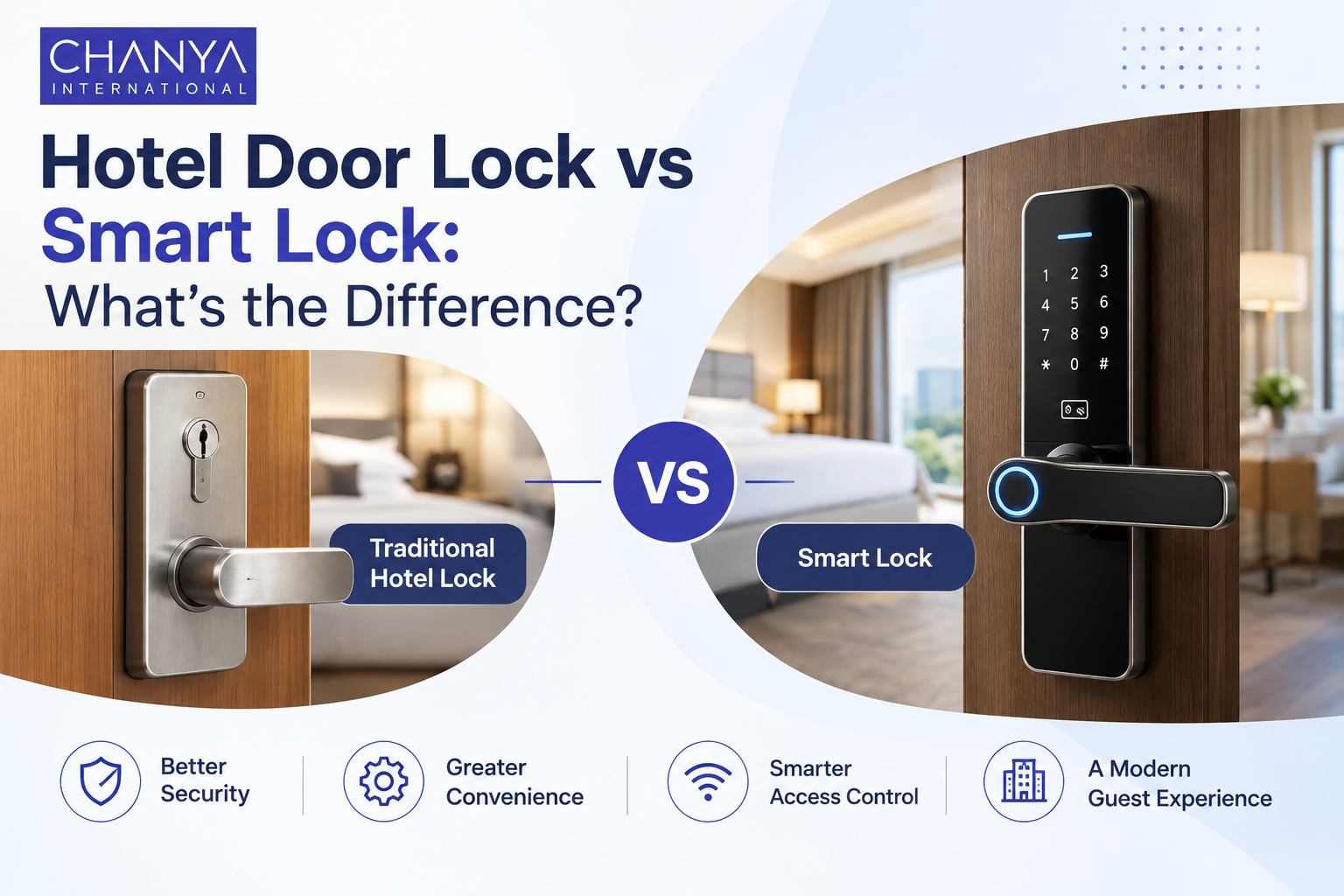
At first glance, a hotel door lock and a smart lock may seem like the same thing. Both can replace a traditional key and allow people to enter without using a conventional metal key. The difference becomes clearer when you look at how each type of lock is designed to work.
The search for hotel door lock vs smart lock often starts with a simple question: can a smart lock be used in a hotel? The answer depends on the property, the number of rooms, the type of access required and how much control the hotel needs over its doors. A typical smart lock may focus mainly on convenient access through an app, PIN, fingerprint or other digital method. A hotel locking system, however, is generally designed around guest stays, staff access, multiple rooms and day-to-day hotel operations. That distinction is important when choosing hotel room door locks, because the lock is only one part of the overall access system.
Hotel Lock vs Smart Lock: What Is the Difference?
The easiest way to understand the hotel lock vs smart lock difference is to look at their intended use. A typical smart lock is often designed for an individual door. It may allow a homeowner, tenant or small business to manage access through a mobile application or another electronic credential. A hotel door lock is generally designed as part of a larger hospitality setup. Depending on the system, it can support RFID cards, mobile credentials or other forms of access while allowing different permissions for guests and staff. For a hotel, this can make a significant difference. A guest may need access only during their stay, while housekeeping staff may require access to selected rooms. Maintenance personnel may need a different level of access altogether. The hardware may look similar from the outside, but the way the system manages users can be very different.
Hotel Door Lock System vs Smart Lock
When comparing a hotel door lock system vs smart lock, it helps to think beyond the locking mechanism itself. A hotel system may include electronic locks, key cards or mobile credentials, management software, encoding devices and connections with other hotel systems. Some solutions can also provide access records and different permissions for different users. A standard smart lock may provide excellent control over one door but may not have been designed to manage hundreds of rooms or different categories of hotel employees. This does not mean that every hotel needs a complex system. A small property may have relatively straightforward requirements, while a large hotel may need much more centralised management. The important question is how the lock fits into the hotel’s daily operation.
Can You Use a Smart Lock for Hotel Rooms?
Yes, but the term “smart lock” covers a wide range of products. A consumer smart lock with only app-based access may not offer the functions required by a hotel. On the other hand, hospitality-focused electronic locks can use mobile technology while still providing features designed specifically for hotel operations. A smart lock for hotel rooms may support mobile credentials, Bluetooth or other digital access methods. Some systems can also work alongside traditional RFID cards, giving hotels more than one way to provide guest access. This can be useful when a property wants to introduce mobile access without completely changing the way its front desk operates.
Before choosing one, hotel managers should consider whether the system can support guest check-in and check-out procedures, staff permissions, emergency access and the number of rooms that need to be managed.
Guest Access Is Only One Part of the System
For a hotel, opening the door is only the beginning. Consider what happens when a guest checks out. Their access should no longer be valid. If a card is lost, the hotel may need to cancel it and issue another one. A housekeeping employee may need access to rooms during specific working hours, while maintenance staff may require access to selected areas. These requirements make access management an important consideration. A hotel system can be designed around these different users rather than treating every person as having the same level of access. This is one of the main differences to consider when comparing a hotel electronic lock vs smart lock. Both may use electronic technology, but the management capabilities can be very different.
RFID, Mobile Access and Other Options
Hotel locks are no longer limited to traditional magnetic cards. RFID cards remain common in hospitality because they are simple to issue and familiar to guests. Mobile access provides another option, allowing a compatible smartphone to act as a room credential. Some hotel systems support both approaches. This can be useful for properties that want to offer mobile access while keeping cards available for guests who prefer them. The choice depends on the hotel’s requirements, existing infrastructure and the type of experience it wants to provide. Rather than selecting a lock because it has a particular technology, it is worth asking how that technology will actually be used by guests and employees.
What About PMS Integration?
Property Management System (PMS) integration can become important as the size of a hotel increases. A connected access system can potentially link room access with information managed by the hotel, depending on the specific software and lock system. This can reduce the amount of manual work involved in managing guest credentials.
For example, a guest’s access can be associated with their stay rather than requiring staff to manually manage access for every room throughout the entire visit. Not every hotel lock offers PMS integration, and not every property requires it. Therefore, this feature should be treated as a requirement to evaluate rather than something that every hotel must have.
For properties planning a complete access setup, working with a specialised hotel door lock system supplier can help identify compatibility between the locks, software and existing hotel infrastructure.
Emergency Access and Everyday Reliability
A hotel lock needs to work during normal operations, but hotels should also think about situations where normal access is not possible. Battery condition, emergency unlocking, authorised override methods and access records are all worth discussing before installation. Hotels should also consider what happens if a guest loses a card, a mobile credential stops working or a lock battery becomes low. These questions are particularly important because hotel doors are used throughout the day by guests, housekeeping teams and other employees. A system intended for hospitality should be selected with this level of use in mind. The right solution will depend on the hotel’s operating procedures, door specifications and local safety requirements.
How Should Hotels Choose Between the Two?
There isn’t one answer that applies to every property.
A small hotel may have a different requirement from a large resort with hundreds of rooms, multiple buildings and several staff departments. Likewise, a property undergoing renovation may have different installation considerations from a newly constructed hotel.
Before purchasing, consider:
- Number of rooms
- Type of guest access required
- RFID or mobile access requirements
- Staff access levels
- PMS integration
- Emergency access
- Battery and maintenance requirements
- Existing door compatibility
- Future expansion
- Installation and after-sales support
The physical lock should also be compatible with the existing door. A system that looks suitable on paper may still require changes to the door, frame or electrical setup. This is where experienced hospitality suppliers can be useful. Instead of looking at the lock as an isolated product, they can help assess the requirements of the complete installation.
Choosing the Right Hotel Door Lock System
When comparing different systems, avoid making the decision based only on whether a product is described as “smart.” A modern hotel lock can include smart features while still being designed specifically for hospitality. Likewise, a smart lock can be perfectly suitable for certain properties if its features match the hotel’s requirements. The better approach is to start with the property’s workflow. How do guests receive access? How are staff credentials managed? How many doors need to be controlled? Does the hotel need central management? What happens when a credential is lost? Does the system need to connect with existing software?
Answering these questions first makes it easier to identify the appropriate locking technology. For more information about choosing a suitable system, read our guide on Choose Right Hotel Door Lock System.
Hotel Door Lock vs Smart Lock: Which One Fits Your Property?
The hotel door lock vs smart lock comparison is ultimately less about which technology sounds more advanced and more about what the property actually needs. A conventional hotel electronic locking system may provide the access methods a property already uses, while a newer system may add mobile credentials, central management or other digital features.
For hotels exploring modern security options, our guide to Smart Hotel Locks for Safety provides additional information on the role of electronic locking systems in hotel operations. Hotels can also explore Chanya Enterprises’ range of hotel supplies when planning other guestroom and hospitality requirements. The right choice comes down to the hotel’s room count, access requirements, staff workflow, existing infrastructure and future plans. Once those factors are clear, comparing the available lock systems becomes much more straightforward.
Other Blog You May like
September 24, 2026
Hotel Door Lock vs Smart Lock: What’s the Difference?
At first glance, a hotel door lock and a smart...
Read More
September 17, 2026
Electric Kettle with Tray Set for Hotels: A Buying Guide for Guestrooms
Every guestroom checklist has a kettle tray set on it,...
Read More
September 10, 2026
How to Choose the Right Absorption Minibar for Hotels?
Every general manager who's replaced a batch of minibars has...
Read More
September 3, 2026
Energy Saving Switch Price in India: What Affects the Cost
Electricity alone can account for one of the largest operating...
Read More
August 27, 2026
Housekeeping Trolley for Hotels: Types, Sizes and How to Choose One
You can tell a lot about a hotel by looking...
Read More
August 18, 2026
How Hotel Chains Choose a Door Lock Supplier for Multi-Property Rollouts
Buying locks for one hotel is a fairly contained decision....
Read More
August 12, 2026
Hotel Door Lock Buying Checklist: 10 Questions to Ask Before You Order
Most hotel owners don't think much about door locks until...
Read More
August 3, 2026
RFID vs Magnetic Stripe vs Mechanical Hotel Locks: Which Should You Buy?
Walk into ten different hotels and you'll probably come across...
Read More
July 28, 2026
Hotel Door Lock Price Guide: Costs, Types and Key Features
If you are preparing for the security upgrade of your...
Read More
January 28, 2026
Hotel Safe Usage: Essential Do’s and Don’ts
When a guest walks into their room, the first thing...
Read More
December 22, 2025
10 Best Hotel Door Lock Systems in 2026
Why 2026 Is a Turning Point for Hotel Security Hotel...
Read More
December 5, 2025
Choosing the Right Hotel Door Lock System
Did you know that guest anxiety about security decreases a...
Read More
August 19, 2025
Hotel Room Phones: Small Device, Big Impact on Guest Satisfaction
When you enter a contemporary hotel room, your attention immediately...
Read More
August 1, 2025
Why More Hotels Are Switching to Absorption Minibars?
When guests enter a hotel room, they have much to...
Read More
July 18, 2025
Enhance Guest Stay with Quality Bathroom Supplies
When one enters a hotel room, the bathroom is often...
Read More
June 20, 2025
Is Your Hotel Ready for Today’s Security Challenges?
Hotel security has come a long way past the key...
Read More
June 13, 2025
Eco-Friendly Hospitality: Mindful Choices for Tomorrow
Nowadays, sustainability is not something to be thought of afterwards,...
Read More
May 22, 2025
5 Tips to Choose the Right Hotel Supplier Partner
Running a hotel is all about constantly trying to make...
Read More
May 13, 2025
7 Creative Hotel Design Tips to Delight Guests This Holiday Season
Summer break is the ideal time for travellers to unwind,...
Read More
April 23, 2025
Boost Your Hotel Occupancy: Budget-Friendly Strategies That Work
In the hotel business, occupancy rates define a hotel’s reputation...
Read More
April 8, 2025
Top Benefits of Installing Digital Doorbells in Hotels
The hotel industry has witnessed very quick changes, taking guest...
Read More
March 26, 2025
How to Elevate Your Hotel Room Service Experience in 2025
In 2025, the room service experience is more important to...
Read More
March 7, 2025
Top Emerging Hospitality Industry Trends : What You Need to Know in 2025
Change is the only constant in this constantly changing hospitality...
Read More
February 7, 2025
Key Features to Look for in a Hotel Safe
Guest security is a key aspect of any hotel’s success...
Read More
January 27, 2025
5 Simple Ways to Make Your Hotel Reception Area Irresistibly Inviting
The first issue a guest sees while entering your lodge...
Read More
December 27, 2024
Innovative Laundry Solutions for Modern Hotels
Laundry is one of the most important yet underrated areas...
Read More
December 12, 2024
How Digital Door Bell Systems Improve Guest Satisfaction
Convenience and security are the buzzwords in today's fast-moving world,...
Read More
November 28, 2024
Hotel Amenities That Will Make Your Guests Feel Like Royalty
Every visitor who walks through the doorways of your hotel...
Read More
November 5, 2024
Essential Safety Tips for Guests Using Hotel Safes
Hotel safes are now a standard feature, especially in the...
Read More
October 18, 2024
Top 5 Hotel Amenities Suppliers In India | List Of 2026
In the hospitality industry, delivering exceptional quality is not just...
Read More
September 26, 2024
What is a Hotel Energy Saving Switch and How Does it Work?
Today, hotels are facing a significant challenge: the operational costs...
Read More
September 12, 2024
Top 6 Hotel Security Devices To Keep Your Guests Safe
Within the hospitality industry, hotels are greater than simply locations...
Read More
August 13, 2024
Guide On How To Enhance Guest Experience in Hotels?
Creating a memorable guest experience is no longer a luxury;...
Read More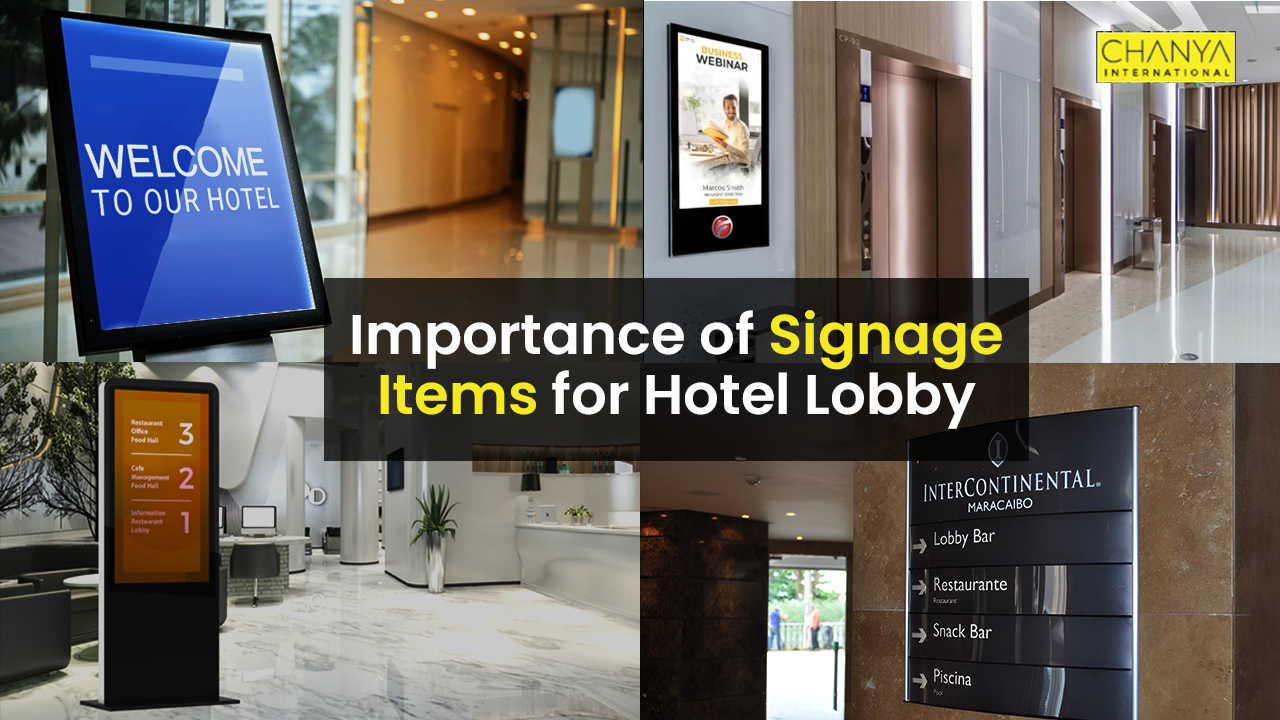
August 5, 2024
Hotel Lobby Signage Items – Types And Their Importance
Imagine creating a hotel experience that delights guests and keeps...
Read More
July 24, 2024
Easy Upgrades for Your Hotel in 2026
Ensuring your hotel remains vibrant and appealing is essential for...
Read More
April 3, 2024
10 Must-Have Hotel Supplies for Guest Satisfaction in 2026
Ensuring your hotel guests are happy is crucial for your...
Read More
April 3, 2024
The Importance of Quality Housekeeping Supplies
In the hotel industry, providing excellent service to guests is...
Read More
April 3, 2024
Trends in Lobby Design and Products for 2024
Thinking about upgrading your hotel lobby? It's important to make...
Read More
December 26, 2023
The International Food & Hospitality Fair
Lorem Ipsum is simply dummy text of the printing and typesetting...
Read More
December 26, 2023
The International Food & Hospitality Fair
Lorem Ipsum is simply dummy text of the printing and...
Read More
December 26, 2023
The International Food & Hospitality Fair
Lorem Ipsum is simply dummy text of the printing and...
Read More
December 25, 2023
The International Food & Hospitality Fair
Lorem Ipsum is simply dummy text of the printing and...
Read More
December 25, 2023
The International Food & Hospitality Fair
Lorem Ipsum is simply dummy text of the printing and...
Read More
December 25, 2023
The International Food & Hospitality Fair
Lorem Ipsum is simply dummy text of the printing and...
Read More