

November 26, 2026
Energy Saving Switch Buying Checklist: Questions to Ask Before You Order
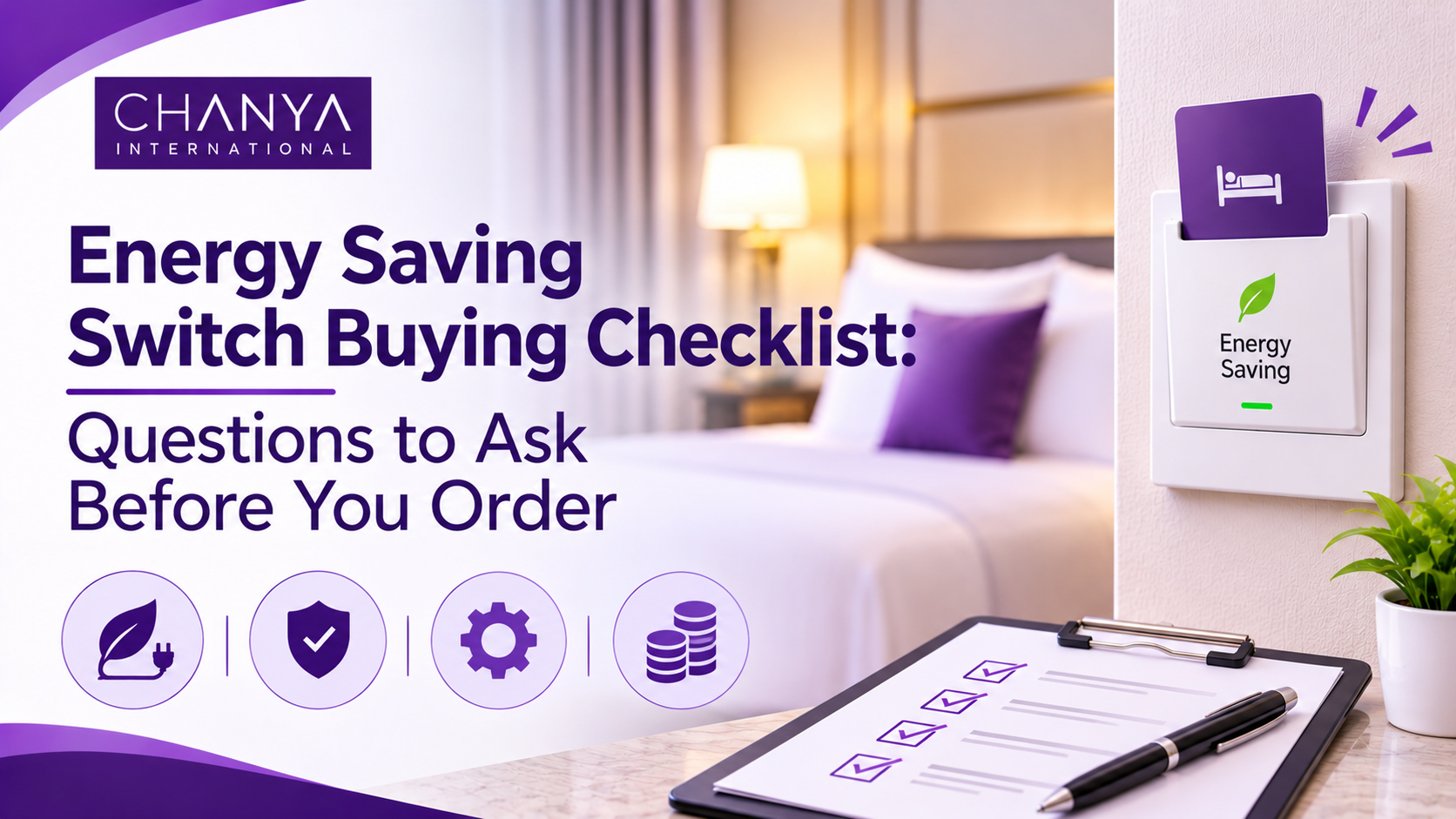
Many hotels order their first card switch without checking all the details. Six months later it turns out it can’t carry the AC load, or doesn’t read the card the front desk uses. If these are the issues you never want to face , this checklist is meant to stop that.
What Should Hotels Check Before Choosing an Energy Saving Switch?
Before you look at energy saving switch supplies, start with the property, not the product sheet. How many rooms need a switch? Is this a new build or an upgrade, because retrofits in old walls are fiddlier? What should the switch actually control: lights, the AC, the TV, maybe the geyser? Do your doors already use RFID or key-card locks, since that decides which card the switch has to read? And can every room have the same set-up, or do suites and standard rooms need different ones?
What works for a 20-room hotel can fall apart in a 200-room one with several room categories and different electrical loads. Guestrooms use 40 to 80 percent of a hotel’s energy, according to a Schneider Electric white paper, so it’s worth getting right. Also think about who will fit and look after the units. A switch that needs an electrician’s visit every time a guest complains is a switch nobody will maintain.
Which Type of Energy Saving Switch Is Right for Your Hotel?
A switch decides a room is empty in one of two ways: it asks for a card, or it looks for movement. Both work, and which one suits you depends on how guests actually use your rooms. If you want the full picture first, read how hotel energy saving switches work.
Key Card Energy Saving Switch
The guest slides the room card into a holder by the door and the room powers up. Take it out and, after a short delay, the lights and AC shut down. It only works with a compatible card, so it suits hotels where guests already carry one. The same paper says card holders have been widely used for about a decade, especially in Europe and Asia. The weak spot is guests who walk out with the card still in their pocket, which is why a small delay and a clear sign beside the slot help. Some hotels also keep the AC running on a timer for a few minutes after the card comes out, so the room isn’t an oven when the guest gets back.
Motion Sensor Energy Saving Switch
A sensor spots movement and decides someone’s in. It’s useful in bathrooms and corridors, where there’s no card to insert. Placement and settings matter, though. If the sensor can’t see someone sitting still, the light goes off mid-shower or while a guest reads in bed.
Can Hotels Use Both Types?
Yes, and many do: a card switch in the main room, sensors in bathrooms and common areas. For the detail, see the key card and motion sensor differences.
Is the Energy Saving Switch Compatible With Your Hotel’s Existing Electrical and Lock System?
An Energy Saving Switch with great features can still be wrong for your hotel:
- Cards: does it read the RFID or Mifare cards your locks already use?
- Locks: does it work with your door lock system, or does it need its own cards?
- Load: can it handle the room’s connected load, AC included?
- Wiring and wall boxes: will it fit the boxes you’ve got?
- Essential circuits: the minibar shouldn’t switch off when the guest leaves, so keep it on a circuit the card switch doesn’t control.
- Existing rooms: retrofits need checking wall by wall.
And get an electrician to verify the load and wiring before the order is finalised. Not after.
What Product Specifications Should You Check Before Ordering?
- Rated current and load capacity
- Relay quality: the relay clicks every time a guest comes or goes, and cheap ones burn out.
- Card-reading accuracy
- Housing and build quality
- Durability under daily use
- Indicator lights and how it operates
- Warranty and spare parts
Don’t pick a switch because it looks like another model. Two plates can look identical and carry different relays inside, and you’ll find out in year two. Compare specification sheets line by line, and if you’re sourcing locks and room items from the same hospitality goods supplies vendor, ask for sheets for everything at once.
How Much Should Hotels Budget for Energy Saving Switches?
There’s no flat answer, and anyone who gives one without your details is guessing. The price moves with the type and technology, the electrical rating, card compatibility, installation and wiring, order quantity, and warranty and upkeep. Wiring is not small: one lighting-controls maker’s sheet puts installation at about 45 to 50 minutes per hardwired device against 10 to 15 for a wireless one.
Work out the cost per room over five years, not the cost per switch. Include the electrician, the cards, a few spare units on the shelf and the visit when something fails. Ask every supplier to quote on the same specification, or the numbers aren’t comparable, and check the warranty covers the relay and not just the plate. The cheapest switch isn’t always the cheapest to own. A weak relay that dies in 18 months costs you the switch, an electrician’s visit and the savings. Savings claims vary too. One vendor says a standalone occupancy-based system may save 10 to 25 percent of energy use, but that’s a vendor figure, so judge it against your own bills. For what shapes a quote, see energy saving switch pricing factors.
What Questions Should You Ask an Energy Saving Switch Supplier Before Placing a Bulk Order?
Take this list to every supplier. Eight questions sounds like a lot, but it takes ten minutes and can save you a bad order:
- Is the switch compatible with our existing hotel key cards?
- Can it handle our room’s connected electrical load, AC included?
- Does it support our existing door lock system?
- What warranty is provided?
- Are replacement parts available?
- Can we test a sample before ordering in bulk, on one real room?
- What are the delivery timelines?
- Is technical assistance available during installation?
Write the answers down side by side, and ask for them in writing. Pay attention to how a supplier answers, not just what they say. If they go vague on the electrical load or the card, that’s your answer. Someone who answers all eight clearly, and offers a sample without being asked, is usually a safe bet. A sample is the best test of all: fit it, run it for a week, and watch how the card reads when a guest is in a hurry. If you’d like help with your rooms, Chanya Enterprises can go through them with you. And if your hospitality suppliers already handle your locks and room items, ask whether they can supply the switches too.
Other Blog You May like
November 26, 2026
Energy Saving Switch Buying Checklist: Questions to Ask Before You Order
Many hotels order their first card switch without checking all...
Read More
November 19, 2026
Hotel Door Locks for New Hotel Projects: What Should You Plan Before Installation?
On a new hotel project, doors get decided early and...
Read More
November 13, 2026
Extra Bed in Hotel Rooms: Types, Costs and a Supplier Checklist for Properties
Every front desk gets the call sooner or later. A...
Read More
November 5, 2026
Hotel Door Lock Installation Guide: What Hotels Need to Know Before Installation
Good hotel door lock installation is mostly preparation. Plenty of...
Read More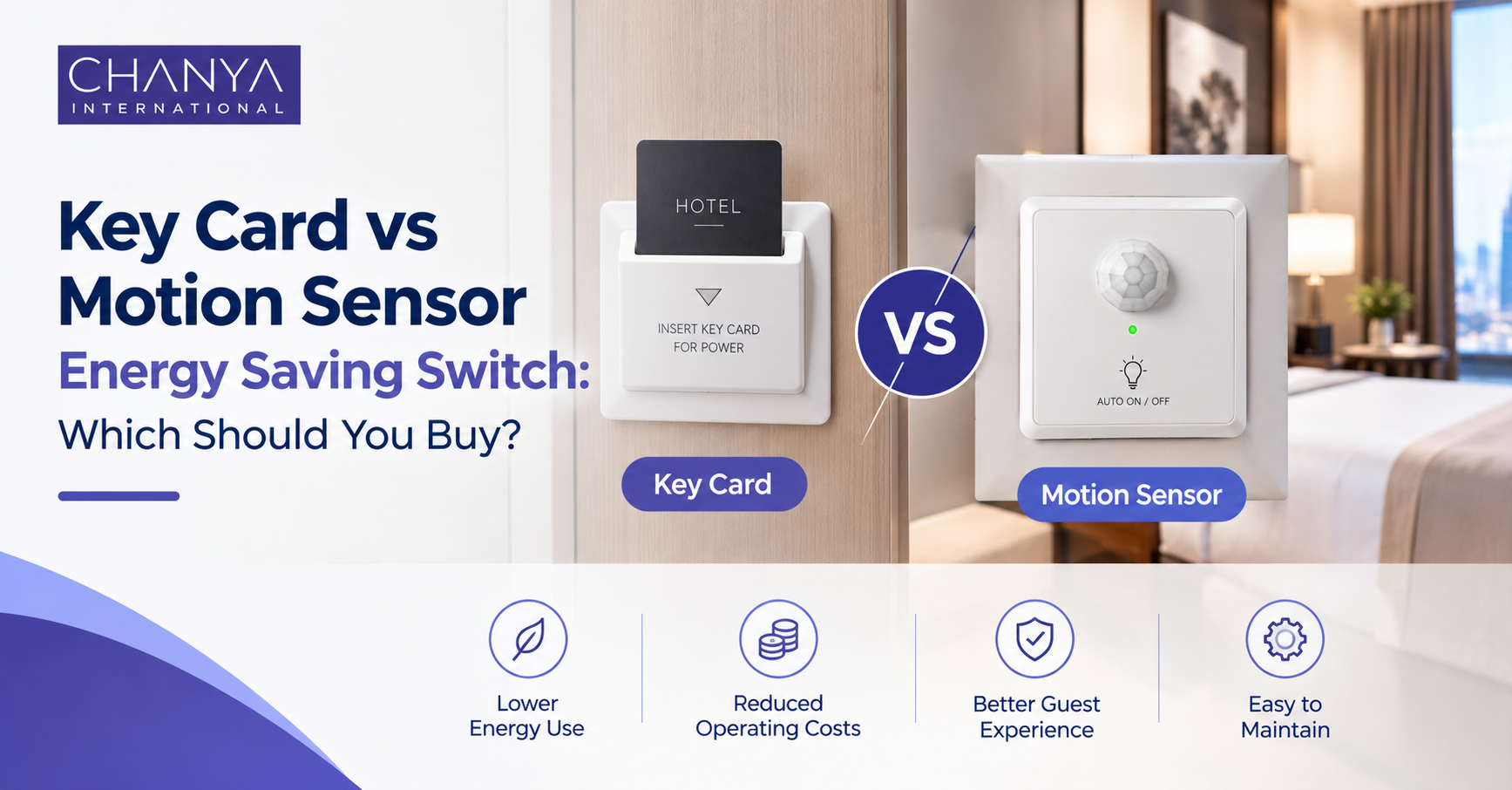
October 29, 2026
Key Card vs Motion Sensor Energy Saving Switch: Which Should You Buy?
A key card switch and a motion sensor switch do...
Read More
October 23, 2026
Hotel Door Lock Maintenance: A Practical Guide for Hotel Owners & Maintenance Teams
Hotel Door Lock Maintenance: A Practical Guide for Hotel Owners...
Read More
October 16, 2026
How Do Hotel Key Card Locks Work? A Complete Guide for Hoteliers
Hotel key cards have made room access easier for both...
Read More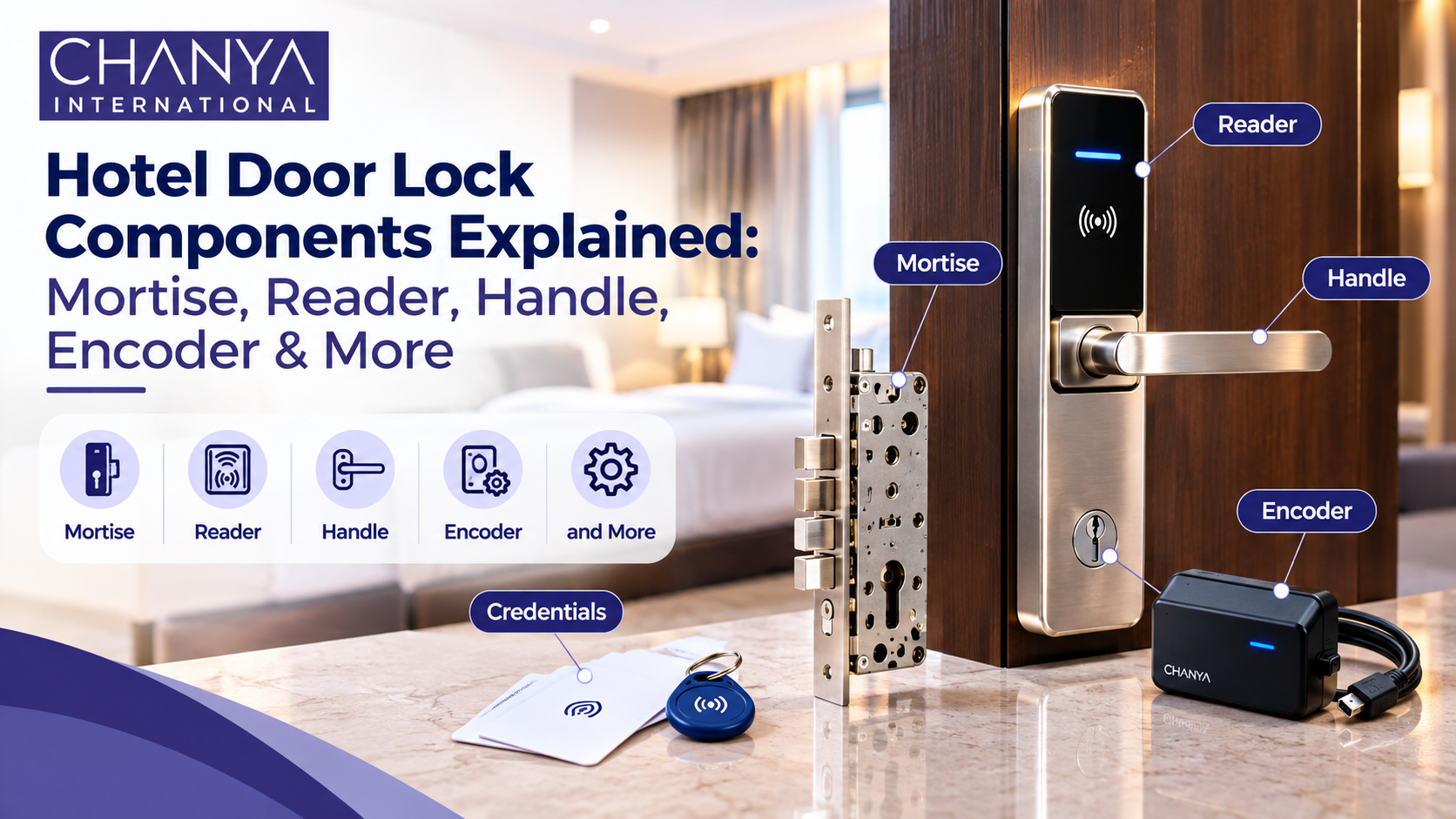
October 9, 2026
Hotel Door Lock Components Explained: Mortise, Reader, Handle, Encoder & More
Ask any front office manager about their worst nights and...
Read More
October 1, 2026
Housekeeping Trolley Price in India: What Affects the Cost
Every housekeeping manager has had this conversation at some point,...
Read More
September 24, 2026
Hotel Door Lock vs Smart Lock: What’s the Difference?
At first glance, a hotel door lock and a smart...
Read More
September 17, 2026
Electric Kettle with Tray Set for Hotels: A Buying Guide for Guestrooms
Every guestroom checklist has a kettle tray set on it,...
Read More
September 10, 2026
How to Choose the Right Absorption Minibar for Hotels?
Every general manager who's replaced a batch of minibars has...
Read More
September 3, 2026
Energy Saving Switch Price in India: What Affects the Cost
Electricity alone can account for one of the largest operating...
Read More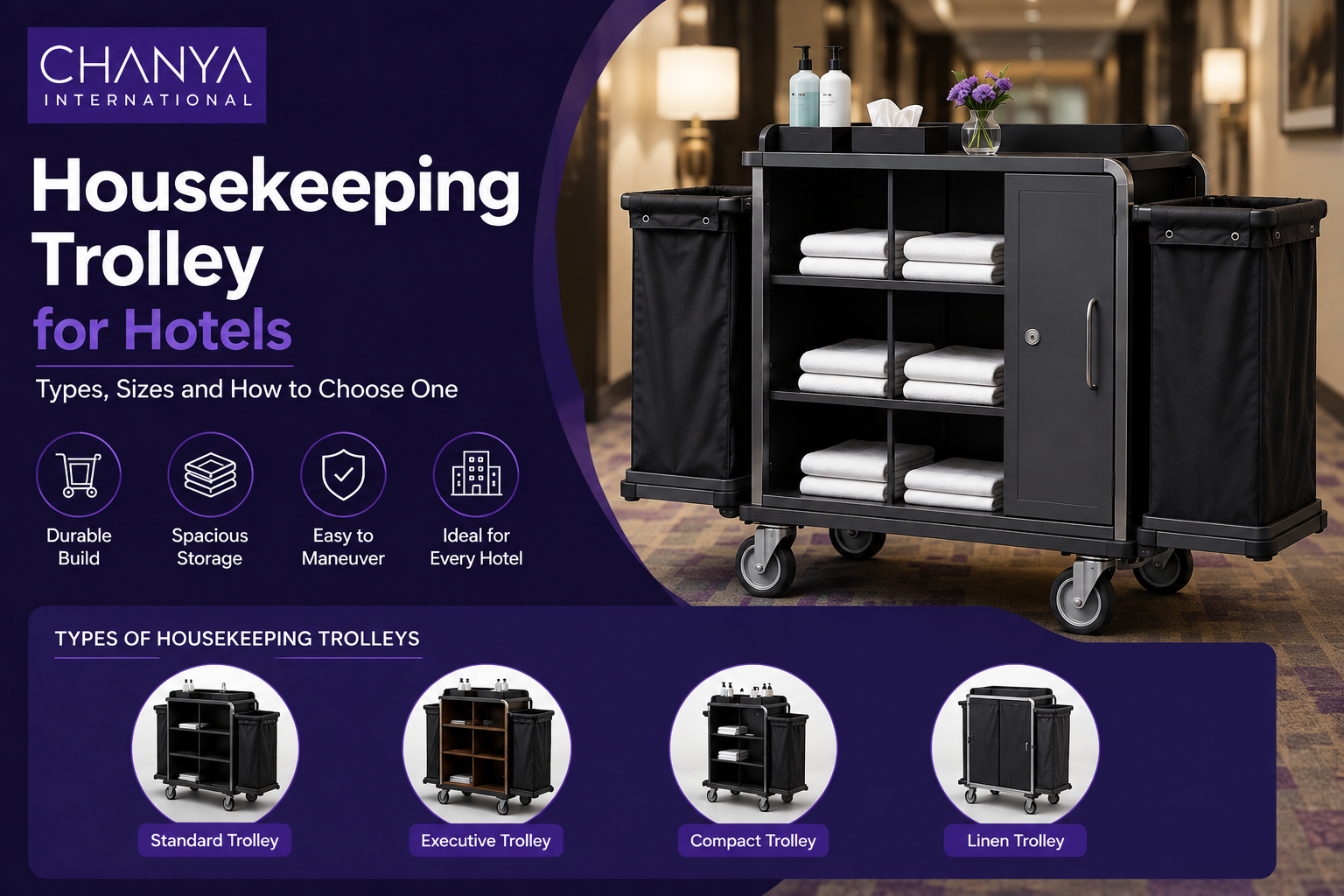
August 27, 2026
Housekeeping Trolley for Hotels: Types, Sizes and How to Choose One
You can tell a lot about a hotel by looking...
Read More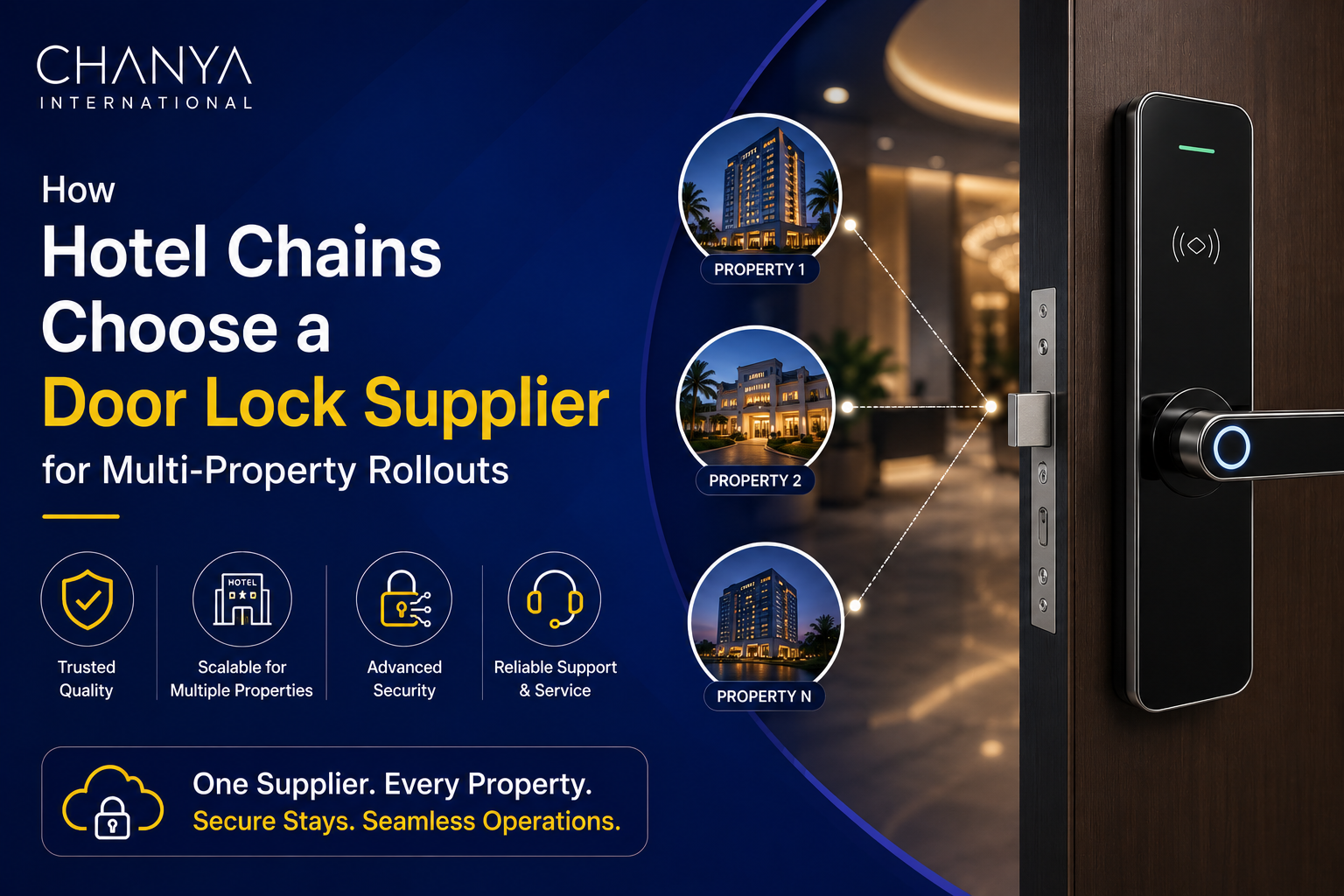
August 18, 2026
How Hotel Chains Choose a Door Lock Supplier for Multi-Property Rollouts
Buying locks for one hotel is a fairly contained decision....
Read More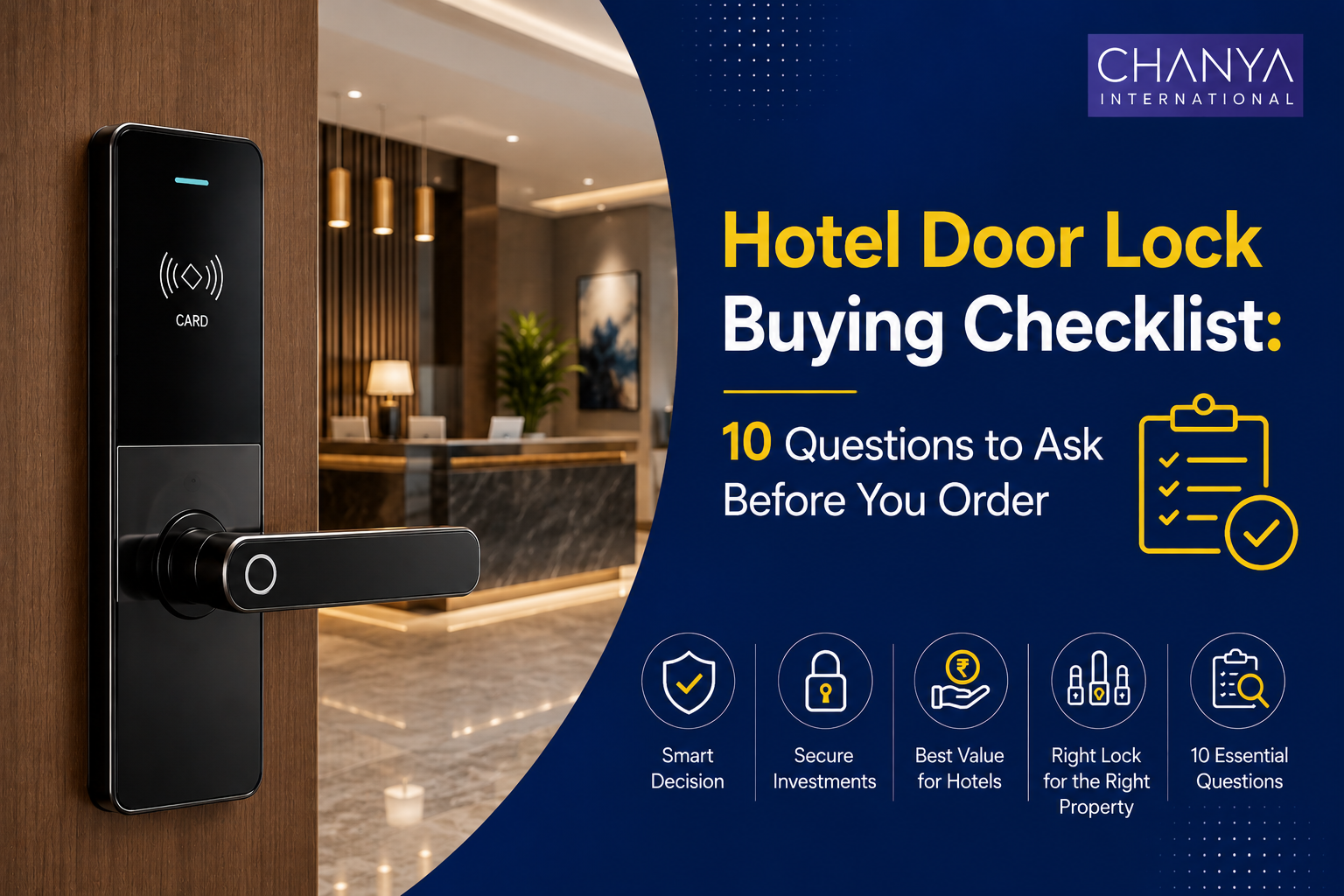
August 12, 2026
Hotel Door Lock Buying Checklist: 10 Questions to Ask Before You Order
Most hotel owners don't think much about door locks until...
Read More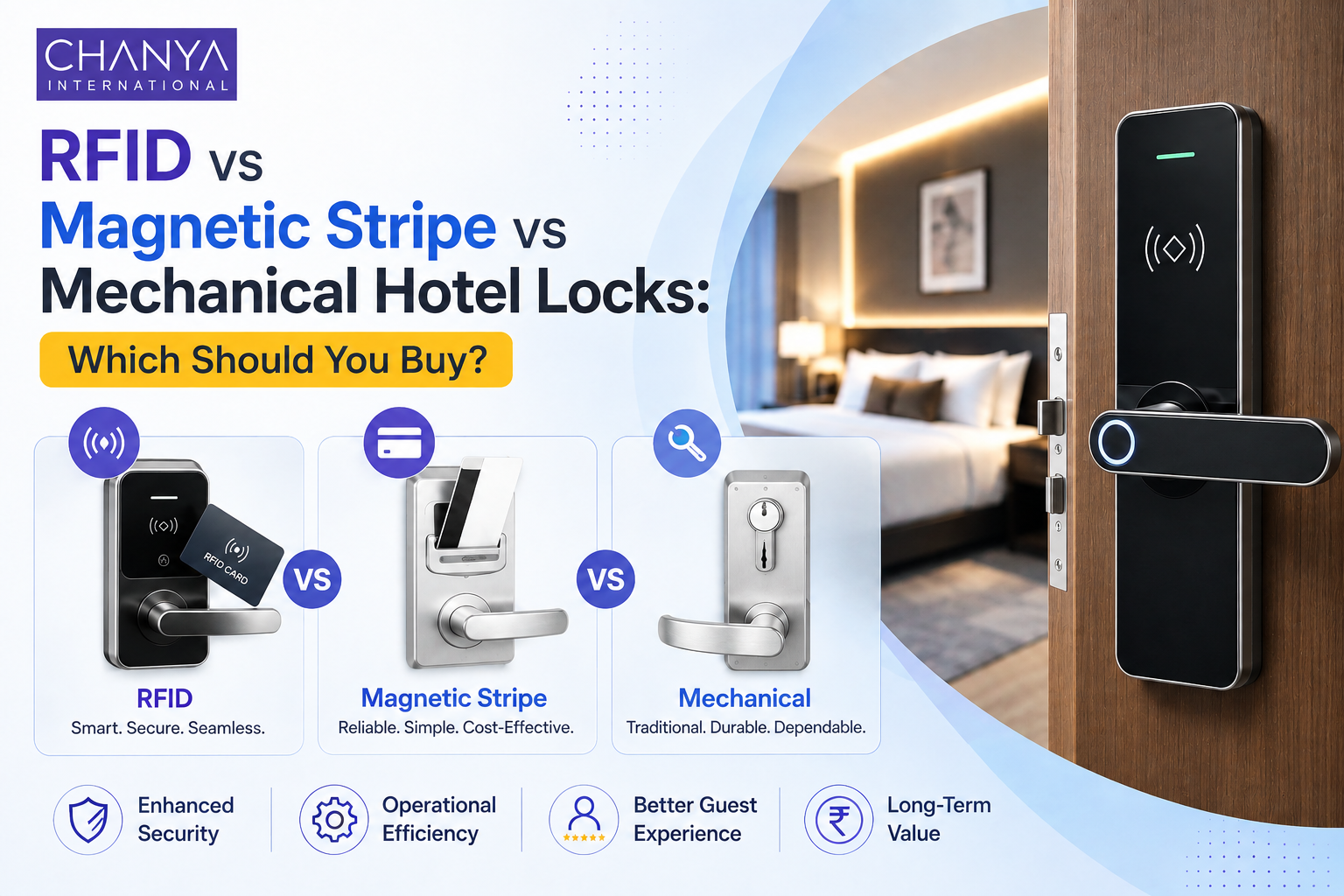
August 3, 2026
RFID vs Magnetic Stripe vs Mechanical Hotel Locks: Which Should You Buy?
Walk into ten different hotels and you'll probably come across...
Read More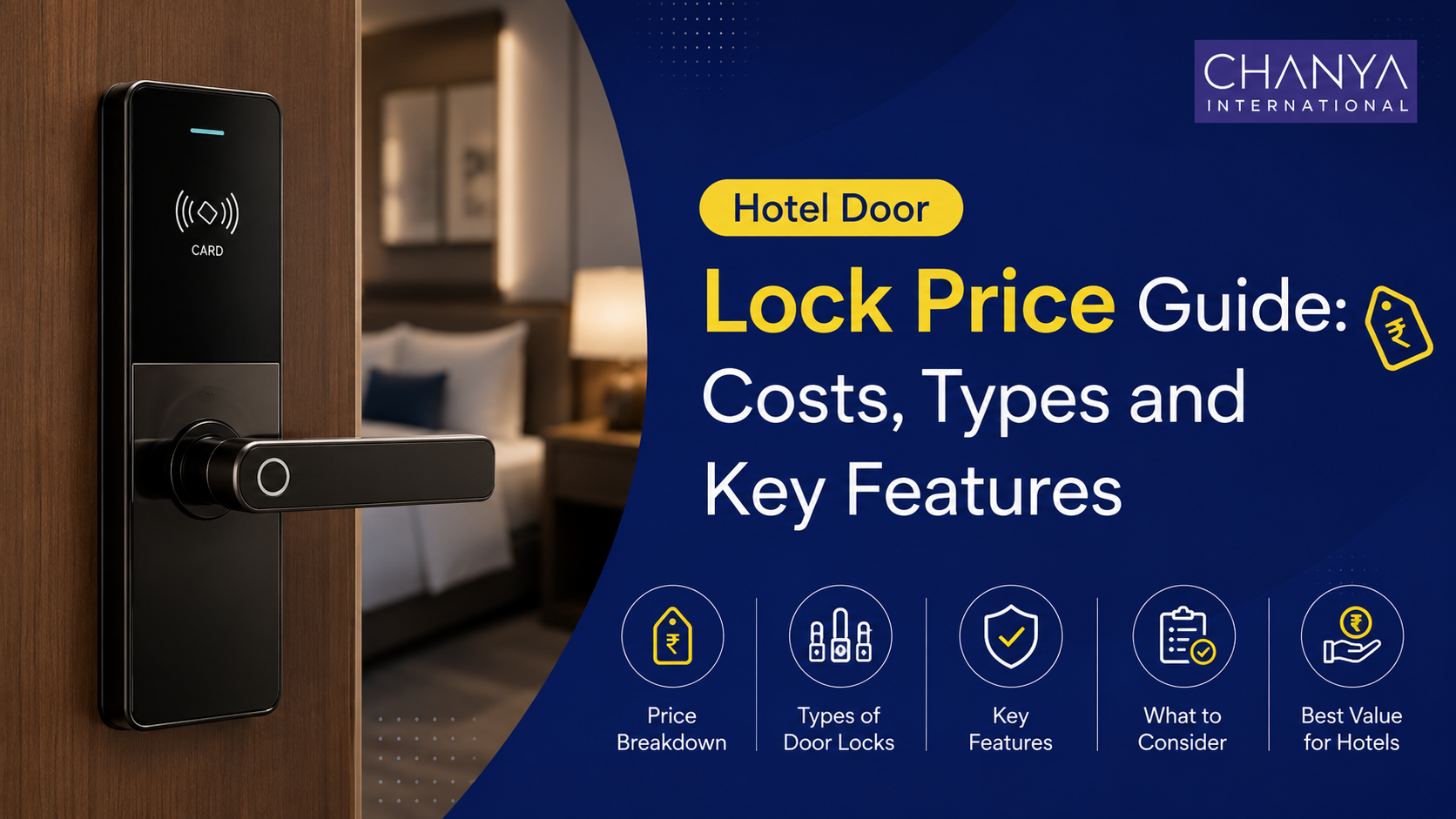
July 28, 2026
Hotel Door Lock Price Guide: Costs, Types and Key Features
If you are preparing for the security upgrade of your...
Read More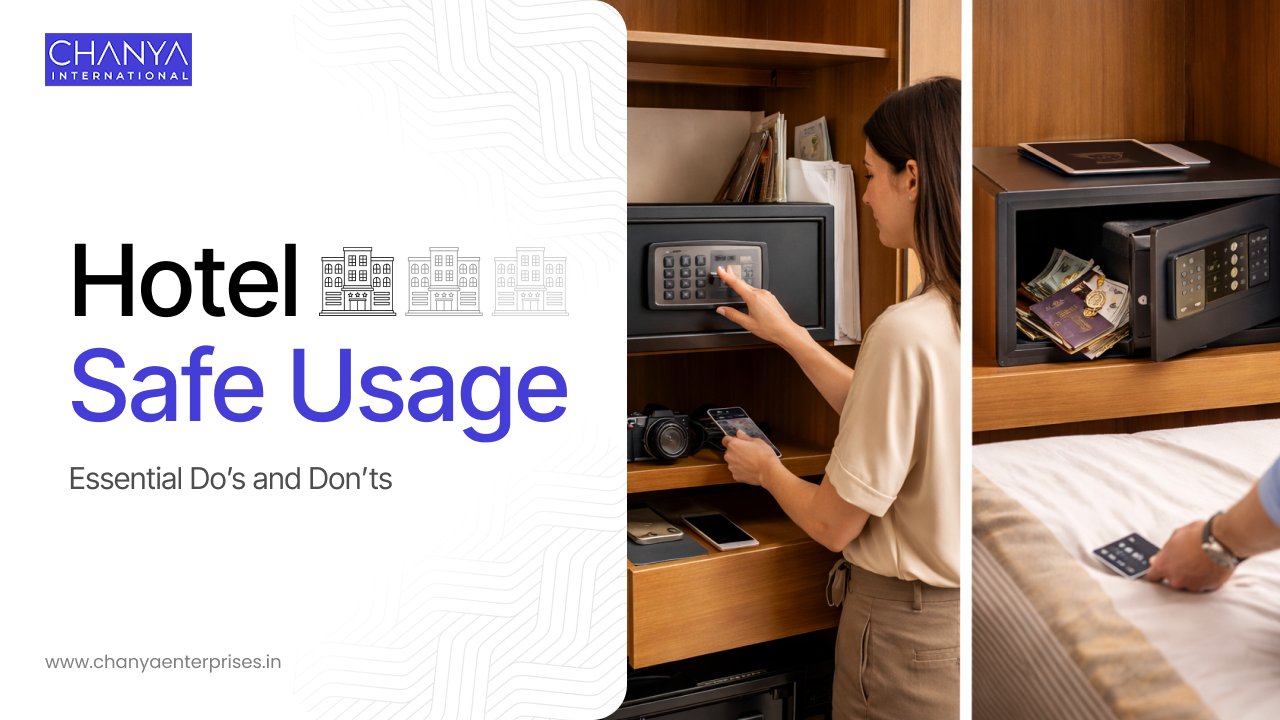
January 28, 2026
Hotel Safe Usage: Essential Do’s and Don’ts
When a guest walks into their room, the first thing...
Read More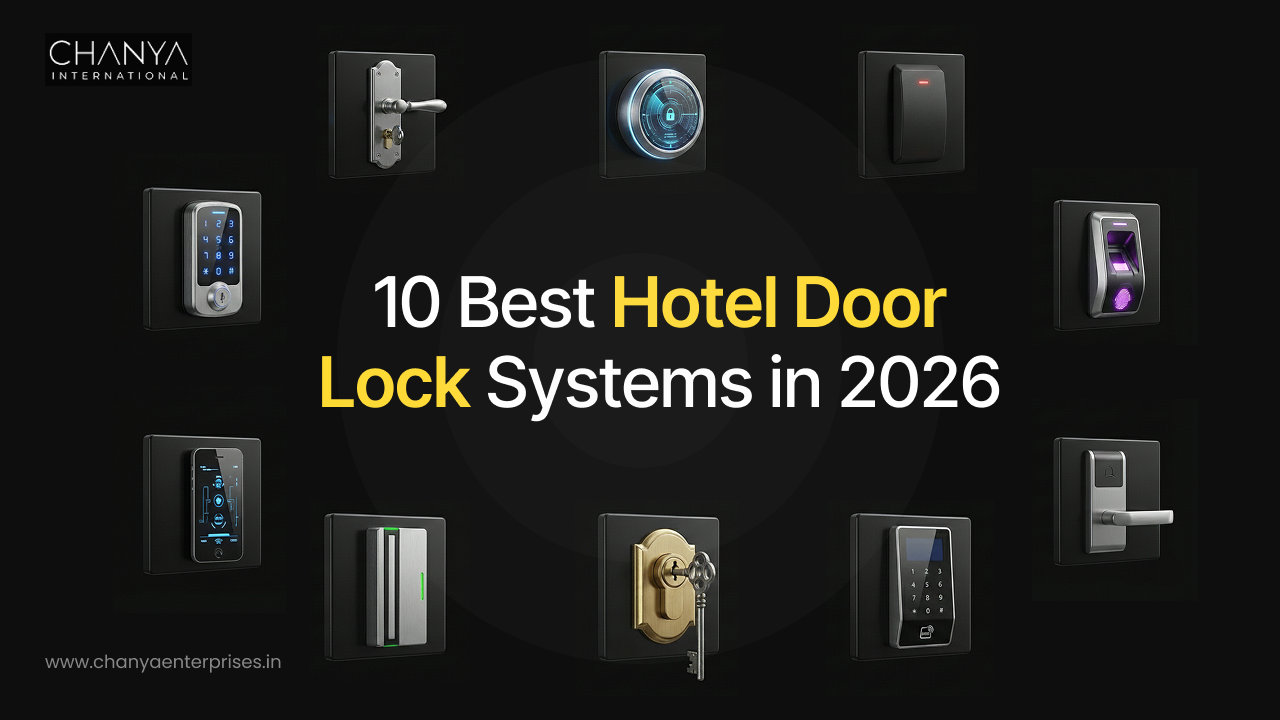
December 22, 2025
10 Best Hotel Door Lock Systems in 2026
Why 2026 Is a Turning Point for Hotel Security Hotel...
Read More
December 5, 2025
Choosing the Right Hotel Door Lock System
Did you know that guest anxiety about security decreases a...
Read More
August 19, 2025
Hotel Room Phones: Small Device, Big Impact on Guest Satisfaction
When you enter a contemporary hotel room, your attention immediately...
Read More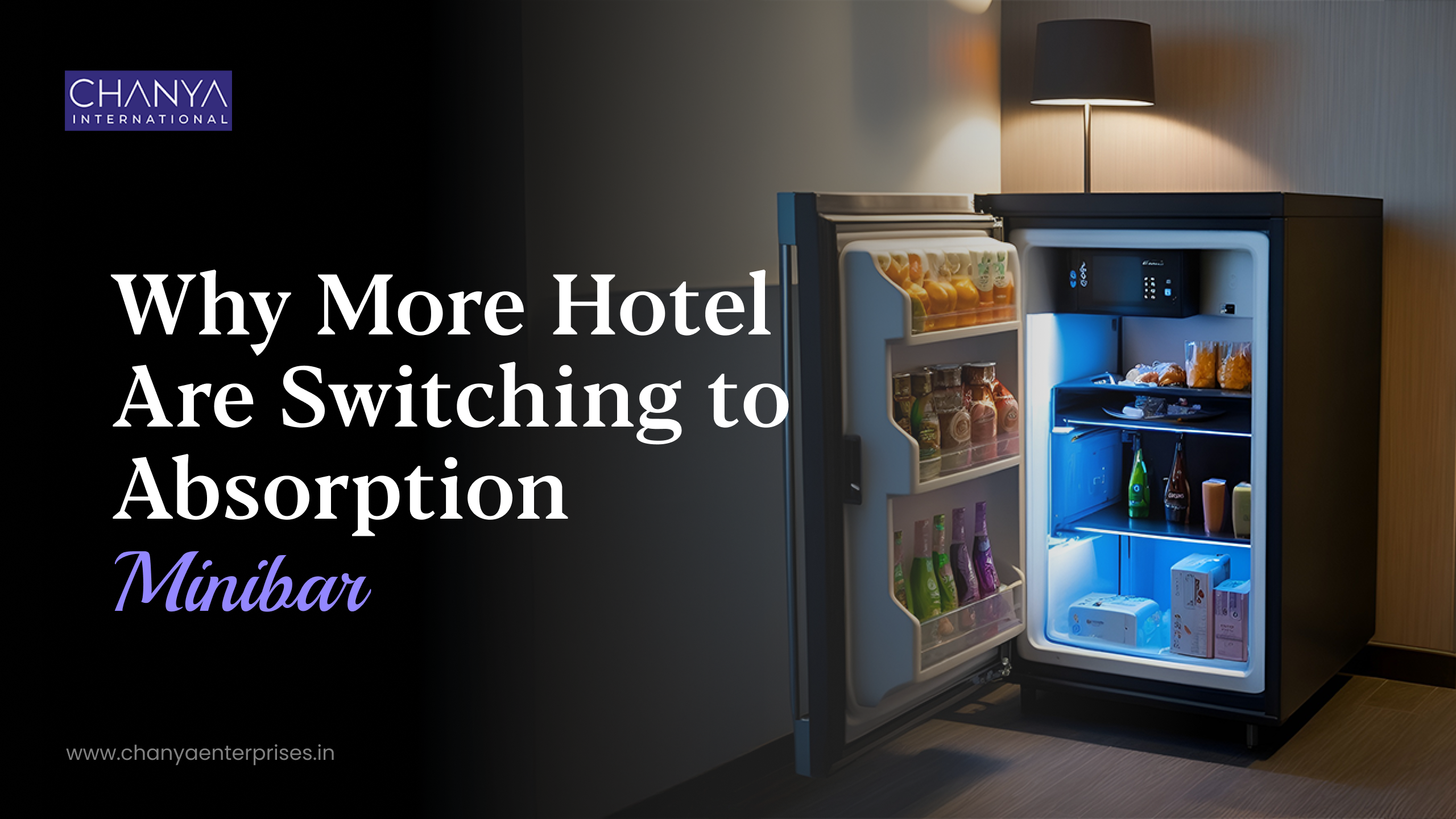
August 1, 2025
Why More Hotels Are Switching to Absorption Minibars?
When guests enter a hotel room, they have much to...
Read More
July 18, 2025
Enhance Guest Stay with Quality Bathroom Supplies
When one enters a hotel room, the bathroom is often...
Read More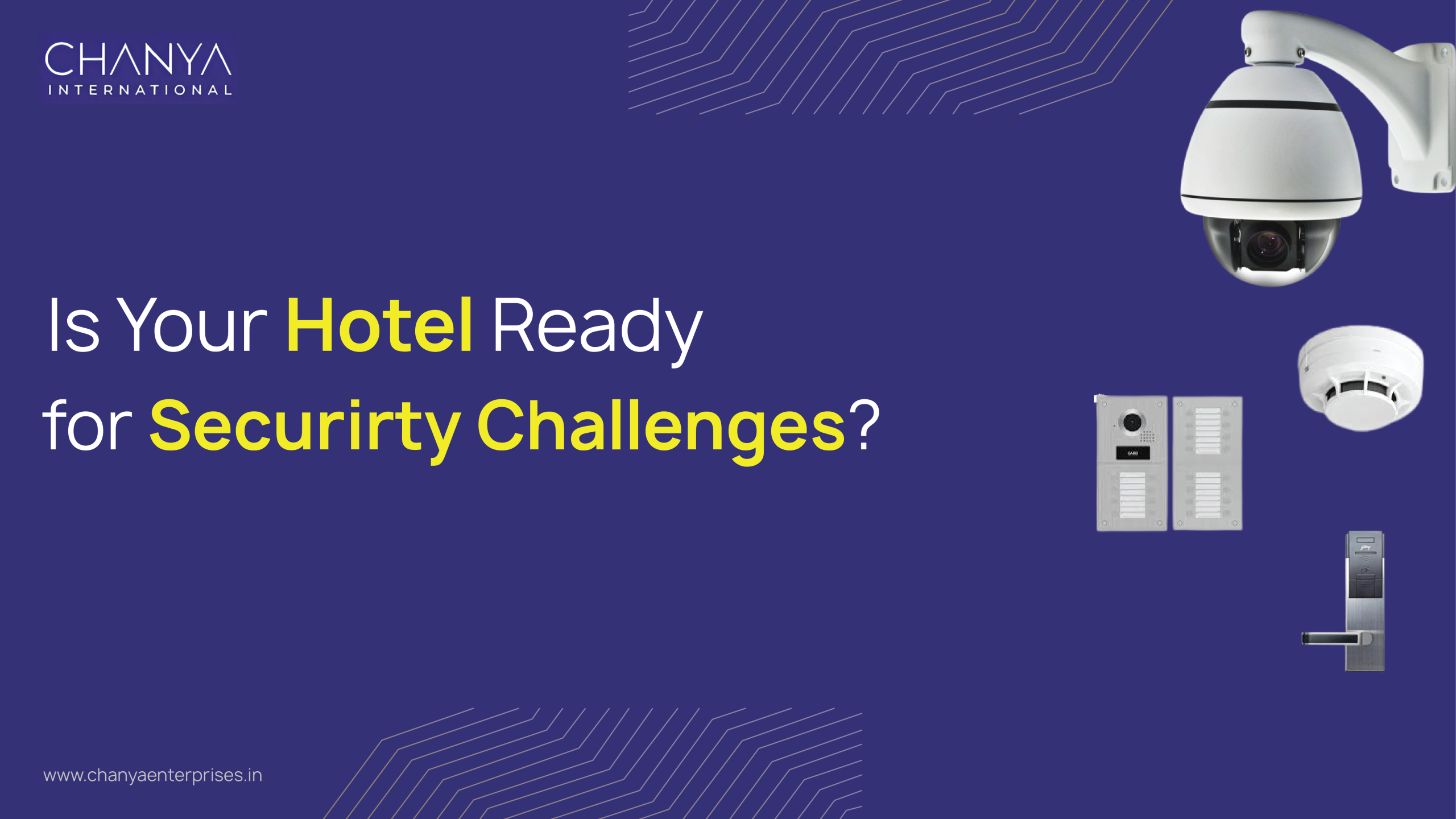
June 20, 2025
Is Your Hotel Ready for Today’s Security Challenges?
Hotel security has come a long way past the key...
Read More
June 13, 2025
Eco-Friendly Hospitality: Mindful Choices for Tomorrow
Nowadays, sustainability is not something to be thought of afterwards,...
Read More
May 22, 2025
5 Tips to Choose the Right Hotel Supplier Partner
Running a hotel is all about constantly trying to make...
Read More
May 13, 2025
7 Creative Hotel Design Tips to Delight Guests This Holiday Season
Summer break is the ideal time for travellers to unwind,...
Read More
April 23, 2025
Boost Your Hotel Occupancy: Budget-Friendly Strategies That Work
In the hotel business, occupancy rates define a hotel’s reputation...
Read More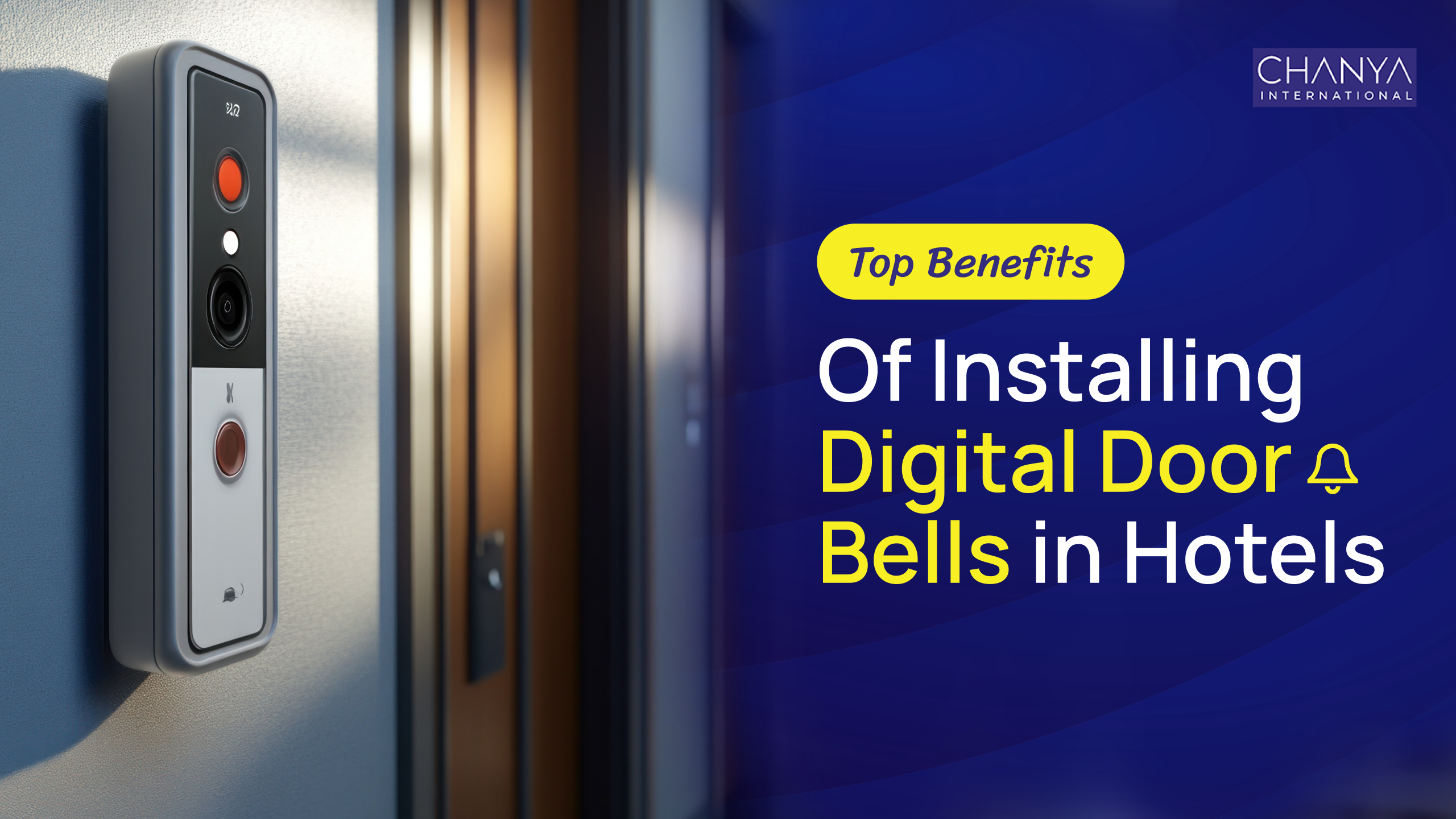
April 8, 2025
Top Benefits of Installing Digital Doorbells in Hotels
The hotel industry has witnessed very quick changes, taking guest...
Read More
March 26, 2025
How to Elevate Your Hotel Room Service Experience in 2025
In 2025, the room service experience is more important to...
Read More
March 7, 2025
Top Emerging Hospitality Industry Trends : What You Need to Know in 2025
Change is the only constant in this constantly changing hospitality...
Read More
February 7, 2025
Key Features to Look for in a Hotel Safe
Guest security is a key aspect of any hotel’s success...
Read More
January 27, 2025
5 Simple Ways to Make Your Hotel Reception Area Irresistibly Inviting
The first issue a guest sees while entering your lodge...
Read More
December 27, 2024
Innovative Laundry Solutions for Modern Hotels
Laundry is one of the most important yet underrated areas...
Read More
December 12, 2024
How Digital Door Bell Systems Improve Guest Satisfaction
Convenience and security are the buzzwords in today's fast-moving world,...
Read More
November 28, 2024
Hotel Amenities That Will Make Your Guests Feel Like Royalty
Every visitor who walks through the doorways of your hotel...
Read More
November 5, 2024
Essential Safety Tips for Guests Using Hotel Safes
Hotel safes are now a standard feature, especially in the...
Read More
October 18, 2024
Top 5 Hotel Amenities Suppliers In India | List Of 2026
In the hospitality industry, delivering exceptional quality is not just...
Read More
September 26, 2024
What is a Hotel Energy Saving Switch and How Does it Work?
Today, hotels are facing a significant challenge: the operational costs...
Read More
September 12, 2024
Top 6 Hotel Security Devices To Keep Your Guests Safe
Within the hospitality industry, hotels are greater than simply locations...
Read More
August 13, 2024
Guide On How To Enhance Guest Experience in Hotels?
Creating a memorable guest experience is no longer a luxury;...
Read More
August 5, 2024
Hotel Lobby Signage Items – Types And Their Importance
Imagine creating a hotel experience that delights guests and keeps...
Read More
July 24, 2024
Easy Upgrades for Your Hotel in 2026
Ensuring your hotel remains vibrant and appealing is essential for...
Read More
April 3, 2024
10 Must-Have Hotel Supplies for Guest Satisfaction in 2026
Ensuring your hotel guests are happy is crucial for your...
Read More
April 3, 2024
The Importance of Quality Housekeeping Supplies
In the hotel industry, providing excellent service to guests is...
Read More
April 3, 2024
Trends in Lobby Design and Products for 2024
Thinking about upgrading your hotel lobby? It's important to make...
Read More
December 26, 2023
The International Food & Hospitality Fair
Lorem Ipsum is simply dummy text of the printing and typesetting...
Read More
December 26, 2023
The International Food & Hospitality Fair
Lorem Ipsum is simply dummy text of the printing and...
Read More
December 26, 2023
The International Food & Hospitality Fair
Lorem Ipsum is simply dummy text of the printing and...
Read More
December 25, 2023
The International Food & Hospitality Fair
Lorem Ipsum is simply dummy text of the printing and...
Read More
December 25, 2023
The International Food & Hospitality Fair
Lorem Ipsum is simply dummy text of the printing and...
Read More
December 25, 2023
The International Food & Hospitality Fair
Lorem Ipsum is simply dummy text of the printing and...
Read More